News On Japan

Homegrown misogyny divides sexes in Japan

Jul 15, 2017 (theaustralian.com.au) - At first glance, Sora Tob Sakana is aimed squarely at the pre-teen market. After all, the pop group's four members are 14 to 16-year-old girls who sport ponytails and cutesy frilly dresses and pump out bubblegum tunes accompanied by wobbly dancing.

Yet at a festival of similar "idol" bands in Yokohoma on July 9, the fans were mostly single men aged between 20 and 50 who might well describe themselves as otaku - nerds. When asked, some men say they do not need to marry; their idols give them the romantic fulfilment they need.

Creepy? It is true, says Rei Kazama, one of the band members, looking slightly uncomfortable, that many of the fans are ojisan - middle-aged blokes. She would prefer a younger audience. But, she adds, the ojisan are supportive: "It's like they're nurturing us as we grow up." Purity, a band manager says, is a selling point. The girls are under contract not to have boyfriends - presumably to encourage fans to project their own fantasies on to their favourite band members. (When a member of Japan's biggest selling idol band, AKB48, recently announced that she was leaving to get married, fans were as outraged as jilted lovers.) Also essential is offering fans the chance to meet band members, including photographs and 20-second handshakes. It is all part of the setto, as in a set menu, and can cost ¥4000 ($35) a pop. The promoters have found lots of ways to part otaku from their money. This is the more palatable end of Japan's striking knack for transmuting sexual urges into efficient industries. Akihabara, Tokyo's mecca for manga and anime, is also the heart of a fetish for schoolgirls and their uniforms. There, in "JK salons" (joshi kosei means high school girl) a young woman in uniform will tell your fortune. Or, for ¥3000 for 20 minutes, you can lie next to her. In many places that is all you may do. But sex is on offer if otaku know where to look. A new city ordinance barring girls of 17 or younger from working in the JK business may serve only to drive it underground - or on to the internet.

It is, to many, proof of the misogyny of Japanese society: often demeaning and sometimes dangerous to women. Yet some sociologists argue that life in Japan is not much fun for men, either. As evidence, they point to the decline of marriage and romantic relationships. Three-fifths of men between the ages of 25 and 35 remain unmarried. A survey by the research arm of Meiji Yasuda, an insurer, found that 53 per cent of men in their 20s had never gone out (vaguely defined) with a woman; in contrast, 64 per cent of American men claim to have had sex by the age of 20.

Labour practices forged during a high-growth industrial era do men no favours. Male-dominated workforces are expected to put in long hours, often without overtime pay - and then stay drinking in smoky bars with the boss until the last train home. The assumption is that employees have a spouse who is a full-time housewife. But even young employees lucky enough to be on permanent contracts struggle to raise a family on a single income.

As for the growing "precariat" of young Japanese men on non-permanent contracts - forget it. Now that women have more, if hardly stellar, work options, they can afford to hold out for a better partner; that is, one earning a good salary. In canvassing opinion among unmarried women seeking a partner, ¥7m a year seems a common floor among the better educated.

News On Japan
POPULAR NEWS

Typhoon No. 26 formed over the sea east of the Philippines at 9 p.m. on September 23 and is expected to strengthen as it moves westward, potentially approaching Okinawa's main island from September 28 with powerful winds.

An All Nippon Airways (ANA) flight bound for Saga Airport made an emergency landing at Naha Airport in Okinawa at 10:05 p.m. on September 23 after developing trouble with its right engine shortly after takeoff, with some passengers suffering minor injuries during an emergency evacuation.

Japan's Asian Games campaign produced another day of records and medals on September 23, with Shoon Mitsunaga setting a national record to win the men's 100-meter butterfly, both Japanese gymnastics teams taking silver behind China, and Toshikazu Yamanishi adding to the host nation's athletics medal haul.

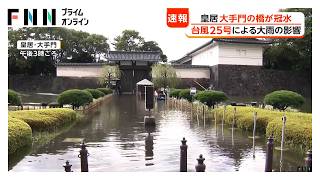
The road leading to Otemon Gate at Tokyo's Imperial Palace was flooded on September 22 after heavy rain from a typhoon caused water in the surrounding moat to overflow.

Japan came within two runs of producing one of international cricket's biggest upsets on September 22, pushing reigning T20 world champion India to the final ball before losing a rain-shortened match at Sano International Cricket Ground in Tochigi Prefecture.

MEDIA CHANNELS
         

MORE Society NEWS

Police in Yamagata Prefecture are working to identify a body found on the coast of a remote island on September 23, the 19th day since a 6-year-old boy went missing in Sakata, after discovering that the body was dressed in clothing similar to the Spider-Man outfit the child was wearing when he disappeared.

An emu that escaped from the home of a traveling zoo operator was captured after wandering through a residential neighborhood in Moriyama, Shiga Prefecture, on September 23, following a police report from a resident who mistook the bird for an ostrich.

People aged 65 and older accounted for a record 29.6% of Japan's population in 2026, the highest proportion among major countries worldwide, while the number of elderly people in employment also reached an all-time high as Japan marked Respect for the Aged Day on September 21.

Emperor Naruhito and Empress Masako visited Ghibli Park in Aichi Prefecture on September 20, touring exhibits that recreate famous scenes from Studio Ghibli films and posing for a photograph with the character No-Face.

Police in Kanagawa Prefecture have rearrested four teenagers on suspicion of murdering a 17-year-old high school student who died after being assaulted in Sagamihara in August.

Drinking parties remain a lively part of social life in Kansai even as younger generations increasingly turn away from alcohol and izakaya bankruptcies rise at a record pace, with customers describing the gatherings less as occasions to drink heavily and more as opportunities to maintain friendships, meet new people and build connections across generations.

Anonymous and fluid criminal groups known in Japan as "tokuryu" are adopting increasingly elaborate tactics, including a scheme in which elderly victims are persuaded to hide cash inside refrigerators before thieves enter their homes, as authorities struggle to combat networks whose members often have no direct contact with one another.

A luxury mansion in Bangkok described as resembling a palace was being used as a base for a specialized fraud operation targeting Japanese people, with Thai authorities detaining 14 people, including four Japanese men.