News On Japan

The 3 ways McDonald's Japan achieved its amazing recovery

Dec 31, 2017 (Japan Today) - V-ji kaifuku -- a V-shaped recovery -- is how Shukan Jitsuwa (Jan 11-18) describes the "astonishing" turnaround achieved by McDonald's Japan, pulling itself up from don-zoko (rock bottom).

For the fiscal period ending in December 2017, the company expects to report consolidated earnings of 20 billion yen -- the highest since it began trading its shares on the Tokyo Stock Exchange.

It was around 2009 that growth began to stagnate, and business analysts observed that the company seemed to have become stuck in a rut. Then around the end of 2014, a video taken by an investigative reporter in China supposedly showed a supplier making items using meat whose "consume by" dates had expired, and in one case, minced chicken that had fallen onto the floor was scooped up being used to prepare nuggets. Once this began to circulate visitors to the golden arches plummeted.

More misfortunes occurred in the first half of 2015. Customers complained of foreign objects such as human teeth or fragments of metals found in foods, further tarnishing the company's image, and some parents went so far as to consider a boycott. By the end of 2015, the company reported a deficit for the year of 34.9 billion yen, and articles appearing in the media were raising the possibility that the brand would vanish from Japan for good.

What's more, Canadian Sarah Cassanova, McDonald's Japan CEO, was a relatively new arrival and at the time still unfamiliar with customary Japanese business practices. And the overbearing attitude shown by the U.S. parent company in dealing with customer dissatisfaction only made matters worse.

"Ms Cassanova did some serious soul-searching and made efforts to understand Japanese people," said a business analyst familiar with the company. "She took speedy action and enacted reforms, particularly in three areas. Thanks to these, the customers gradually began coming back."

The first and foremost of the three reforms was to emphasize food safety.

"Items that up to that point had been procured from China were switched to Thailand or other sources, with the data shown on the company's home page. In addition, as part of the food safety publicity efforts, the paper used to wrap the items of merchandise bore a QR (quick response) code," a source in the food and beverage industry tells the magazine.

Some former customers, however, remained unconvinced, so from summer 2016, McDonald's began a collaborative tieup, promoting the Pokemon GO virtual game via its outlets. "It's no exaggeration to say that this kind of collaboration with other companies had a big impact on attracting new business," the source continued.

The third action taken by the company management was to shut down unprofitable outlets. From 3,801 stores in Japan at the time of the sanitation scandal in China, the number was reduced by nearly 1,000, to 2,902. On a weekly basis Cassanova began making the rounds to outlets in person, talking to staff members, and customers ranging from housewives and high school students to seniors. When possible their views and suggestions were incorporated into store operations, and through repeated efforts, the company was able to pull off a "miraculous" recovery.

News On Japan
POPULAR NEWS

Typhoon No. 26 formed over the sea east of the Philippines at 9 p.m. on September 23 and is expected to strengthen as it moves westward, potentially approaching Okinawa's main island from September 28 with powerful winds.

Airports and railway stations across Japan were crowded on September 23 as travelers returned from their hometowns and holiday destinations on the final day of the five-day Silver Week holiday, with international flight arrivals reaching their peak and many afternoon Shinkansen services fully booked.

Japan's Asian Games campaign produced another day of records and medals on September 23, with Shoon Mitsunaga setting a national record to win the men's 100-meter butterfly, both Japanese gymnastics teams taking silver behind China, and Toshikazu Yamanishi adding to the host nation's athletics medal haul.

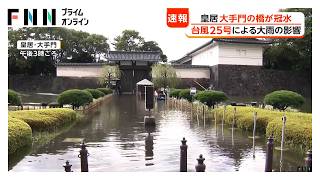
The road leading to Otemon Gate at Tokyo's Imperial Palace was flooded on September 22 after heavy rain from a typhoon caused water in the surrounding moat to overflow.

Japan came within two runs of producing one of international cricket's biggest upsets on September 22, pushing reigning T20 world champion India to the final ball before losing a rain-shortened match at Sano International Cricket Ground in Tochigi Prefecture.

MEDIA CHANNELS
         

MORE Society NEWS

Police in Yamagata Prefecture are working to identify a body found on the coast of a remote island on September 23, the 19th day since a 6-year-old boy went missing in Sakata, after discovering that the body was dressed in clothing similar to the Spider-Man outfit the child was wearing when he disappeared.

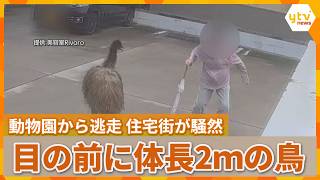
An emu that escaped from the home of a traveling zoo operator was captured after wandering through a residential neighborhood in Moriyama, Shiga Prefecture, on September 23, following a police report from a resident who mistook the bird for an ostrich.

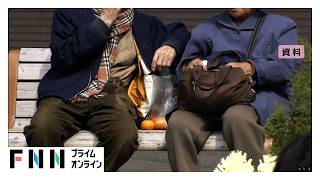
People aged 65 and older accounted for a record 29.6% of Japan's population in 2026, the highest proportion among major countries worldwide, while the number of elderly people in employment also reached an all-time high as Japan marked Respect for the Aged Day on September 21.

Emperor Naruhito and Empress Masako visited Ghibli Park in Aichi Prefecture on September 20, touring exhibits that recreate famous scenes from Studio Ghibli films and posing for a photograph with the character No-Face.

Police in Kanagawa Prefecture have rearrested four teenagers on suspicion of murdering a 17-year-old high school student who died after being assaulted in Sagamihara in August.

Drinking parties remain a lively part of social life in Kansai even as younger generations increasingly turn away from alcohol and izakaya bankruptcies rise at a record pace, with customers describing the gatherings less as occasions to drink heavily and more as opportunities to maintain friendships, meet new people and build connections across generations.

Anonymous and fluid criminal groups known in Japan as "tokuryu" are adopting increasingly elaborate tactics, including a scheme in which elderly victims are persuaded to hide cash inside refrigerators before thieves enter their homes, as authorities struggle to combat networks whose members often have no direct contact with one another.

A luxury mansion in Bangkok described as resembling a palace was being used as a base for a specialized fraud operation targeting Japanese people, with Thai authorities detaining 14 people, including four Japanese men.