News On Japan

The limits of Japan's cruise missile plan

Feb 01, 2018 (The Strategist) - Japan's plans to acquire cruise missiles for its combat aircraft are a step forward in its ability to provide for its own defence. But these weapons won't give the country the capacity to pre-emptively destroy North Korea's ballistic missiles because of the major weaknesses in Japan's ability to locate mobile targets.

Tokyo's announcement that it will fit its soon-to-enter-service F-35A fighter force with the 500-kilometre-range Joint Strike Missile capped a year of significant developments for Japan's military. It's also studying options to fit its existing F-15J fleet with 900-kilometre-range air-to-surface missiles and 560-kilometre-range anti-ship missiles. With a record budget proposed, the procurement of a new land-based anti-missile system confirmed, and the election of a parliament predisposed to moving Japan away from its pacifist constitution, the scene seems set for a new era in the country's approach to security. Given North Korea's repeated firing of ballistic missiles over Japan, it also appears clear where much of Tokyo's new offensive capability is to be aimed.

Japan denies that the cruise missiles are for use against North Korean facilities. The country's defence minister, Itsunori Onodera, said at the procurement decision announcement, 'The stand-off missiles we are introducing at this time are purely for our national defence and are not for the purpose of attacking enemy bases.' Instead, Tokyo claims the weapons are to be used if enemy forces try to attack or succeed in occupying Japan's outlying islands, and to protect units of the Japanese Maritime Self-Defence Force. Nevertheless, Onodera has long been a proponent of giving Japan the ability to strike North Korean targets. The explanation offered for current plans is likely simply a political ploy to smooth over objections.

More concerning are the practicalities of the Japanese Air Self-Defence Force (JASDF) striking North Korea's missiles while they're still on the ground. As demonstrated during the 1991 Gulf War's 'Scud hunt', finding and destroying mobile missile platforms---known as transporter-erector-launchers (TELs)---and their support vehicles is a difficult and time-consuming process. Although sensor technology has vastly improved in the last quarter century, a comprehensive search operation would be largely dependent on deploying a fleet of unmanned aerial vehicles (UAVs) and using satellite surveillance to provide targeting data in real time. Japan currently lacks long-range UAVs and has only a limited satellite network, meaning that it would be reliant on third-party information to conduct air strikes on mobile targets. Although in theory Tokyo could send crewed combat aircraft (particularly the F-35A once it enters service) into North Korean airspace on search-and-destroy missions, that would be hazardous in the initial stage of a conflict, likely provide only limited results and waste the stand-off capability of its cruise missiles.

News On Japan
POPULAR NEWS

Typhoon No. 26 formed over the sea east of the Philippines at 9 p.m. on September 23 and is expected to strengthen as it moves westward, potentially approaching Okinawa's main island from September 28 with powerful winds.

Airports and railway stations across Japan were crowded on September 23 as travelers returned from their hometowns and holiday destinations on the final day of the five-day Silver Week holiday, with international flight arrivals reaching their peak and many afternoon Shinkansen services fully booked.

Japan's Asian Games campaign produced another day of records and medals on September 23, with Shoon Mitsunaga setting a national record to win the men's 100-meter butterfly, both Japanese gymnastics teams taking silver behind China, and Toshikazu Yamanishi adding to the host nation's athletics medal haul.

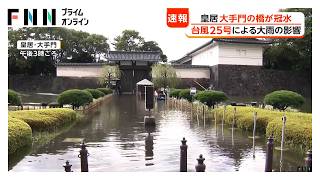
The road leading to Otemon Gate at Tokyo's Imperial Palace was flooded on September 22 after heavy rain from a typhoon caused water in the surrounding moat to overflow.

Japan came within two runs of producing one of international cricket's biggest upsets on September 22, pushing reigning T20 world champion India to the final ball before losing a rain-shortened match at Sano International Cricket Ground in Tochigi Prefecture.

MEDIA CHANNELS
         

MORE Society NEWS

Police in Yamagata Prefecture are working to identify a body found on the coast of a remote island on September 23, the 19th day since a 6-year-old boy went missing in Sakata, after discovering that the body was dressed in clothing similar to the Spider-Man outfit the child was wearing when he disappeared.

An emu that escaped from the home of a traveling zoo operator was captured after wandering through a residential neighborhood in Moriyama, Shiga Prefecture, on September 23, following a police report from a resident who mistook the bird for an ostrich.

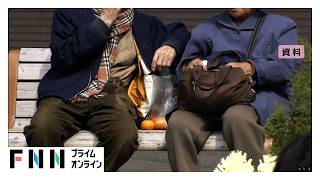
People aged 65 and older accounted for a record 29.6% of Japan's population in 2026, the highest proportion among major countries worldwide, while the number of elderly people in employment also reached an all-time high as Japan marked Respect for the Aged Day on September 21.

Emperor Naruhito and Empress Masako visited Ghibli Park in Aichi Prefecture on September 20, touring exhibits that recreate famous scenes from Studio Ghibli films and posing for a photograph with the character No-Face.

Police in Kanagawa Prefecture have rearrested four teenagers on suspicion of murdering a 17-year-old high school student who died after being assaulted in Sagamihara in August.

Drinking parties remain a lively part of social life in Kansai even as younger generations increasingly turn away from alcohol and izakaya bankruptcies rise at a record pace, with customers describing the gatherings less as occasions to drink heavily and more as opportunities to maintain friendships, meet new people and build connections across generations.

Anonymous and fluid criminal groups known in Japan as "tokuryu" are adopting increasingly elaborate tactics, including a scheme in which elderly victims are persuaded to hide cash inside refrigerators before thieves enter their homes, as authorities struggle to combat networks whose members often have no direct contact with one another.

A luxury mansion in Bangkok described as resembling a palace was being used as a base for a specialized fraud operation targeting Japanese people, with Thai authorities detaining 14 people, including four Japanese men.