News On Japan

Japan struggles to overcome its groping problem

Mar 18, 2018 (Japan Times) - A group of men boarded the women-only car of the Chiyoda Line subway in Tokyo during the morning commute on Feb. 16 as a form of protest, saying that excluding men was a form of discrimination.

Such protests are not unusual, but the media almost never covers them. In this case, the women who were already on the train objected loudly, but the men refused to leave after the train arrived at Kokkai-gijidomae Station, thus prompting station staff to become involved. Then, one of the protesters pushed the emergency stop button on the platform. The train ended up being delayed by more than 15 minutes.

Now that was news, so when one of the leaders of the anti-women-only car movement, a man called "Dr. Sabetsu" ("Dr. Discrimination"), tried to speak publicly in front of Shibuya Station on Feb. 24, the press was on hand. This is exactly the kind of publicity the movement has been trying to attract for years. Dr. Sabetsu said that discrimination is discrimination, regardless of the reason, and that men had every right to ride on any train car they wanted to.

The reason for women-only train cars is chikan - sexual molestation or groping - a problem as old as rush hour itself and one that Japan has never been able to solve. Starting around the turn of the century, some train lines in Tokyo introduced women-only cars as an option on some evenings, mainly at the request of the Metropolitan Police Department.

As media critic Maki Fukasawa explained on the Feb. 27 edition of Bunka Hoso's "Golden Radio," although there has been a movement against women-only cars ever since they were introduced, it has become more visible in recent years thanks to the rise of social media, which allows for better coordination among men who want to protest.

It's important to remember that men are not legally prohibited from entering these cars. They are simply asked not to use them during rush hour. Railways are counting on passengers' good will, so protesters know they can cause disruptions by just trying to board. The women on the train may object, but they are usually more concerned with getting to work on time. These protest groups have also sued railways for discrimination, but have never won in court.

News On Japan
POPULAR NEWS

Typhoon No. 26 formed over the sea east of the Philippines at 9 p.m. on September 23 and is expected to strengthen as it moves westward, potentially approaching Okinawa's main island from September 28 with powerful winds.

Airports and railway stations across Japan were crowded on September 23 as travelers returned from their hometowns and holiday destinations on the final day of the five-day Silver Week holiday, with international flight arrivals reaching their peak and many afternoon Shinkansen services fully booked.

Japan's Asian Games campaign produced another day of records and medals on September 23, with Shoon Mitsunaga setting a national record to win the men's 100-meter butterfly, both Japanese gymnastics teams taking silver behind China, and Toshikazu Yamanishi adding to the host nation's athletics medal haul.

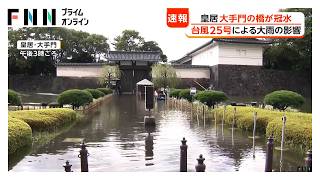
The road leading to Otemon Gate at Tokyo's Imperial Palace was flooded on September 22 after heavy rain from a typhoon caused water in the surrounding moat to overflow.

Japan came within two runs of producing one of international cricket's biggest upsets on September 22, pushing reigning T20 world champion India to the final ball before losing a rain-shortened match at Sano International Cricket Ground in Tochigi Prefecture.

MEDIA CHANNELS
         

MORE Society NEWS

Police in Yamagata Prefecture are working to identify a body found on the coast of a remote island on September 23, the 19th day since a 6-year-old boy went missing in Sakata, after discovering that the body was dressed in clothing similar to the Spider-Man outfit the child was wearing when he disappeared.

An emu that escaped from the home of a traveling zoo operator was captured after wandering through a residential neighborhood in Moriyama, Shiga Prefecture, on September 23, following a police report from a resident who mistook the bird for an ostrich.

People aged 65 and older accounted for a record 29.6% of Japan's population in 2026, the highest proportion among major countries worldwide, while the number of elderly people in employment also reached an all-time high as Japan marked Respect for the Aged Day on September 21.

Emperor Naruhito and Empress Masako visited Ghibli Park in Aichi Prefecture on September 20, touring exhibits that recreate famous scenes from Studio Ghibli films and posing for a photograph with the character No-Face.

Police in Kanagawa Prefecture have rearrested four teenagers on suspicion of murdering a 17-year-old high school student who died after being assaulted in Sagamihara in August.

Drinking parties remain a lively part of social life in Kansai even as younger generations increasingly turn away from alcohol and izakaya bankruptcies rise at a record pace, with customers describing the gatherings less as occasions to drink heavily and more as opportunities to maintain friendships, meet new people and build connections across generations.

Anonymous and fluid criminal groups known in Japan as "tokuryu" are adopting increasingly elaborate tactics, including a scheme in which elderly victims are persuaded to hide cash inside refrigerators before thieves enter their homes, as authorities struggle to combat networks whose members often have no direct contact with one another.

A luxury mansion in Bangkok described as resembling a palace was being used as a base for a specialized fraud operation targeting Japanese people, with Thai authorities detaining 14 people, including four Japanese men.