News On Japan

Burned by bitcoin -- Son's misadventure tells wider story

Apr 29, 2019 (Nikkei) - Masayoshi Son is often called Japan's Warren Buffett. It is a useful comparison as the SoftBank billionaire scours the globe for value investments, and, as with Buffett, some of his choices leave observers perplexed.

News that Son lost $130 million of personal money on bitcoin is now Exhibit A of this phenomenon. As The Wall Street Journal reported last week, the Sage of Tokyo bought the digital currency in late 2017 just as it was peaking near $20,000. He then reportedly dumped bitcoin in early 2018 as prices nose-dived (since then it has recovered to about $5,100).

The story raised a couple of intriguing questions. Who, for example, leaked this embarrassing loss and why? It comes, after all, as investors question the $100 billion SoftBank Vision Fund's bets on Uber, WeWork and other potentially overvalued Silicon Valley unicorns.

The bigger quandary is how a savvy investor who says "I think I'm better than others at sniffing out things that will bear fruit in 10 or 20 years, while they're still at the seed stage" got caught up in cryptocurrency mania?

The answer may have more to do with bitcoin than Son. It is an asset that can seem more pyramid scheme than store of value.

Son is in risk-on mode. The Buffett-like halo investors bestow on him stems from his $20 million bet on an obscure Chinese startup in 2000. The juggernaut that Son helped finance was Alibaba, and his investment was worth $50 billion when that company went public in 2014.

The SoftBank founder is trying to strike gold again. His giant wagers on ride-hailing startups like Southeast Asia's Grab and America's Uber seem part of a strategy of hope. Son needs another big win to keep the Saudi benefactors, who back his funds, happy and writing those multibillion-dollar checks.

News On Japan
POPULAR NEWS

Airports and railway stations across Japan were crowded on September 23 as travelers returned from their hometowns and holiday destinations on the final day of the five-day Silver Week holiday, with international flight arrivals reaching their peak and many afternoon Shinkansen services fully booked.

Extensive railway disruption continued across Chiba Prefecture on September 23 as JR East warned that several lines damaged by Typhoon No. 25 would remain closed beyond the Silver Week holiday, even as flights returned toward normal, all typhoon-related expressway closures were lifted and some highway bus services resumed. The storm has left widespread damage to railway tracks and embankments, with flooding, landslides and fallen trees complicating restoration work.

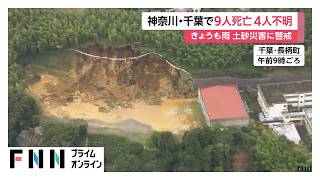
The death toll from Typhoon No. 25 rose to nine on September 23, with four people still missing in Chiba and Kanagawa prefectures, as renewed rainfall raised fears of further landslides in communities devastated by the storm.

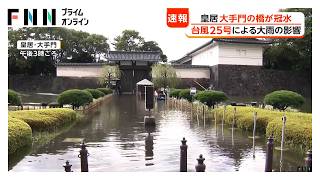
The road leading to Otemon Gate at Tokyo's Imperial Palace was flooded on September 22 after heavy rain from a typhoon caused water in the surrounding moat to overflow.

Japan came within two runs of producing one of international cricket's biggest upsets on September 22, pushing reigning T20 world champion India to the final ball before losing a rain-shortened match at Sano International Cricket Ground in Tochigi Prefecture.

MEDIA CHANNELS
         

MORE Society NEWS

An emu that escaped from the home of a traveling zoo operator was captured after wandering through a residential neighborhood in Moriyama, Shiga Prefecture, on September 23, following a police report from a resident who mistook the bird for an ostrich.

People aged 65 and older accounted for a record 29.6% of Japan's population in 2026, the highest proportion among major countries worldwide, while the number of elderly people in employment also reached an all-time high as Japan marked Respect for the Aged Day on September 21.

Emperor Naruhito and Empress Masako visited Ghibli Park in Aichi Prefecture on September 20, touring exhibits that recreate famous scenes from Studio Ghibli films and posing for a photograph with the character No-Face.

Police in Kanagawa Prefecture have rearrested four teenagers on suspicion of murdering a 17-year-old high school student who died after being assaulted in Sagamihara in August.

Drinking parties remain a lively part of social life in Kansai even as younger generations increasingly turn away from alcohol and izakaya bankruptcies rise at a record pace, with customers describing the gatherings less as occasions to drink heavily and more as opportunities to maintain friendships, meet new people and build connections across generations.

Anonymous and fluid criminal groups known in Japan as "tokuryu" are adopting increasingly elaborate tactics, including a scheme in which elderly victims are persuaded to hide cash inside refrigerators before thieves enter their homes, as authorities struggle to combat networks whose members often have no direct contact with one another.

A luxury mansion in Bangkok described as resembling a palace was being used as a base for a specialized fraud operation targeting Japanese people, with Thai authorities detaining 14 people, including four Japanese men.

Copper roofing has been stripped from Shinano-no-miya Shrine in Oshika Village, Nagano Prefecture, leaving the wooden structure exposed in the latest of a series of similar thefts reported at shrines across the prefecture.