News On Japan

The prison inside: Japan's hikikomori lack relationships, not physical spaces

Jun 02, 2019 (Japan Times) - Fifty-three-year-old Kenji Yamase doesn’t fit the traditional image of a hikikomori, but then perceptions of Japan’s social recluses are changing.

“People think of hikikomori as being lazy young people with personality problems who stay in their rooms all the time playing video games,” says Yamase, who lives with his 87-year-old mother and has been a recluse on and off for the past 30 years.

“But the reality is that most hikikomori are people who can’t get back into society after straying off the path at some point,” he says. “They have been forced into withdrawal. It isn’t that they’re shutting themselves away — it’s more like they’re being forced to shut themselves away.”

A hikikomori is defined by the Health, Labor and Welfare Ministry as someone who has remained isolated at home for at least six consecutive months without going to school or work, and rarely interacts with people from outside their own immediate family.

The term was coined by psychiatrist Tamaki Saito in the late 1990s to describe young people who had withdrawn from society, and a series of violent incidents involving social recluses soon after helped shape the public’s image of them as dangerous sociopaths.

In January 2000, a loner in Niigata Prefecture was arrested after it was discovered that he had kidnapped a 9-year-old girl and kept her hostage in his room for more than nine years.

Four months later, a 17-year-old from Saga Prefecture hijacked a bus, killing one passenger with a kitchen knife and injuring another two.

In recent years, however, a different picture has emerged.

In December 2018, the Cabinet Office undertook a first-ever survey of people aged between 40 and 64, and the results, published in March, revealed that around 613,000 people of that age group in Japan are believed to be hikikomori. That surpasses the estimated 541,000 people aged between 15 and 39 that a 2015 Cabinet Office survey found to be hikikomori.

The latest survey showed that 76.6 percent of recluses between the ages of 40 and 64 are men.

A total of 46.7 percent of the hikikomori surveyed said they had lived that way for at least seven years, and 34.1 percent of cases said they relied on their parents for financial support.

Welfare Minister Takumi Nemoto described middle-aged hikikomori as “a new phenomenon,” but experts argue that the survey results are merely bringing to light something that has been present for some time.

News On Japan
POPULAR NEWS

Typhoon No. 27 (Choi-wan) is expected to rapidly intensify into a very strong storm as it moves north toward the Ogasawara Islands, bringing prolonged strong winds, heavy rain and waves exceeding six meters from October 5 to October 6, according to the latest forecast issued at 9 p.m. on October 2.

Nearly one year after the Osaka-Kansai Expo closed, the former exhibition grounds were opened to the media on October 2, revealing that around 90% of the pavilions and other facilities have been demolished, while the Forest of Tranquility remains a peaceful green space at the center of the site.

Time magazine has named Shoko Kawata, the 36-year-old mayor of Yawata in Kyoto Prefecture, among its 100 most influential emerging figures worldwide, recognizing her decision to become Japan's first sitting mayor to take maternity leave and highlighting a political career that has taken her from municipal administration to national politics and the leadership of a city of nearly 70,000 people.

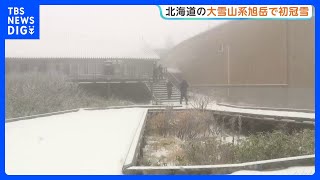
Hokkaido's highest peak, Mount Asahidake in the Daisetsuzan mountain range, recorded its first snow cover of the season on October 2, with the area around the Asahidake Ropeway's Sugatami Station, at an elevation of approximately 1,600 meters, blanketed in snow.

Tokyo authorities carried out the capital's first emergency shooting of a captured bear in Hachioji after an adult Asiatic black bear was found caught in a trap near a residential area about 8 kilometers from Takao Station.

MEDIA CHANNELS
         

MORE Society NEWS

A 35-year-old man has been rearrested on suspicion of persuading a high school girl to expose herself during a video call on social media and recording the footage, in a case that has revealed the growing dangers of "non-meeting sugar dating," in which adults offer money to minors in exchange for sexual images and videos without ever meeting them in person.

An Australian tourist who suffered a spinal cord injury after falling from a bridge near a popular sightseeing area in Hakodate, Hokkaido, has filed a lawsuit against the city seeking 400 million yen in damages, claiming that the bridge's railing was dangerously low.

A man suspected of stealing 24 medaka fish from an unmanned roadside shop attempted to destroy evidence by throwing the fish and their containers from his car window while fleeing police in an incident on September 25.

A 79-year-old former gang member was arrested on September 30 following two shootings in Kobe that left one man dead and another seriously injured, with police investigating the possibility that the suspect acted alone rather than as part of a conflict between organized crime groups.

A 46-year-old doctor arrested on suspicion of dismembering his wife's body and dumping the remains in a river in Amagasaki, Hyogo Prefecture, has admitted to the allegations, telling investigators that he laid a blue plastic sheet in the bathroom before cutting up the body and transporting it by car.

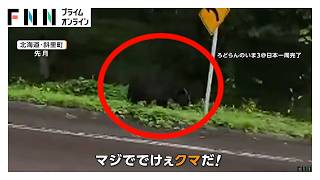
A brown bear repeatedly rammed a moving car on a prefectural road in Bifuka, Hokkaido, on the night of September 29, damaging the vehicle but leaving the driver unhurt, police said.

Tokyo authorities carried out the capital's first emergency shooting of a captured bear in Hachioji after an adult Asiatic black bear was found caught in a trap near a residential area about 8 kilometers from Takao Station.

Japan's total population, including foreign residents, stood at 122.97 million as of October 1, 2025, down 3.17 million from the previous census in 2020, marking only the third decline since the national census began in 1920.