News On Japan

In wake of election, a host of foreign policy challenges await Abe

Jul 22, 2019 (Japan Times) - After Sunday’s election, the ruling Liberal Democratic Party — along with its coalition partner Komeito — remains firmly in the saddle with a strong majority in both the Upper and Lower Houses of the Diet.

While the results of the poll were not surprising, they do reaffirm that Prime Minister Shinzo Abe’s administration will likely cement its hold on power until his final term concludes in 2021 — assuming the LDP does look to extend his term beyond that point.

Post-election, one of the key areas for Abe will be foreign policy. Although he has been a source of stability on the global stage, he will be tasked with dealing with a host of critical issues in the coming months.

First, the Abe administration may face challenges ahead in maintaining its strong relationship with the United States.

Abe has expended considerable time and effort in building a personal rapport with U.S. President Donald Trump, and the two have now met on a dozen occasions — in addition to more than 25 official phone calls. The two leaders last met on the sidelines of the Group of 20 summit in Osaka, just days after Japan was blindsided by a report that Trump was mulling the option of withdrawing from the U.S.-Japan security treaty, the bedrock of security in the Asia Pacific. The report, which both administrations dismissed, once again led to concerns about the U.S. commitments to its key allies, including Japan.

On one hand it is tempting to dismiss the report and point to the strong shared interests and growth in the U.S.-Japan alliance. But it would be foolish to entirely dismiss the risks, and there are real issues to be managed in the coming year.

First, Japan and the U.S. will have to finalize their special measures negotiation, which will cover host-nation support cost-sharing within the alliance. The current deal is set to expire at the end of the fiscal year in 2020. Trump has on multiple occasions critiqued Japan — and other allies such as South Korea and those in NATO — for not covering an adequate amount of costs for the deployment of U.S. troops.

How will Japan look to address the accusation of free-riding?

The Abe administration will surely point again to its large purchases of U.S. defense equipment — including the Aegis Ashore missile defense system and its plan to increase its order of F-35 fighter jets. Tokyo will also tactfully point to its large share of host-nation support — considerably more equitable than other large basing countries like South Korea and Germany — but that is unlikely to be enough to fully satiate Trump.

This will lead to difficult decisions on the role and contribution of the Self Defense Forces — as outlined by the current U.S. plans to assemble a multilateral coalition to safeguard commercial vessel traffic in the Strait of Hormuz amid an uptick of tensions with Iran.

Second, despite Abe successfully delaying any serious trade deal progress with the U.S. until after the Upper House election, he will need to face a Trump administration that is running low on patience and heading into election campaign-mode in America — a potentially dangerous formula as Japan looks to determine what concessions can be made on trade. The proposed agreement on goods would represent the first serious free trade effort between Washington and Tokyo since the Trump administration withdrew from the Trans-Pacific Partnership agreement.

News On Japan
POPULAR NEWS

Airports and railway stations across Japan were crowded on September 23 as travelers returned from their hometowns and holiday destinations on the final day of the five-day Silver Week holiday, with international flight arrivals reaching their peak and many afternoon Shinkansen services fully booked.

Extensive railway disruption continued across Chiba Prefecture on September 23 as JR East warned that several lines damaged by Typhoon No. 25 would remain closed beyond the Silver Week holiday, even as flights returned toward normal, all typhoon-related expressway closures were lifted and some highway bus services resumed. The storm has left widespread damage to railway tracks and embankments, with flooding, landslides and fallen trees complicating restoration work.

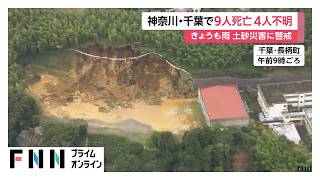
The death toll from Typhoon No. 25 rose to nine on September 23, with four people still missing in Chiba and Kanagawa prefectures, as renewed rainfall raised fears of further landslides in communities devastated by the storm.

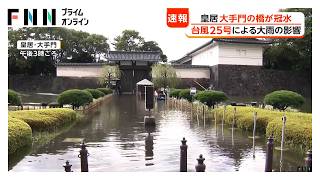
The road leading to Otemon Gate at Tokyo's Imperial Palace was flooded on September 22 after heavy rain from a typhoon caused water in the surrounding moat to overflow.

Japan came within two runs of producing one of international cricket's biggest upsets on September 22, pushing reigning T20 world champion India to the final ball before losing a rain-shortened match at Sano International Cricket Ground in Tochigi Prefecture.

MEDIA CHANNELS
         

MORE Society NEWS

An emu that escaped from the home of a traveling zoo operator was captured after wandering through a residential neighborhood in Moriyama, Shiga Prefecture, on September 23, following a police report from a resident who mistook the bird for an ostrich.

People aged 65 and older accounted for a record 29.6% of Japan's population in 2026, the highest proportion among major countries worldwide, while the number of elderly people in employment also reached an all-time high as Japan marked Respect for the Aged Day on September 21.

Emperor Naruhito and Empress Masako visited Ghibli Park in Aichi Prefecture on September 20, touring exhibits that recreate famous scenes from Studio Ghibli films and posing for a photograph with the character No-Face.

Police in Kanagawa Prefecture have rearrested four teenagers on suspicion of murdering a 17-year-old high school student who died after being assaulted in Sagamihara in August.

Drinking parties remain a lively part of social life in Kansai even as younger generations increasingly turn away from alcohol and izakaya bankruptcies rise at a record pace, with customers describing the gatherings less as occasions to drink heavily and more as opportunities to maintain friendships, meet new people and build connections across generations.

Anonymous and fluid criminal groups known in Japan as "tokuryu" are adopting increasingly elaborate tactics, including a scheme in which elderly victims are persuaded to hide cash inside refrigerators before thieves enter their homes, as authorities struggle to combat networks whose members often have no direct contact with one another.

A luxury mansion in Bangkok described as resembling a palace was being used as a base for a specialized fraud operation targeting Japanese people, with Thai authorities detaining 14 people, including four Japanese men.

Copper roofing has been stripped from Shinano-no-miya Shrine in Oshika Village, Nagano Prefecture, leaving the wooden structure exposed in the latest of a series of similar thefts reported at shrines across the prefecture.