News On Japan

An architect of Japan’s virus strategy sees flaws in West’s approach at fighting the pandemic

Jun 11, 2020 (Japan Times) - One of the key architects of Japan’s coronavirus strategy has hailed the country’s response to the pandemic, saying its approach was more effective than those implemented by Western nations.

"Data clearly indicates that the measures taken by Japan have been more effective than those taken in Western countries,” Hitoshi Oshitani, a professor of virology at Tohoku University and a member of the expert panel advising the government, said in an interview with Diplomacy, a journal published by the country’s Foreign Ministry.

Western countries became involved in a "war of attrition” of tracking down each individual case of the virus to thoroughly eliminate them, Oshitani said. Japan, on the other hand, allowed some degree of transmission of the virus and focused instead on identifying clusters of infection. This avoided exhausting the testing and medical system but was effective in eliminating large-scale transmission, he said in the interview, which was released in Japanese earlier this month.

Oshitani’s remarks come despite domestic dissatisfaction with the handling of the outbreak, and as Tokyo is yet to fully reopen its economy after ending the state of emergency. While cases and deaths in Japan are lower than Group of Seven peers, its performance still trails that of several other Asia Pacific nations — including neighbor Taiwan, which saw just seven deaths from the disease, and New Zealand, which on Tuesday declared the virus eliminated. Japan had 17,210 cases and 916 deaths as of Tuesday, according to data from the Health Ministry.

Noting the success other Asian countries have had with varying strategies, a "one-size fits all” approach where Western countries create guidelines on infectious diseases for lower-income countries — with the WHO acting as the intermediary — no longer makes sense, according to Oshitani.

Japan allowed a second wave of infections to develop by letting in an estimated 1,000 to 2,000 carriers of the virus from Europe, the U.S. and elsewhere before travel restrictions were implemented at the end of March, Oshitani said. The delay was "regrettable,” he said, despite having quashed the first wave of the disease which stemmed from China. Oshitani acknowledged Japan failed to meet a target of keeping deaths below 100, and said it is now focusing on keeping them below 1,000.

News On Japan
POPULAR NEWS

Airports and railway stations across Japan were crowded on September 23 as travelers returned from their hometowns and holiday destinations on the final day of the five-day Silver Week holiday, with international flight arrivals reaching their peak and many afternoon Shinkansen services fully booked.

Extensive railway disruption continued across Chiba Prefecture on September 23 as JR East warned that several lines damaged by Typhoon No. 25 would remain closed beyond the Silver Week holiday, even as flights returned toward normal, all typhoon-related expressway closures were lifted and some highway bus services resumed. The storm has left widespread damage to railway tracks and embankments, with flooding, landslides and fallen trees complicating restoration work.

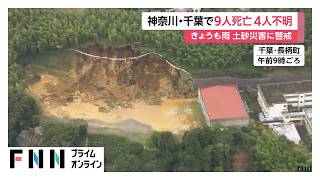
The death toll from Typhoon No. 25 rose to nine on September 23, with four people still missing in Chiba and Kanagawa prefectures, as renewed rainfall raised fears of further landslides in communities devastated by the storm.

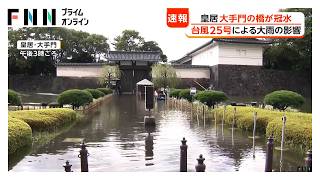
The road leading to Otemon Gate at Tokyo's Imperial Palace was flooded on September 22 after heavy rain from a typhoon caused water in the surrounding moat to overflow.

Japan came within two runs of producing one of international cricket's biggest upsets on September 22, pushing reigning T20 world champion India to the final ball before losing a rain-shortened match at Sano International Cricket Ground in Tochigi Prefecture.

MEDIA CHANNELS
         

MORE Society NEWS

An emu that escaped from the home of a traveling zoo operator was captured after wandering through a residential neighborhood in Moriyama, Shiga Prefecture, on September 23, following a police report from a resident who mistook the bird for an ostrich.

People aged 65 and older accounted for a record 29.6% of Japan's population in 2026, the highest proportion among major countries worldwide, while the number of elderly people in employment also reached an all-time high as Japan marked Respect for the Aged Day on September 21.

Emperor Naruhito and Empress Masako visited Ghibli Park in Aichi Prefecture on September 20, touring exhibits that recreate famous scenes from Studio Ghibli films and posing for a photograph with the character No-Face.

Police in Kanagawa Prefecture have rearrested four teenagers on suspicion of murdering a 17-year-old high school student who died after being assaulted in Sagamihara in August.

Drinking parties remain a lively part of social life in Kansai even as younger generations increasingly turn away from alcohol and izakaya bankruptcies rise at a record pace, with customers describing the gatherings less as occasions to drink heavily and more as opportunities to maintain friendships, meet new people and build connections across generations.

Anonymous and fluid criminal groups known in Japan as "tokuryu" are adopting increasingly elaborate tactics, including a scheme in which elderly victims are persuaded to hide cash inside refrigerators before thieves enter their homes, as authorities struggle to combat networks whose members often have no direct contact with one another.

A luxury mansion in Bangkok described as resembling a palace was being used as a base for a specialized fraud operation targeting Japanese people, with Thai authorities detaining 14 people, including four Japanese men.

Copper roofing has been stripped from Shinano-no-miya Shrine in Oshika Village, Nagano Prefecture, leaving the wooden structure exposed in the latest of a series of similar thefts reported at shrines across the prefecture.