News On Japan

Japan weighs shortcut to green cards for Hong Kong financial talent

Jul 02, 2020 (Nikkei) - A day after China passed and enacted a new national security law to govern Hong Kong, Japanese lawmakers kicked off official discussions over ways to welcome financial talent that may be contemplating leaving the international financial hub.

At the first meeting Wednesday of a new project team established by the ruling Liberal Democratic Party, experts stressed an urgent need to create a more accommodating environment for foreign professionals. The team will assemble a package of recommendations this year.

A shorter path to permanent residency and tax breaks are some of the measures on the table, as Japan seeks to raise Tokyo's status as a global financial center.

The Hong Kong law passed Tuesday is widely expected to reduce the autonomy that has made the city attractive as an international financial hub, potentially redrawing the map of Asia's finance sector and providing an opening for Tokyo to boost its own status.

The legislation is "not likely to affect financial markets right away, but I think [Hong Kong] will undoubtedly lose its position as a finance center," Shigeharu Suzuki, chairman of the Japan Securities Dealers Association, told a news conference Wednesday.

But while Japan looks to vie with rival economies such as Singapore for talent, it has not been a favored destination for finance workers. A 2017 survey by Switzerland's IMD Business School ranked Japan as 51st in terms of appeal to foreign highly-skilled personnel -- the lowest among the Asian economies covered.

Japan issues visas for highly skilled professionals based on a point system that considers such factors as education, work history and salary. Recipients can stay in the country for five years, with possible eligibility for permanent residency if they meet certain conditions.

About 21,000 visas had been approved through Japan's point system at the end of 2019, according to the Immigration Services Bureau. While issuance is picking up, critics have pointed to issues including the complexity of the system, limits on residency time and restrictions on bringing family members.

News On Japan
POPULAR NEWS

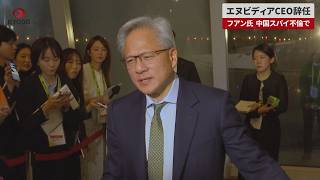
The resignation of Nvidia CEO Jensen Huang on November 12 following allegations involving a woman suspected of links to Chinese intelligence has raised concerns in Japan over the potential impact on semiconductor investment, financial markets and the yen, as uncertainty surrounding the American AI chipmaker threatens to disrupt the global technology industry.

Japan launched a new national disaster management agency on November 2nd to strengthen its response to major emergencies, just days before a powerful earthquake struck Aichi Prefecture, injuring 24 people and renewing concerns over the possibility of a catastrophic Nankai Trough earthquake.

Russia's Foreign Ministry on November 11 defended the government's unilateral decision to place the local subsidiary of Japan Tobacco (JT) under the management of a Russian company, describing the move as a countermeasure against what it called Japan's "blatantly hostile actions."

East Japan Railway (JR East) announced on November 10th that it will introduce touch-free ticket gates at 40 stations, including every station on Tokyo's Yamanote Line, from spring 2028, allowing passengers using Mobile Suica to pass through without taking their smartphones out of their pockets or bags.

Japan's Children and Families Agency unveiled its first national guidelines on November 10th for parental involvement in children's internet use, dividing those aged 0 to 18 into six developmental stages as the government considers tighter regulations on social media platforms to protect young people from online bullying, exploitation, and other growing risks.

MEDIA CHANNELS
         

MORE Society NEWS

An anti-organized crime convention was held in Osaka City, bringing together police, government officials, and business representatives to reaffirm their commitment to eliminating organized crime groups, as authorities warned that shrinking yakuza organizations are increasingly cooperating with loosely organized criminal networks involved in fraud and robbery.

Tokyo police have raided two establishments in Shinjuku's Kabukicho entertainment district suspected of repeatedly overcharging customers brought in by foreign street touts, with investigators believing the businesses were targeting international tourists visiting Japan.

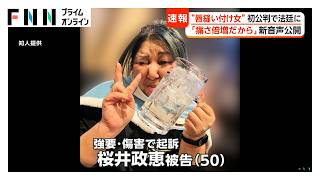
A 50-year-old woman accused of forcing her housemate to sew her own lips shut with a needle and thread admitted all charges at her first court hearing on November 11th, as prosecutors played disturbing audio recordings of the threats used to coerce the victim during an incident in Koga, Ibaraki Prefecture, in June 2026.

A 26-year-old woman from Nagoya has been arrested on suspicion of defrauding men by encouraging them to develop romantic feelings for her before repeatedly requesting money, with 13 men reporting losses totaling approximately 30 million yen in a scheme resembling the notorious "Itadaki Joshi" romance fraud case.

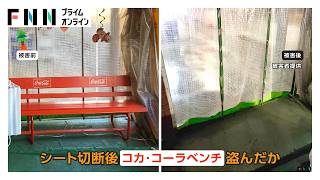
A rare red Coca-Cola bench was stolen from outside a prepared-food shop in Nagareyama, Chiba Prefecture, in the early hours of October 24th, with the owner suspecting the thieves intended to resell the collectible item to enthusiasts after similar benches were found listed online for as much as 180,000 yen.

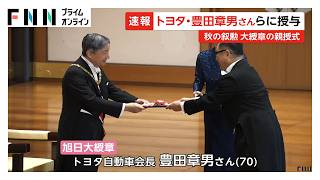
Emperor Naruhito presented prestigious Grand Cordon decorations to Toyota Motor Chairman Akio Toyoda and other recipients of Japan's autumn honors at a ceremony held at the Imperial Palace on November 10th, recognizing their longstanding contributions to the country and society.

A 26-year-old yakuza member suspected of sending young women he met in Tokyo's Kabukicho entertainment district to Cambodia to work as telephone scammers has been arrested for the eighth time, this time on suspicion of conspiring with two women to defraud a man in his 30s of 9.5 million yen.

A 31-year-old Chinese national has been arrested in Tokyo on suspicion of operating an illegal mobile phone base station that forced more than 10,000 smartphones onto a 2G network in less than two hours, allowing phishing messages to be sent to unsuspecting users in busy shopping districts including Ginza, Shinjuku and Shibuya.