News On Japan

Securing Japan from Chinese ‘Predatory Economics’

Jul 18, 2020 (thediplomat.com) - One of the key questions in Japan’s present national security debate is how to manage China’s “predatory” geoeconomics.

Where does Tokyo stand in crafting an effective economic security strategy?

Beijing has systematically integrated economic and financial instruments into its foreign policy with the objective of advancing its grand strategic ambitions. From the Belt and Road Initiative (BRI) to Made in China 2025, Beijing shrewdly incorporated geoeconomic tools of statecraft into its grand strategic thinking. China’s coercive economic maneuvering employs trade, investments, technology, internationalizing of currency and even weaponization of resource supply chains toward geopolitical ends.

Thus, reorienting Japan’s economic security strategy constitutes a top priority for Prime Minister Abe Shinzo. The objective is primarily to secure cutting edge technologies including next-generation 5G networks; strengthening foreign investment regulations in “core industries” in 12 strategic sectors; blocking COVID-19 bargain hunters grabbing key businesses; protecting intellectual property and averting forced technology transfers; fortifying self-sufficiency in strategic metals and mineral resource supply; managing China’s plans for a digital yuan; and better strategizing developmental aid in the Indo-Pacific. From instituting an economic unit at the National Security Secretariat (NSS), conceiving a U.S.-Japan economic security dialogue, and joining forces with other democracies in a D-10 (the G7 plus India, Australia and South Korea) framework for 5G and the Global Partnership on Artificial Intelligence — Japan’s strategic thinking on economic security is manifesting.

Pre-pandemic, Prime Minister Shinzo Abe’s priority was how to secure Japan’s economic interests amid worrying trends of de-globalization, receding trade liberalization, and increasing protectionism. Japan, as the world’s third largest economy, has led in building the multilateral trading system, particularly with the Comprehensive and Progressive Agreement for Trans-Pacific Partnership (TPP-11) following the U.S. exit from the Trans-Pacific Partnership; the Economic Partnership Agreement (EPA) with the EU following Brexit; and steering the Regional Comprehensive Economic Partnership (RCEP) process. At the Osaka G-20, Japan pushed for building rules for data governance and constructing a new regime underpinned by “data free flow with trust” (DFFT).

News On Japan
POPULAR NEWS

Airports and railway stations across Japan were crowded on September 23 as travelers returned from their hometowns and holiday destinations on the final day of the five-day Silver Week holiday, with international flight arrivals reaching their peak and many afternoon Shinkansen services fully booked.

Extensive railway disruption continued across Chiba Prefecture on September 23 as JR East warned that several lines damaged by Typhoon No. 25 would remain closed beyond the Silver Week holiday, even as flights returned toward normal, all typhoon-related expressway closures were lifted and some highway bus services resumed. The storm has left widespread damage to railway tracks and embankments, with flooding, landslides and fallen trees complicating restoration work.

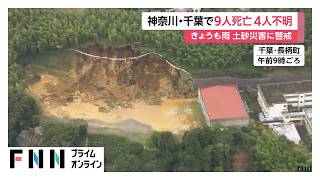
The death toll from Typhoon No. 25 rose to nine on September 23, with four people still missing in Chiba and Kanagawa prefectures, as renewed rainfall raised fears of further landslides in communities devastated by the storm.

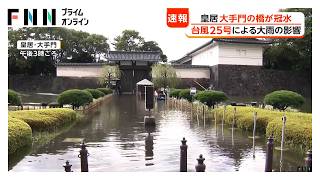
The road leading to Otemon Gate at Tokyo's Imperial Palace was flooded on September 22 after heavy rain from a typhoon caused water in the surrounding moat to overflow.

Japan came within two runs of producing one of international cricket's biggest upsets on September 22, pushing reigning T20 world champion India to the final ball before losing a rain-shortened match at Sano International Cricket Ground in Tochigi Prefecture.

MEDIA CHANNELS
         

MORE Society NEWS

An emu that escaped from the home of a traveling zoo operator was captured after wandering through a residential neighborhood in Moriyama, Shiga Prefecture, on September 23, following a police report from a resident who mistook the bird for an ostrich.

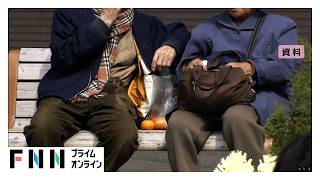
People aged 65 and older accounted for a record 29.6% of Japan's population in 2026, the highest proportion among major countries worldwide, while the number of elderly people in employment also reached an all-time high as Japan marked Respect for the Aged Day on September 21.

Emperor Naruhito and Empress Masako visited Ghibli Park in Aichi Prefecture on September 20, touring exhibits that recreate famous scenes from Studio Ghibli films and posing for a photograph with the character No-Face.

Police in Kanagawa Prefecture have rearrested four teenagers on suspicion of murdering a 17-year-old high school student who died after being assaulted in Sagamihara in August.

Drinking parties remain a lively part of social life in Kansai even as younger generations increasingly turn away from alcohol and izakaya bankruptcies rise at a record pace, with customers describing the gatherings less as occasions to drink heavily and more as opportunities to maintain friendships, meet new people and build connections across generations.

Anonymous and fluid criminal groups known in Japan as "tokuryu" are adopting increasingly elaborate tactics, including a scheme in which elderly victims are persuaded to hide cash inside refrigerators before thieves enter their homes, as authorities struggle to combat networks whose members often have no direct contact with one another.

A luxury mansion in Bangkok described as resembling a palace was being used as a base for a specialized fraud operation targeting Japanese people, with Thai authorities detaining 14 people, including four Japanese men.

Copper roofing has been stripped from Shinano-no-miya Shrine in Oshika Village, Nagano Prefecture, leaving the wooden structure exposed in the latest of a series of similar thefts reported at shrines across the prefecture.