News On Japan

Japanese parents and sports coaches need to stop hitting children

Aug 02, 2020 (Nikkei) - The shocking revelations contained in the report "I Was Hit So Many Times I Can't Count," released by Human Rights Watch on July 20 exposing the abuse of child athletes in Japan, came as no surprise to those of us close to the world of Japanese sports administration.

Supported by meticulous interviews and questionnaire surveys from actual victims, the startling amount of detail collected by the report's authors make its findings impossible to ignore.

As Japan prepares to host the XXXII Olympiad, commonly known as Tokyo 2020, perhaps the report's most important conclusion is that the abuse of child athletes in Japan is fundamentally a human rights issue, and it must be addressed as such.

Up until now, the issue of corporal punishment in Japanese sports has followed a familiar pattern. First, a number of painful incidents come to light and are featured prominently by the media. Then, the so-called "fire extinguisher" approach is used to squelch the scandal.

Those responsible are removed from positions of influence; declarations of "zero tolerance" are made; special hotlines are set up to handle complaints. So why don't these actions lead to a fall in the number of abuse incidents?

The reality is that many coaches and parents in Japan regard corporal punishment as a necessary part of training, with no understanding that physical abuse can be detrimental to the future development of their children. The fact that so many great educators, who care deeply about the growth of children, still believe in the effectiveness of corporal punishment underscores how complex this problem is.

My hope is that with the HRW report receiving so much international attention, we can finally begin to make real progress.

The first thing Japan should do is follow HRW's recommendation to establish a Japan Center for Safe Sport, an independent body tasked solely with addressing child abuse in sport. Legislation enacted overseas, such as the Safe Sport Authorization Act in the U.S., as well as the United Kingdom's system of child protection, are important models that Japan should follow. Because hosting the Olympics means that Japan is interested in good sports governance, it should not be too difficult for the government to set up a mechanism by which child-athletes can report abuses without fear.

Takuya Yamazaki, a Japanese Attorney-at-Law, is the founder of Field-R Law Offices, a niche sports and entertainment legal practice based in Tokyo.

News On Japan
POPULAR NEWS

Typhoon No. 15 (Chan-hom) began causing significant disruption to Japan's Obon holiday travel on August 11, with ANA canceling 58 flights serving Haneda and Narita airports, JAL canceling four flights, and JR East suspending some services on the Joban Line as the storm approached eastern Japan.

Typhoon No. 15 (Chan-hom) was closing in on the Kanto region on the evening of August 11 and is expected to soon make landfall in or around Ibaraki Prefecture before crossing Honshu from east to west, an unusual path that could bring heavy rain, powerful winds and high waves across a wide stretch of Japan through August 12.

Japan's H3 Rocket No. 9 successfully placed the Michibiki No. 7 navigation satellite into its planned orbit after lifting off from the Tanegashima Space Center in Kagoshima Prefecture at 4:23 a.m. on August 11, marking the country's second consecutive successful H3 launch.

The Tokaido Shinkansen operated its first overnight service ahead of the Obon holiday period, offering travelers a 15,000 yen trip from the Tokyo area to Kyoto and Shin-Osaka while allowing them to save on hotel costs and arrive earlier than the first regular morning trains.

Typhoon No. 15 is expected to approach and likely make landfall somewhere in the Kanto region on August 11, bringing strong winds and heavy rain that could disrupt conventional rail services, expressways and flights while also affecting a wider area extending into Tohoku.

MEDIA CHANNELS
         

MORE Society NEWS

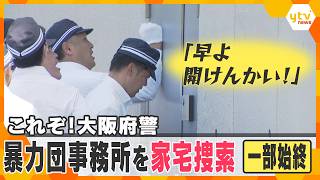
Osaka Prefectural Police searched an office linked to the Yamaguchi-gumi crime syndicate in Toyohashi, Aichi Prefecture, on July 29 as part of an investigation into suspected receipt of money obtained through special fraud.

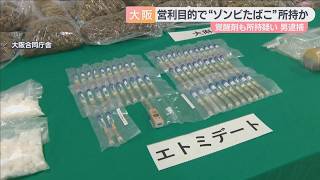
Authorities in Kyoto and Osaka have arrested three men in separate drug cases involving so-called zombie cigarettes containing the designated drug etomidate, as investigators step up efforts against the illegal trade in the Kansai region.

Raccoons are increasingly invading homes across Japan, damaging roofs and wiring, contaminating buildings with large amounts of urine and feces, and raising concerns over agriculture, native wildlife and the spread of disease as their population continues to expand.

Japan marked August 8, 2026, with a wave of weddings, special discounts and commemorative events as the date produced a rare alignment of three eights - the eighth day of the eighth month in Reiwa 8 - a combination regarded as especially auspicious because the character for eight is traditionally associated with expanding prosperity.

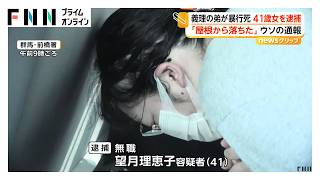
A 41-year-old woman has been arrested on suspicion of fatally assaulting her brother-in-law at her home in Shibukawa, Gunma Prefecture, after allegedly telling emergency services that he had fallen from a roof.

The Emperor and his family are spending time at the Nasu Imperial Villa in Tochigi Prefecture as the retreat marks 100 years since its establishment, with the visit coming as debate in the Diet over revisions related to the Imperial House Law enters a critical stage.

Two kappa statues that served as symbols of a bridge in Ebina, Kanagawa Prefecture, have been stolen after being cherished by local residents for 34 years, with police investigating whether the thieves targeted the sculptures for their copper.

A 63-year-old man from Shizuoka Prefecture has been arrested on suspicion of selling 10 stolen metal plaques, including nameplates bearing the names of bridges, to a scrap metal dealer in Ichinomiya, Aichi Prefecture.