News On Japan

Tokyo exchange failure shows why Japan's own stock is falling

Oct 05, 2020 (Nikkei) - The real winner from the Tokyo Stock Exchange outage last week? Bitcoin!

When Asia's biggest equity bourse suddenly has the same transactional opacity and questionable security as the famously shadowy asset class, investors almost have to figure, why not place a bet? Ethereum, Binance Coin, Zcash, TSE-listed shares -- what is the difference when trading can be halted so suspiciously?

Yes, some hyperbole here. But it is quite a feat to generate simultaneous trending in cyberspace with Monty Python ("It is just a glitch!"), Trading Places ("Turn those machines back on!), The Simpsons (D'oh!) and The Matrix ("Woah!").

Still, this bull market in unfortunate metaphors is well earned.

The glacial and murky way TSE officials explained how one of the world's top exchanges had failed the same day the Bank of Japan released major data was a terrible look for a Tokyo trying to restore its status as a global financial center. The best Yoshihide Suga's new government, one pledging a financial Big Bang, could muster was a perfunctory "it is regrettable."

Chief Cabinet Secretary Katsunobu Kato attends a press conference on Oct. 1: the best Suga's new government could muster was a perfunctory "it is regrettable." (Photo by Uichiro Kasai)

What is really regrettable is how Japan has squandered the past eight years of supposed reform under Shinzo Abe. Or, depending on your perspective, the past 15 years.

Investors could not help but channel 2006, when Tokyo exchange computers got overloaded, halting trading. That came just months after a four-and-a-half-hour shutdown in 2005 thanks to a botched system upgrade.

Onward and upward, was the zeitgeist. In January 2010, the exchange shifted to Fujitsu's Arrowhead system. That did not keep a 2012 computer snafu from stopping dealing in nearly 250 securities, or a system crash that knocked out derivatives trading later in the year.

The name of Fujitsu's matrix would prove ironic as Abe came to power promising to fire three policy arrows at Japan's chronic deflation and dysfunction. One of the few to hit the target was tightened corporate governance. That matters little, though, if the most prominent expression of Japan Inc.'s health -- stock indexes -- can still fail in spectacular fashion in the year 2020.

Nor does the "was-TSE-hacked" chatter in financial circles help. Context and timing are important parts of this tale. The context is that earlier this year New Zealand's exchange was halted by cyberattacks. The timing could not be worse with Japan mired in recession.

BOJ Governor Haruhiko Kuroda cannot be happy either. Because Abe's arrows went off course, the onus is now on the central bank to boost growth and confidence. Its primary avatar was stocks, with Kuroda setting the public mood via epic purchases of exchange-traded funds.

News On Japan
POPULAR NEWS

Airports and railway stations across Japan were crowded on September 23 as travelers returned from their hometowns and holiday destinations on the final day of the five-day Silver Week holiday, with international flight arrivals reaching their peak and many afternoon Shinkansen services fully booked.

Extensive railway disruption continued across Chiba Prefecture on September 23 as JR East warned that several lines damaged by Typhoon No. 25 would remain closed beyond the Silver Week holiday, even as flights returned toward normal, all typhoon-related expressway closures were lifted and some highway bus services resumed. The storm has left widespread damage to railway tracks and embankments, with flooding, landslides and fallen trees complicating restoration work.

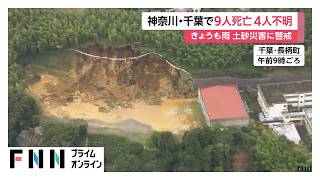
The death toll from Typhoon No. 25 rose to nine on September 23, with four people still missing in Chiba and Kanagawa prefectures, as renewed rainfall raised fears of further landslides in communities devastated by the storm.

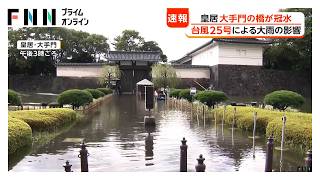
The road leading to Otemon Gate at Tokyo's Imperial Palace was flooded on September 22 after heavy rain from a typhoon caused water in the surrounding moat to overflow.

Japan came within two runs of producing one of international cricket's biggest upsets on September 22, pushing reigning T20 world champion India to the final ball before losing a rain-shortened match at Sano International Cricket Ground in Tochigi Prefecture.

MEDIA CHANNELS
         

MORE Society NEWS

An emu that escaped from the home of a traveling zoo operator was captured after wandering through a residential neighborhood in Moriyama, Shiga Prefecture, on September 23, following a police report from a resident who mistook the bird for an ostrich.

People aged 65 and older accounted for a record 29.6% of Japan's population in 2026, the highest proportion among major countries worldwide, while the number of elderly people in employment also reached an all-time high as Japan marked Respect for the Aged Day on September 21.

Emperor Naruhito and Empress Masako visited Ghibli Park in Aichi Prefecture on September 20, touring exhibits that recreate famous scenes from Studio Ghibli films and posing for a photograph with the character No-Face.

Police in Kanagawa Prefecture have rearrested four teenagers on suspicion of murdering a 17-year-old high school student who died after being assaulted in Sagamihara in August.

Drinking parties remain a lively part of social life in Kansai even as younger generations increasingly turn away from alcohol and izakaya bankruptcies rise at a record pace, with customers describing the gatherings less as occasions to drink heavily and more as opportunities to maintain friendships, meet new people and build connections across generations.

Anonymous and fluid criminal groups known in Japan as "tokuryu" are adopting increasingly elaborate tactics, including a scheme in which elderly victims are persuaded to hide cash inside refrigerators before thieves enter their homes, as authorities struggle to combat networks whose members often have no direct contact with one another.

A luxury mansion in Bangkok described as resembling a palace was being used as a base for a specialized fraud operation targeting Japanese people, with Thai authorities detaining 14 people, including four Japanese men.

Copper roofing has been stripped from Shinano-no-miya Shrine in Oshika Village, Nagano Prefecture, leaving the wooden structure exposed in the latest of a series of similar thefts reported at shrines across the prefecture.