News On Japan

Japan's new leader goes missing in action

Nov 09, 2020 (Nikkei) - In the COVID-19 era, billions of people around the world wonder what leaders are doing to contain the economic fallout. For the Japanese, though, it is less about what than where.

Questions concerning the whereabouts of newish Prime Minister Yoshihide Suga abound as Asia's No. 2 economy staggers toward 2021. Early talk of newly assertive stimulus moves went quiet. So has chatter about his 54-day-old government putting some quick and notable reform or diplomatic wins on the scoreboard.

One common explanation for Suga's disappearing act is a scandal grabbing national headlines. Controversy over Suga barring a number of professors from the Science Council of Japan will sound insignificant to those abroad. It reminds voters, though, of the myriad scandals under his predecessor Shinzo Abe, who Suga served for nearly eight years as chief cabinet secretary.

There are two important takeaways from this low-visibility start. First, Suga is likely to be a short-timer, just like the six governments that came and went in a blur before Abe's 2012-2020 stint. Second, and most importantly, Suga seems destined to get little done to reorder an aging, rigid economy.

Granted, it is still early days. But Suga's priorities so far are as incremental as they are vague. Talk of reducing mobile-phone bills, digitalizing the government, support for fertility treatments and being carbon-neutral by 2050 sounds nice.

These plans lack audacity, though, as China invests trillions in dominating virtually every economic sector by 2025. And as developing Indonesia beats Japan in the tech unicorn race. Suga's pledges to continue a structural reform program Abe that could not get done with 2,821 days in power do not sound very promising either.

If Suga is going to shift the economy into higher gear, there is not a moment to waste. Here are three ways Suganomics can avoid being the punchline Abenomics has become.

One: telegraph a big bang, and fast. Suga missed an early and obvious opportunity by sticking with 80-year-old Taro Aso as finance minister. The same with keeping the rather low energy Hiroshige Seko as minister of economy, trade and industry. Naming a woman to one of these key posts -- something Abe would not do -- might have signaled change is coming to patriarchy.

Even so, Suga should empower his team to present a timeline for expedited moves to loosen labor markets, reduce bureaucracy, empower women, alter tax incentives away from giant exporters and revive the innovative spirit that China's Xi Jinping is working to instill in the 1.4 billion-person economy next door.

This cannot be mere talk. There must be clear and ambitious timelines for regulators and lawmakers to shake up Japan Inc. Since 2012, Tokyo has relied on stimulus sugar highs, while promising epochal change that never arrived. To beat this reformists-who-cried-wolf rap, Suga must roll up his sleeves and go big.

News On Japan
POPULAR NEWS

Airports and railway stations across Japan were crowded on September 23 as travelers returned from their hometowns and holiday destinations on the final day of the five-day Silver Week holiday, with international flight arrivals reaching their peak and many afternoon Shinkansen services fully booked.

Extensive railway disruption continued across Chiba Prefecture on September 23 as JR East warned that several lines damaged by Typhoon No. 25 would remain closed beyond the Silver Week holiday, even as flights returned toward normal, all typhoon-related expressway closures were lifted and some highway bus services resumed. The storm has left widespread damage to railway tracks and embankments, with flooding, landslides and fallen trees complicating restoration work.

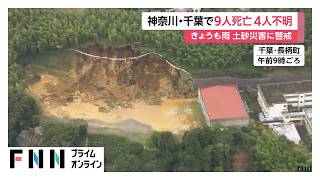
The death toll from Typhoon No. 25 rose to nine on September 23, with four people still missing in Chiba and Kanagawa prefectures, as renewed rainfall raised fears of further landslides in communities devastated by the storm.

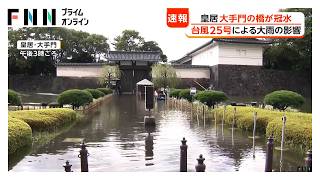
The road leading to Otemon Gate at Tokyo's Imperial Palace was flooded on September 22 after heavy rain from a typhoon caused water in the surrounding moat to overflow.

Japan came within two runs of producing one of international cricket's biggest upsets on September 22, pushing reigning T20 world champion India to the final ball before losing a rain-shortened match at Sano International Cricket Ground in Tochigi Prefecture.

MEDIA CHANNELS
         

MORE Society NEWS

An emu that escaped from the home of a traveling zoo operator was captured after wandering through a residential neighborhood in Moriyama, Shiga Prefecture, on September 23, following a police report from a resident who mistook the bird for an ostrich.

People aged 65 and older accounted for a record 29.6% of Japan's population in 2026, the highest proportion among major countries worldwide, while the number of elderly people in employment also reached an all-time high as Japan marked Respect for the Aged Day on September 21.

Emperor Naruhito and Empress Masako visited Ghibli Park in Aichi Prefecture on September 20, touring exhibits that recreate famous scenes from Studio Ghibli films and posing for a photograph with the character No-Face.

Police in Kanagawa Prefecture have rearrested four teenagers on suspicion of murdering a 17-year-old high school student who died after being assaulted in Sagamihara in August.

Drinking parties remain a lively part of social life in Kansai even as younger generations increasingly turn away from alcohol and izakaya bankruptcies rise at a record pace, with customers describing the gatherings less as occasions to drink heavily and more as opportunities to maintain friendships, meet new people and build connections across generations.

Anonymous and fluid criminal groups known in Japan as "tokuryu" are adopting increasingly elaborate tactics, including a scheme in which elderly victims are persuaded to hide cash inside refrigerators before thieves enter their homes, as authorities struggle to combat networks whose members often have no direct contact with one another.

A luxury mansion in Bangkok described as resembling a palace was being used as a base for a specialized fraud operation targeting Japanese people, with Thai authorities detaining 14 people, including four Japanese men.

Copper roofing has been stripped from Shinano-no-miya Shrine in Oshika Village, Nagano Prefecture, leaving the wooden structure exposed in the latest of a series of similar thefts reported at shrines across the prefecture.