News On Japan

Tokyo's restaurateurs rail against alcohol ban as Covid measures bite

May 19, 2021 (theguardian.com) - Avivid rainbow heralds the arrival of dusk in Tokyo, but the fabled promise of a pot of gold must seem like a cruel joke to restaurateurs in Shimbashi, where office blocks stand in happy proximity to hundreds of watering holes.

In pre-coronavirus days, nightfall would be the cue for the neighbourhood’s neon lights to flicker into action and for touts armed with laminated menus to beckon office workers inside with promises of cheap food and drink.

But as Tokyo begins the fourth week of its latest coronavirus state of emergency, the usual post-work bonhomie that spills out on to Shimbashi’s narrow backstreets has been replaced by anger and despondency.

“Take a look … it’s empty,” says Yasuko Matsui, the owner of a small restaurant serving Nagasaki-style noodles. “We’re not allowed to serve alcohol, so no one is interested in eating out. Imagine going to a pub or restaurant where you can’t even order a drink.”

A ban on alcohol is one of several restrictions Tokyo’s eateries have been told to observe as the city attempts to arrest a fourth wave of Covid-19 infections, two months before it is due to host the Olympic Games. Even those that switch to serving only soft drinks must close at 8pm. As an incentive, the government is offering daily subsidies of between Y40,000 and Y200,000 depending on the establishment’s size, along with the threat of a Y300,000 fine for noncompliance.

Even alfresco drinking is discouraged, with burly men in hi-vis jackets and baseball caps positioned on street corners to deter “displaced” carousers from congregating in a nearby park.

While sales at fast-food chains have grown during the pandemic thanks to higher demand for takeaways, those at bars and izakayas, a type of informal bar that serves drinks and snacks, plunged by almost 40% in March compared with the same month last year, according to the Japan Foodservice Association.

A report by Tokyo Shoko Research, a corporate analysis firm, says 842 restaurants nationwide filed for bankruptcy in 2020, up 5.3% from a year earlier. But it is at smaller izakaya pubs – a fixture of Japanese social and cultural life – where the virus is causing most damage. In the year through to the end of March, 175 went out of business – an annual rise of 17%, it said.

News On Japan
POPULAR NEWS

Airports and railway stations across Japan were crowded on September 23 as travelers returned from their hometowns and holiday destinations on the final day of the five-day Silver Week holiday, with international flight arrivals reaching their peak and many afternoon Shinkansen services fully booked.

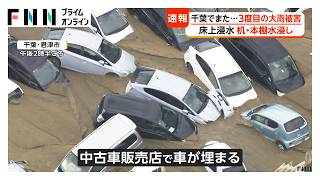
Rail services across Chiba Prefecture remained severely disrupted on the morning of September 23, three days after Typhoon No. 25 brought torrential rain to eastern Japan, with extensive suspensions on the Uchibo, Sotobo, Sobu Main and Narita lines expected to continue throughout the final day of the Silver Week holiday. Although some services have resumed and flights at Tokyo's major airports are recovering, damage to railway tracks and embankments is preventing a return to normal operations in several areas.

Typhoon No. 25 has left seven people dead and five missing in Chiba and Kanagawa prefectures, with rescue operations continuing on September 23 as the extent of devastating landslides and flooding across the Kanto region becomes clearer, while widespread power outages, disrupted rail services and submerged neighborhoods hamper recovery efforts.

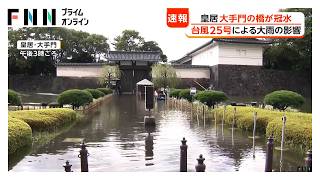
The road leading to Otemon Gate at Tokyo's Imperial Palace was flooded on September 22 after heavy rain from a typhoon caused water in the surrounding moat to overflow.

Japan came within two runs of producing one of international cricket's biggest upsets on September 22, pushing reigning T20 world champion India to the final ball before losing a rain-shortened match at Sano International Cricket Ground in Tochigi Prefecture.

MEDIA CHANNELS
         

MORE Society NEWS

An emu that escaped from the home of a traveling zoo operator was captured after wandering through a residential neighborhood in Moriyama, Shiga Prefecture, on September 23, following a police report from a resident who mistook the bird for an ostrich.

People aged 65 and older accounted for a record 29.6% of Japan's population in 2026, the highest proportion among major countries worldwide, while the number of elderly people in employment also reached an all-time high as Japan marked Respect for the Aged Day on September 21.

Emperor Naruhito and Empress Masako visited Ghibli Park in Aichi Prefecture on September 20, touring exhibits that recreate famous scenes from Studio Ghibli films and posing for a photograph with the character No-Face.

Police in Kanagawa Prefecture have rearrested four teenagers on suspicion of murdering a 17-year-old high school student who died after being assaulted in Sagamihara in August.

Drinking parties remain a lively part of social life in Kansai even as younger generations increasingly turn away from alcohol and izakaya bankruptcies rise at a record pace, with customers describing the gatherings less as occasions to drink heavily and more as opportunities to maintain friendships, meet new people and build connections across generations.

Anonymous and fluid criminal groups known in Japan as "tokuryu" are adopting increasingly elaborate tactics, including a scheme in which elderly victims are persuaded to hide cash inside refrigerators before thieves enter their homes, as authorities struggle to combat networks whose members often have no direct contact with one another.

A luxury mansion in Bangkok described as resembling a palace was being used as a base for a specialized fraud operation targeting Japanese people, with Thai authorities detaining 14 people, including four Japanese men.

Copper roofing has been stripped from Shinano-no-miya Shrine in Oshika Village, Nagano Prefecture, leaving the wooden structure exposed in the latest of a series of similar thefts reported at shrines across the prefecture.