News On Japan

Transport to Tokyo's pandemic Olympics proves to be logistics nightmare

Jul 05, 2021 (Japan Times) - Ensuring 11,000 athletes from more than 200 countries descend on one city over 16 days is a logistical challenge at the best of times.

Now consider doing it during the tail end of a pandemic that’s upended airlines’ flight schedules, closed international borders and made any movement without vaccinations and multiple COVID-19 tests impossible.

For hundreds of Olympic organizing officials eyeing the start of the Tokyo Games in just 18 days, it’s a major headache. Forget about medal tallies and post-race parties (to the limited extent they’re permitted at all), just getting to Japan on time is half the battle.

For example, take Fiji, a tiny South Pacific island nation best known for its pristine beaches and tropical seas. The Fijian men’s and women’s Rugby Sevens — plus a handful of swimmers, sailors and other athletes — aren’t flying coach so much as cargo. From Nadi to Narita, Team Fiji will fly on a service that generally transports express mail and chilled seafood like tuna and mahi mahi.

“Travel is definitely a major challenge,” said Lorraine Mar, head of the Fiji Association of Sports and National Olympic Committee. “Fiji Airways isn’t doing any commercial flights at the current time so we’re going up on a cargo run.”

Mar said Fiji was trying to coordinate with other South Pacific nations to “do a milk run around the other islands to to collect everyone, but it wasn’t commercially viable.”

Papua New Guinea’s team plans to fly to Brisbane and then onto Tokyo while Samoa’s squad will likely go first to Auckland and then fly Air New Zealand, she said.


News On Japan
POPULAR NEWS

Japanese Prime Minister Sanae Takaichi and US President Donald Trump held talks at United Nations headquarters in New York in the early hours of September 23 Japan time, demonstrating the strength of the Japan-US alliance and confirming close cooperation on China ahead of an upcoming US-China summit.

Rail services across Chiba Prefecture remained severely disrupted on the morning of September 23, three days after Typhoon No. 25 brought torrential rain to eastern Japan, with extensive suspensions on the Uchibo, Sotobo, Sobu Main and Narita lines expected to continue throughout the final day of the Silver Week holiday. Although some services have resumed and flights at Tokyo's major airports are recovering, damage to railway tracks and embankments is preventing a return to normal operations in several areas.

Typhoon No. 25 has left seven people dead and five missing in Chiba and Kanagawa prefectures, with rescue operations continuing on September 23 as the extent of devastating landslides and flooding across the Kanto region becomes clearer, while widespread power outages, disrupted rail services and submerged neighborhoods hamper recovery efforts.

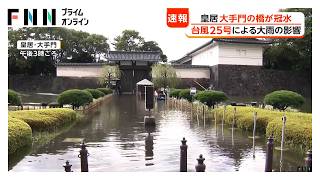
The road leading to Otemon Gate at Tokyo's Imperial Palace was flooded on September 22 after heavy rain from a typhoon caused water in the surrounding moat to overflow.

Japan came within two runs of producing one of international cricket's biggest upsets on September 22, pushing reigning T20 world champion India to the final ball before losing a rain-shortened match at Sano International Cricket Ground in Tochigi Prefecture.

MEDIA CHANNELS
         

MORE Society NEWS

People aged 65 and older accounted for a record 29.6% of Japan's population in 2026, the highest proportion among major countries worldwide, while the number of elderly people in employment also reached an all-time high as Japan marked Respect for the Aged Day on September 21.

Emperor Naruhito and Empress Masako visited Ghibli Park in Aichi Prefecture on September 20, touring exhibits that recreate famous scenes from Studio Ghibli films and posing for a photograph with the character No-Face.

Police in Kanagawa Prefecture have rearrested four teenagers on suspicion of murdering a 17-year-old high school student who died after being assaulted in Sagamihara in August.

Drinking parties remain a lively part of social life in Kansai even as younger generations increasingly turn away from alcohol and izakaya bankruptcies rise at a record pace, with customers describing the gatherings less as occasions to drink heavily and more as opportunities to maintain friendships, meet new people and build connections across generations.

Anonymous and fluid criminal groups known in Japan as "tokuryu" are adopting increasingly elaborate tactics, including a scheme in which elderly victims are persuaded to hide cash inside refrigerators before thieves enter their homes, as authorities struggle to combat networks whose members often have no direct contact with one another.

A luxury mansion in Bangkok described as resembling a palace was being used as a base for a specialized fraud operation targeting Japanese people, with Thai authorities detaining 14 people, including four Japanese men.

Copper roofing has been stripped from Shinano-no-miya Shrine in Oshika Village, Nagano Prefecture, leaving the wooden structure exposed in the latest of a series of similar thefts reported at shrines across the prefecture.

A popular Tokyo nightclub hostess and influencer known as Yamatorino, who says she generated more than 200 million yen in sales during a single month, has been arrested on suspicion of possessing cocaine with her boyfriend at their home in Roppongi.