News On Japan

Japanese sponsors poured $3 billion into the Tokyo Olympics. What will they get in return?

Jul 23, 2021 (fortune.com) - Japanese corporate sponsors of the Tokyo Olympics have poured $3 billion into the Games, the largest-ever amount contributed by domestic companies.

But even before Friday's Opening Ceremony, firms began scrapping advertisements and canceling plans for officials to attend the COVID-era Games.

On Monday, Toyota Motors, whose multi-year contract with the Olympics is valued at almost $1 billion, announced it won’t air Olympic-themed television ads in Japan. It also said company president Akio Toyoda will skip the Opening Ceremony, despite the spectator-less event being open for VIPs like company executives and foreign dignitaries.

Toyota chief communications officer Jun Nagata told local media the 84-year-old carmaker scrapped its Olympic campaign in deference to the Games' unpopularity among Japanese consumers. Toyota will continue to support the Games and athletes via other means, such as providing electric vehicles for transportation during Tokyo 2020; its Olympic TV ads will continue to run in other countries.

Other Japanese companies are following Toyota's lead. The day after the carmaker's announcement, sponsors Fujitsu, NEC, and Nippon Telegraph all said they wouldn’t send company officials to the Games. Executives from other sponsors Panasonic, Nippon Life Insurance, Sumitomi Mitsui Financial Group, Meiji Holdings and Asahi Group won’t be in attendance either.

Subscribe to Eastworld for weekly insight on what’s dominating business in Asia, delivered free to your inbox.

“Pre-pandemic, Tokyo 2020 was extolled as a means to promote ‘brand Japan’ and to regain the country’s status as a global technology leader," says Ben Ascione, assistant professor at the Graduate School of Asia-Pacific Studies at Waseda University in Tokyo.

But now the Games have become a "liability for domestic sponsors who are seeking to distance themselves from the event. [Companies have] decided that the potential advertising benefits are outweighed by concerns of reputational damage," he says.

At the top of the Olympic sponsorship pyramid is the 'worldwide' tier: multi-year contracts that span multiple Olympic Games. Only two Japanese firms, Toyota and Panasonic, are on this list of thirteen companies. Toyota's contract for instance, is valued at nearly $1 billion and extends to 2025. Some say that long-term sponsors could still stand to gain. Davis says that reimbursements are unlikely to be written into contracts, whereas "rolling the investment into support for the next Games" is more probable.

But the majority of the domestic firms that have plowed money into the Tokyo Games are 'gold' sponsors, meaning their Olympic affiliation only applies to the 2020 (now 2021) event. An oft-cited price tag for these contracts is at least $100 million. While the terms of each sponsorship vary, a basic package would include association with the Olympic brand, says Michael Payne, chairman and CEO of Payne Media Strategies, a sports consulting firm. This means brands can use the word 'Olympics' and the logos and imagery synonymous with the Games for physical and digital advertisements and social media marketing campaigns. Sponsors are also allotted a certain number of 'hospitality' tickets, to be used for ticket giveaways and to entertain clients. Extra add-ons include options like TV spots, which gold sponsors like Nippon Life Insurance have opted for.


News On Japan
POPULAR NEWS

Japanese Prime Minister Sanae Takaichi and US President Donald Trump held talks at United Nations headquarters in New York in the early hours of September 23 Japan time, demonstrating the strength of the Japan-US alliance and confirming close cooperation on China ahead of an upcoming US-China summit.

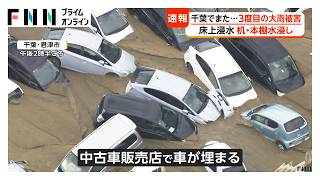
Rail services across Chiba Prefecture remained severely disrupted on the morning of September 23, three days after Typhoon No. 25 brought torrential rain to eastern Japan, with extensive suspensions on the Uchibo, Sotobo, Sobu Main and Narita lines expected to continue throughout the final day of the Silver Week holiday. Although some services have resumed and flights at Tokyo's major airports are recovering, damage to railway tracks and embankments is preventing a return to normal operations in several areas.

Typhoon No. 25 has left seven people dead and five missing in Chiba and Kanagawa prefectures, with rescue operations continuing on September 23 as the extent of devastating landslides and flooding across the Kanto region becomes clearer, while widespread power outages, disrupted rail services and submerged neighborhoods hamper recovery efforts.

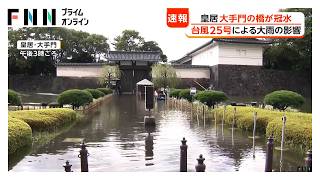
The road leading to Otemon Gate at Tokyo's Imperial Palace was flooded on September 22 after heavy rain from a typhoon caused water in the surrounding moat to overflow.

Japan came within two runs of producing one of international cricket's biggest upsets on September 22, pushing reigning T20 world champion India to the final ball before losing a rain-shortened match at Sano International Cricket Ground in Tochigi Prefecture.

MEDIA CHANNELS
         

MORE Society NEWS

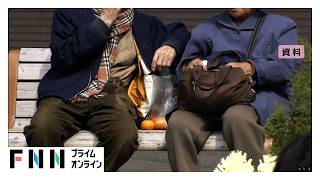
People aged 65 and older accounted for a record 29.6% of Japan's population in 2026, the highest proportion among major countries worldwide, while the number of elderly people in employment also reached an all-time high as Japan marked Respect for the Aged Day on September 21.

Emperor Naruhito and Empress Masako visited Ghibli Park in Aichi Prefecture on September 20, touring exhibits that recreate famous scenes from Studio Ghibli films and posing for a photograph with the character No-Face.

Police in Kanagawa Prefecture have rearrested four teenagers on suspicion of murdering a 17-year-old high school student who died after being assaulted in Sagamihara in August.

Drinking parties remain a lively part of social life in Kansai even as younger generations increasingly turn away from alcohol and izakaya bankruptcies rise at a record pace, with customers describing the gatherings less as occasions to drink heavily and more as opportunities to maintain friendships, meet new people and build connections across generations.

Anonymous and fluid criminal groups known in Japan as "tokuryu" are adopting increasingly elaborate tactics, including a scheme in which elderly victims are persuaded to hide cash inside refrigerators before thieves enter their homes, as authorities struggle to combat networks whose members often have no direct contact with one another.

A luxury mansion in Bangkok described as resembling a palace was being used as a base for a specialized fraud operation targeting Japanese people, with Thai authorities detaining 14 people, including four Japanese men.

Copper roofing has been stripped from Shinano-no-miya Shrine in Oshika Village, Nagano Prefecture, leaving the wooden structure exposed in the latest of a series of similar thefts reported at shrines across the prefecture.

A popular Tokyo nightclub hostess and influencer known as Yamatorino, who says she generated more than 200 million yen in sales during a single month, has been arrested on suspicion of possessing cocaine with her boyfriend at their home in Roppongi.