News On Japan

Japan study shows women more likely to get skin rash from Moderna shot

Jun 02, 2022 (Japan Today) - A study in Japan found that women were significantly more likely than men to develop rash-like side effects after a first dose of Moderna Inc's COVID-19 vaccine.

The study of 5,893 participants between May and November last year showed that 22.4% of women developed delayed skin reactions after the first shot, compared to 5.1% of men.

The symptoms were mild and not considered a contraindication of the mRNA-based vaccine, according to the June 1 report in the Journal of the American Medical Association.

Delayed skin reactions, happening on or after six days from the shot, have been also reported as a rare adverse event in the United States and Europe, according to the authors from Tokyo's Self-Defense Forces Central Hospital.

But the incidences appear to be higher in Japan, they wrote, perhaps because of a higher awareness of such symptoms in the country.


News On Japan
POPULAR NEWS

Japanese Prime Minister Sanae Takaichi and US President Donald Trump held talks at United Nations headquarters in New York in the early hours of September 23 Japan time, demonstrating the strength of the Japan-US alliance and confirming close cooperation on China ahead of an upcoming US-China summit.

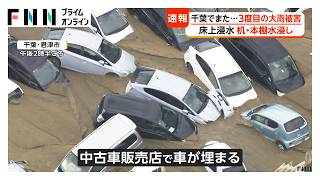
Rail services across Chiba Prefecture remained severely disrupted on the morning of September 23, three days after Typhoon No. 25 brought torrential rain to eastern Japan, with extensive suspensions on the Uchibo, Sotobo, Sobu Main and Narita lines expected to continue throughout the final day of the Silver Week holiday. Although some services have resumed and flights at Tokyo's major airports are recovering, damage to railway tracks and embankments is preventing a return to normal operations in several areas.

Typhoon No. 25 has left seven people dead and five missing in Chiba and Kanagawa prefectures, with rescue operations continuing on September 23 as the extent of devastating landslides and flooding across the Kanto region becomes clearer, while widespread power outages, disrupted rail services and submerged neighborhoods hamper recovery efforts.

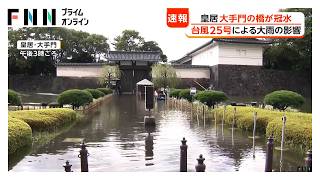
The road leading to Otemon Gate at Tokyo's Imperial Palace was flooded on September 22 after heavy rain from a typhoon caused water in the surrounding moat to overflow.

Japan came within two runs of producing one of international cricket's biggest upsets on September 22, pushing reigning T20 world champion India to the final ball before losing a rain-shortened match at Sano International Cricket Ground in Tochigi Prefecture.

MEDIA CHANNELS
         

MORE Sci-Tech NEWS

A rare pod of around 50 dolphins was spotted swimming through the Seto Inland Sea off Ozu, Ehime Prefecture, with dozens of dorsal fins repeatedly breaking the surface as the animals moved together.

Tesla unveiled its Cybercab in Japan for the first time on September 11, showcasing an AI-powered autonomous taxi designed without a steering wheel or pedals.

Large volumes of floodwater poured into the Metropolitan Area Outer Underground Discharge Channel in Kasukabe, Saitama Prefecture, following heavy rain on September 7, prompting the massive underground flood-control facility known as the "Underground Temple" to go into operation.

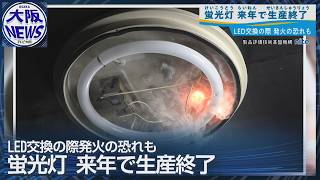
Fluorescent lamps that have illuminated Japanese homes and workplaces for decades are approaching the end of production, with Panasonic preparing to wind down a business it has operated since 1951 while experts warn that incorrectly replacing some fixtures with LEDs could create a fire risk.

Osaka-based spray nozzle maker IKEUCHI is expanding applications for its proprietary "Dry Fog," an ultra-fine mist that can cool, humidify and create visual effects without leaving surfaces wet, with the technology now being used in factories, livestock farming, crop cultivation and tourist attractions in Japan and overseas.

Japanese companies are moving closer to commercializing photonics-electronics convergence technology that replaces part of conventional electrical data transmission with optical signals, potentially allowing huge volumes of data to move with lower latency while sharply reducing power consumption as artificial intelligence drives rapid growth in electricity demand from data centers.

A new generation of optoelectronic integration technology developed over four decades by Japanese companies is moving closer to commercialization, offering a way to transmit huge volumes of data with low latency while sharply reducing the electricity consumed by data centers as artificial intelligence drives explosive growth in computing demand.

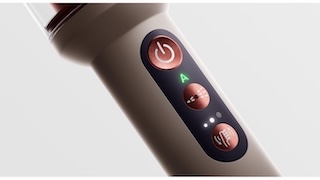
Dyson CameraJet™ turns the smart toothbrush into an active sensing product, making useful feedback and clear privacy design part of the same engineering brief.