News On Japan

Sushi shortage: Japan is facing a crisis as restaurants grapple with supply issues and rising costs

Aug 02, 2022 (businessinsider.com) - Sushi, a standard, cheaper option on the menu in Japanese restaurants, is facing a crisis in the country. The Russia-Ukraine war, rising costs, and declining freshness have sent food prices soaring.

"There's currently a shortage of salmon, and ikura is in real danger," said Yoshinobu Yoshihashi, a "naka-oroshi," or intermediate wholesaler, at Toyosu Market in Tokyo, the country's largest wholesale market.

The salmon found in Japanese sushi is typically farmed salmon. Conveyor-belt sushi restaurant chains — where the food is served on conveyor belts that customers take for themselves — often use salmon from Norway, the world's largest producer of Atlantic salmon.

But since the end of February, Russia has imposed restrictions on its airspace, which means alternative routes had to be found for flights bringing Norwegian salmon to Japan.

Yoshihashi said the salmon is now flown from Norway to Japan via Dubai, United Arab Emirates.

The longer routes are more expensive and also mean the fish loses its freshness. There are also fewer flights, so supply has dropped. ...continue reading


News On Japan
POPULAR NEWS

Japanese Prime Minister Sanae Takaichi and US President Donald Trump held talks at United Nations headquarters in New York in the early hours of September 23 Japan time, demonstrating the strength of the Japan-US alliance and confirming close cooperation on China ahead of an upcoming US-China summit.

Rail services across Chiba Prefecture remained severely disrupted on the morning of September 23, three days after Typhoon No. 25 brought torrential rain to eastern Japan, with extensive suspensions on the Uchibo, Sotobo, Sobu Main and Narita lines expected to continue throughout the final day of the Silver Week holiday. Although some services have resumed and flights at Tokyo's major airports are recovering, damage to railway tracks and embankments is preventing a return to normal operations in several areas.

Typhoon No. 25 has left seven people dead and five missing in Chiba and Kanagawa prefectures, with rescue operations continuing on September 23 as the extent of devastating landslides and flooding across the Kanto region becomes clearer, while widespread power outages, disrupted rail services and submerged neighborhoods hamper recovery efforts.

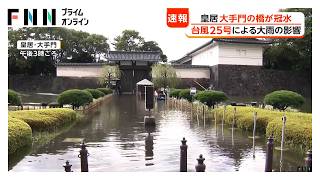
The road leading to Otemon Gate at Tokyo's Imperial Palace was flooded on September 22 after heavy rain from a typhoon caused water in the surrounding moat to overflow.

Japan came within two runs of producing one of international cricket's biggest upsets on September 22, pushing reigning T20 world champion India to the final ball before losing a rain-shortened match at Sano International Cricket Ground in Tochigi Prefecture.

MEDIA CHANNELS
         

MORE Business NEWS

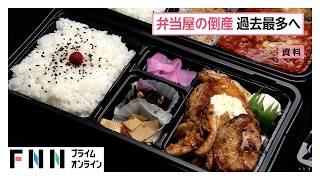
Bankruptcies among Japan's bento shops are surging, with 83 businesses failing in the first eight months of 2026, putting the industry on course to surpass last year's record of 89 as rising ingredient costs and intensifying competition from supermarkets, convenience stores and drugstores squeeze smaller operators.

Tokyo’s stock market was closed on September 21 for Respect for the Aged Day, leaving the Nikkei 225 without a cash close after finishing the previous session at 65,019, while currency and futures markets focused on the yen, the Bank of Japan’s latest rate hike and intervention risks during Japan’s Silver Week holiday.

Japan's first five-day Silver Week holiday in 11 years has put renewed attention on household finances, with persistently high food prices and a weakening yen threatening to erode the benefits of the government's planned consumption tax cut on food.

A list of providers with identical promises turns selection into brute-force sorting. The differences do exist; they are just hidden somewhere other than the homepage.

The Bank of Japan raised its policy rate from 1.0% to 1.25% on September 18, taking borrowing costs to their highest level in 31 years and accelerating the pace of monetary tightening as persistent inflation and concerns over fiscal expansion put upward pressure on interest rates.

The yen strengthened by more than 1 yen against the dollar in a short period late on September 18 after the Bank of Japan conducted a rate check, a step commonly taken in preparation for possible intervention in the foreign exchange market.

Tokyo stocks rose sharply on September 18, with the Nikkei 225 climbing to around 65,350 in afternoon trading after the Bank of Japan raised interest rates to 1.25%, as the yen weakened and investors bought artificial intelligence and semiconductor-related shares.

The Bank of Japan raised its policy interest rate from 1.0% to 1.25% on September 18, lifting borrowing costs to their highest level in 31 years as policymakers moved to contain growing inflation risks, but the yen weakened sharply after the decision as markets focused on two dissenting votes and uncertainty over the pace of further increases.