News On Japan

G7 digital and tech ministers discuss rules for AI

TOKYO - Digital and tech ministers of the Group of Seven nations began their talks on Saturday by focusing on the rapidly spreading use of artificial intelligence and ways to regulate it.

The two-day meeting of the G7 ministers for digitalization and technology is underway in the city of Takasaki, north of Tokyo, with Japan serving as the chair.

Top agenda items are AI and cross-border flows of data.

Japan's Economy, Trade and Industry Minister Nishimura Yasutoshi said the potentially destructive effects of technology such as AI can bring drastic social change, and it is necessary to quickly assess risks and respond to them.

He said that as much as possible, such risks should be addressed without hindering the development and appropriate use of technology.

Recent technological breakthroughs have raised concerns about breaches of privacy and information leaks, along with the misuse of data and the spread of fake information.

European nations appear to be stressing the need for rules, including the regulation of AI, while Japan and others are emphasizing the importance of AI's development and use. ...continue reading

Source: ANNnewsCH

News On Japan
POPULAR NEWS

Typhoon No. 25 has left five people dead and six missing after bringing record rainfall, widespread flooding and landslides to the Kanto region, with Chiba Prefecture suffering its third major flood in just over a month and approximately 42,330 households losing power.

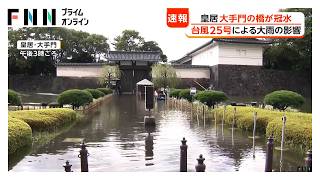
The road leading to Otemon Gate at Tokyo's Imperial Palace was flooded on September 22 after heavy rain from a typhoon caused water in the surrounding moat to overflow.

Japan came within two runs of producing one of international cricket's biggest upsets on September 22, pushing reigning T20 world champion India to the final ball before losing a rain-shortened match at Sano International Cricket Ground in Tochigi Prefecture.

Japan's Asian Games campaign continued across a packed Day 4 schedule on September 22, with the women's badminton team securing another medal, the women's basketball team completing an unbeaten group stage, and Japan adding a historic bronze medal in mixed air rifle shooting as several of the host nation's biggest medal opportunities moved into the evening.

Japan collected another 12 medals on Day 3 of the Aichi-Nagoya Asian Games on September 21, with 17-year-old swimmer Shin Ohashi and karateka Kakeru Nishiyama winning gold, while the host nation also advanced strongly in women's volleyball, baseball, soccer, handball and hockey.

MEDIA CHANNELS
         

MORE Sci-Tech NEWS

A rare pod of around 50 dolphins was spotted swimming through the Seto Inland Sea off Ozu, Ehime Prefecture, with dozens of dorsal fins repeatedly breaking the surface as the animals moved together.

Tesla unveiled its Cybercab in Japan for the first time on September 11, showcasing an AI-powered autonomous taxi designed without a steering wheel or pedals.

Large volumes of floodwater poured into the Metropolitan Area Outer Underground Discharge Channel in Kasukabe, Saitama Prefecture, following heavy rain on September 7, prompting the massive underground flood-control facility known as the "Underground Temple" to go into operation.

Fluorescent lamps that have illuminated Japanese homes and workplaces for decades are approaching the end of production, with Panasonic preparing to wind down a business it has operated since 1951 while experts warn that incorrectly replacing some fixtures with LEDs could create a fire risk.

Osaka-based spray nozzle maker IKEUCHI is expanding applications for its proprietary "Dry Fog," an ultra-fine mist that can cool, humidify and create visual effects without leaving surfaces wet, with the technology now being used in factories, livestock farming, crop cultivation and tourist attractions in Japan and overseas.

Japanese companies are moving closer to commercializing photonics-electronics convergence technology that replaces part of conventional electrical data transmission with optical signals, potentially allowing huge volumes of data to move with lower latency while sharply reducing power consumption as artificial intelligence drives rapid growth in electricity demand from data centers.

A new generation of optoelectronic integration technology developed over four decades by Japanese companies is moving closer to commercialization, offering a way to transmit huge volumes of data with low latency while sharply reducing the electricity consumed by data centers as artificial intelligence drives explosive growth in computing demand.

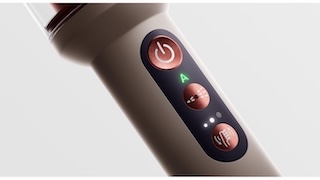
Dyson CameraJet™ turns the smart toothbrush into an active sensing product, making useful feedback and clear privacy design part of the same engineering brief.