News On Japan

What a Typical Japanese Wedding is Really Like

May 21, 2023 (Paolo fromTOKYO) - Japanese weddings consist of two parts - a ceremony where they exchange vows, and a reception followed afterwards.

A typical Japanese wedding ceremony and a Japanese wedding reception can be quite different than western weddings. In Japanese wedding culture there is a dress code. Let me just say it’s typically a lot more strict in Japan as there are countless rules, especially for females. For example, women can’t show their shoulders, knees, toes, wear furs or animal prints. They must wear only nude stocking and not black ones and the list goes on. And when you attend as a family of the bride and groom, you must absolutely follow the rules so they don’t lose face. For friends though, there is some gray area. When you attend a Japanese wedding, you must absolutely bring a wedding gift, which typically, only cold hard cash, called Goshugi. No wedding registries really exist. Japanese don’t even know what that is. In addition, it’s critical to use a special envelop, specifically designed for the wedding gift where the ribbons are made to not be untied. And the amount itself is important. Friends and co-workers are expected to give at least 30,000 yen per person, about $225, while cousins and relatives gift at least 30,000 to 100,000 yen and immediate family members are expected to gift even more.

News On Japan
POPULAR NEWS

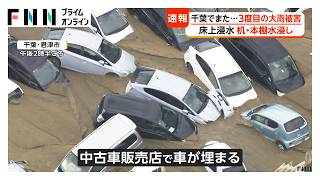
Typhoon No. 25 has left five people dead and six missing after bringing record rainfall, widespread flooding and landslides to the Kanto region, with Chiba Prefecture suffering its third major flood in just over a month and approximately 42,330 households losing power.

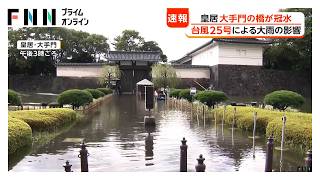
The road leading to Otemon Gate at Tokyo's Imperial Palace was flooded on September 22 after heavy rain from a typhoon caused water in the surrounding moat to overflow.

Japan came within two runs of producing one of international cricket's biggest upsets on September 22, pushing reigning T20 world champion India to the final ball before losing a rain-shortened match at Sano International Cricket Ground in Tochigi Prefecture.

Japan's Asian Games campaign continued across a packed Day 4 schedule on September 22, with the women's badminton team securing another medal, the women's basketball team completing an unbeaten group stage, and Japan adding a historic bronze medal in mixed air rifle shooting as several of the host nation's biggest medal opportunities moved into the evening.

Japan collected another 12 medals on Day 3 of the Aichi-Nagoya Asian Games on September 21, with 17-year-old swimmer Shin Ohashi and karateka Kakeru Nishiyama winning gold, while the host nation also advanced strongly in women's volleyball, baseball, soccer, handball and hockey.

MEDIA CHANNELS
         

MORE Education NEWS

A groundbreaking ceremony was held in Kyoto City on September 15 for Ronald McDonald House Kyoto, a residential facility where children undergoing medical treatment will be able to stay together with their families.

Elementary school students in Fukuoka got a hands-on lesson in the importance of taxes on September 11, lifting a 10-kilogram replica of 100 million yen as part of a class designed to show how public money supports society.

Raccoons are increasingly appearing in urban areas of Japan, including residential neighborhoods near Shin-Osaka Station, raising concerns over disease, attacks on people and agricultural damage that reached about 700 million yen nationwide last year.

Japanese 15-year-olds spend an average of 2.3 hours browsing social media during their weekday free time, the shortest amount among 24 countries surveyed, according to data from the Organization for Economic Cooperation and Development.

Renovation work has begun at a hospital in Izumisano, Osaka Prefecture, as the city prepares to introduce a baby hatch for parents unable to raise their children and a confidential birth system that allows pregnant women to give birth without publicly disclosing their identities.

A disaster prevention experiment has shown how quickly a rain-soaked slope can collapse once visible cracks appear, highlighting the need for people in landslide-prone areas to evacuate before conditions become critical as the risk of disasters remains elevated through early next week.

Nearly 60% of Japanese high school students consider learning about different cultures "very important," the highest proportion among Japan, the United States, China and South Korea, according to a survey released by the National Institution for Youth Education.

The number of elderly people in Japan with no relatives to rely on is projected to rise to 4.48 million by 2050, or roughly one in nine seniors, prompting the government to create a new system under revised social welfare laws to support people with daily needs, hospitalization and arrangements after death.