News On Japan

BMW Japan to recall nearly 170,000 vehicles due to engine defect

TOKYO - The Japanese subsidiary of German automaker BMW has said it will recall nearly 170,000 vehicles due to an engine defect that could cause a fire.

The recall BMW Japan submitted to the transport ministry targets 27 imported models, such as the 320d and the 218d Active Tourer, which were manufactured between June 2012 and December 2022.

The transport ministry says a malfunction in the engine's exhaust gas recirculation system causes soot to accumulate in the intake pipe, and could result in a fire in the worst-case scenario.

There have been 38 reports of trouble, including four fires. No injuries have been reported.

BMW plans to have its dealerships across Japan replace the defective parts for free.

Source: ANNnewsCH

News On Japan
POPULAR NEWS

Typhoon No. 25 has left five people dead and six missing after bringing record rainfall, widespread flooding and landslides to the Kanto region, with Chiba Prefecture suffering its third major flood in just over a month and approximately 42,330 households losing power.

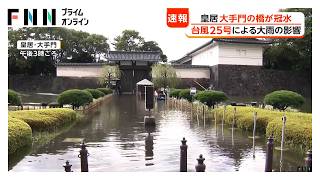
The road leading to Otemon Gate at Tokyo's Imperial Palace was flooded on September 22 after heavy rain from a typhoon caused water in the surrounding moat to overflow.

Japan came within two runs of producing one of international cricket's biggest upsets on September 22, pushing reigning T20 world champion India to the final ball before losing a rain-shortened match at Sano International Cricket Ground in Tochigi Prefecture.

Japan's Asian Games campaign continued across a packed Day 4 schedule on September 22, with the women's badminton team securing another medal, the women's basketball team completing an unbeaten group stage, and Japan adding a historic bronze medal in mixed air rifle shooting as several of the host nation's biggest medal opportunities moved into the evening.

Japan collected another 12 medals on Day 3 of the Aichi-Nagoya Asian Games on September 21, with 17-year-old swimmer Shin Ohashi and karateka Kakeru Nishiyama winning gold, while the host nation also advanced strongly in women's volleyball, baseball, soccer, handball and hockey.

MEDIA CHANNELS
         

MORE Business NEWS

Bankruptcies among Japan's bento shops are surging, with 83 businesses failing in the first eight months of 2026, putting the industry on course to surpass last year's record of 89 as rising ingredient costs and intensifying competition from supermarkets, convenience stores and drugstores squeeze smaller operators.

Tokyo’s stock market was closed on September 21 for Respect for the Aged Day, leaving the Nikkei 225 without a cash close after finishing the previous session at 65,019, while currency and futures markets focused on the yen, the Bank of Japan’s latest rate hike and intervention risks during Japan’s Silver Week holiday.

Japan's first five-day Silver Week holiday in 11 years has put renewed attention on household finances, with persistently high food prices and a weakening yen threatening to erode the benefits of the government's planned consumption tax cut on food.

A list of providers with identical promises turns selection into brute-force sorting. The differences do exist; they are just hidden somewhere other than the homepage.

The Bank of Japan raised its policy rate from 1.0% to 1.25% on September 18, taking borrowing costs to their highest level in 31 years and accelerating the pace of monetary tightening as persistent inflation and concerns over fiscal expansion put upward pressure on interest rates.

The yen strengthened by more than 1 yen against the dollar in a short period late on September 18 after the Bank of Japan conducted a rate check, a step commonly taken in preparation for possible intervention in the foreign exchange market.

Tokyo stocks rose sharply on September 18, with the Nikkei 225 climbing to around 65,350 in afternoon trading after the Bank of Japan raised interest rates to 1.25%, as the yen weakened and investors bought artificial intelligence and semiconductor-related shares.

The Bank of Japan raised its policy interest rate from 1.0% to 1.25% on September 18, lifting borrowing costs to their highest level in 31 years as policymakers moved to contain growing inflation risks, but the yen weakened sharply after the decision as markets focused on two dissenting votes and uncertainty over the pace of further increases.