News On Japan

The Proper Way to Store Eggs: Pointed End Down or Up?

TOKYO - Have you ever wondered whether there's a right way to store eggs, considering one end is pointed and the other is rounded? We asked JA Zen-Noh Eggs, experts in egg safety management, for their advice.

According to Junka Yamada of JA Zen-Noh Eggs' Business Planning Division, eggs sold in supermarkets are usually packed with the pointed end facing down.

When storing eggs, it's recommended to keep the pointed end down and the rounded end up. The reason behind this is that the pointed end has greater strength. The thickness of an eggshell varies depending on the part; the blunt end (rounded side) is thinner, while the sharp end (pointed side) is thicker. Placing the pointed end down helps protect the eggs from impact during distribution.

Eggs increase in strength from the rounded end to the pointed end. This is why, during packing for distribution, the eggs are positioned with the stronger, pointed end down to withstand any impacts.

A person in their 70s expressed surprise, saying, "This is the first time I've heard this." Meanwhile, a person in their 50s commented, "That makes sense. The packaging is designed to be strong so that the eggs don't break when you carry them home."

So, how do most people store their eggs?

A person in their 50s shared, "I keep them in the refrigerator, in the special egg compartment, still in the pack."

As for the recommended storage method by egg professionals:

"Usually, the eggs are already in a pack when you buy them. It's safest to keep them in that pack and store them towards the back of the refrigerator," advises Junka Yamada.

It's best to keep the eggs in the original pack to avoid changing their orientation. Packs are designed to withstand pressure from above, so placing them at the bottom of your shopping bag when you buy them ensures stability.

Source: ANN

News On Japan
POPULAR NEWS

A state of heightened alert remained in place in Utsunomiya, Tochigi Prefecture, on June 9th after a series of bear sightings continued across the city, with authorities warning that as many as two bears may be moving through residential neighborhoods. All 94 municipal elementary and junior high schools remained closed for a second day as officials searched for the animals.

A prolonged eruption at Sakurajima on June 7th blanketed parts of Kagoshima City in volcanic ash, turning roads gray and prompting long lines of vehicles seeking car washes after a plume of smoke rose 1,300 meters above the crater.

A powerful earthquake struck off Mindanao Island in the southern Philippines at 8:38 a.m. (Japan time) on June 8th, generating tsunami waves across parts of the Pacific, causing building collapses and casualties near the epicenter, and prompting the Japan Meteorological Agency to issue tsunami advisories along a wide stretch of Japan's Pacific coastline before lifting all of them at 4:50 p.m.

A clinic director and a former Peruvian staff member have been referred to prosecutors after the man allegedly performed medical procedures without a license, including an external cephalic version—a procedure used to manually turn a baby into the correct position before birth—at an obstetrics and gynecology clinic in Fukuoka City, raising concerns about patient safety and oversight in maternity care.

A large bear was captured on security camera footage running through a shopping arcade in central Utsunomiya, Tochigi Prefecture, in the early hours of June 7th, as authorities stepped up warnings following a series of bear sightings across the city.

MEDIA CHANNELS
         

MORE Food NEWS

Seven-Eleven Okinawa and local dairy farmers have begun working together to find new uses for milk produced during the summer vacation period, when school lunch programs are suspended and demand for fresh milk declines.

The harvest of Nanko plums, a specialty product of Minabe Town in Wakayama Prefecture, Japan's largest ume-producing region, has reached its peak, with farmers busy gathering the highly prized fruit despite another disappointing crop year.

Major meat processor Itoham announced on June 5th that it will launch a new lower-priced product line next month as companies continue to grapple with rising costs driven by inflation and instability in the Middle East.

Did you know that some Domino’s Pizza locations in Japan offer an all-you-can-eat deal? It is a super rare experience available at only a very limited number of stores.

World-renowned musician YOSHIKI is betting on Hokkaido wine as Japan's next global export success story, joining a growing list of international figures and industry leaders who see the island as one of the world's most promising emerging wine regions.

I'll attempt to spend $100 on street food in Kyoto, Japan, but there's one problem: Japan is not really a street food country. Most people prefer to eat indoors, and finding street food is surprisingly difficult almost anywhere in the country—except in places like Nishiki Market. (More Best Ever Food Review Show)

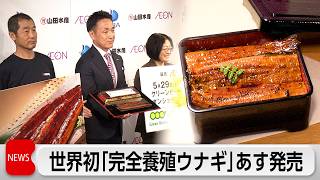
Japan will begin trial sales of the world’s first fully farmed eels for consumers on May 29th, marking a major milestone for the aquaculture industry as domestic eel prices have already fallen by about 40% from a year earlier.

Curry udon, a dish combining the fragrance of spices with one of Kansai's most beloved noodle staples, has developed into a distinctly different style in Kyoto, where a thickened dashi-based curry broth created to withstand the city's harsh winters has become the defining feature of a local comfort food tradition.