TOKYO - Major American IT companies like Microsoft and Oracle have announced substantial investments totalling 4 trillion yen ($26 billion) in data centers in Japan, sparking concerns about digital sovereignty and AI development.
Initiatives such as 'Digital Government' promoted by Japan's Digital Agency are believed to play a role.
With Japanese companies also joining the fray, a future where data centers' power consumption exceeds current production is anticipated. Will this development impede AI advancement in Japan?
Furthermore, under American cloud laws, the reach of criminal investigation extends even to U.S. companies' data centers located within Japan, prompting concerns about the safeguarding of Japanese data sovereignty.
Professor Ichiro Sato from the National Institute of Informatics, offering a comprehensive perspective.
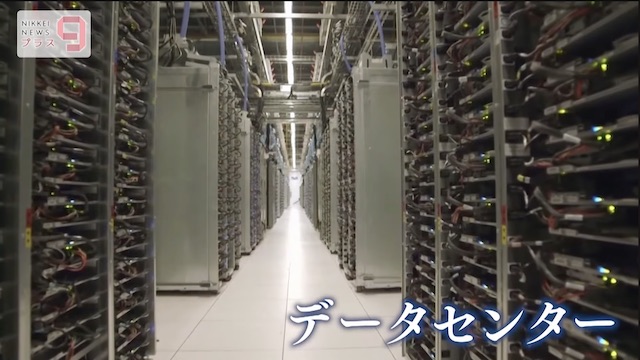
The facilities in the video are data centers for installing servers and networking equipment. Major U.S. IT companies are rapidly establishing these data centers in Japan. Oracle, Amazon Web Services, and Microsoft, familiar names in Japan, are among the giant U.S. IT firms that have announced plans this year to build data centers in Japan. The total investment amounts to a staggering four trillion yen.
Professor Sato, why are these American companies now so intent on establishing data centers in Japan?
There are several reasons, but one is that these data centers are intended for cloud services. Currently, there's a move in Japan to shift administrative systems of central government agencies and local governments to the cloud—a new trend. Because these are government systems, there's a preference to have them located within Japan. Private companies feel the same way. Even if using American clouds, if the data centers are in Japan, Japanese law applies more broadly, so there's a growing demand to keep such facilities in Japan.
The graph here predicts the market size of data centers by country; America and China dominate while Japan appears quite small in comparison. However, by 2028, it's expected to increase by 1.4 times from 2023, reaching a market size of 24 billion dollars, or 3.7 trillion yen.
Professor Sato, do you think there's an oversupply of data centers in Japan, or how do you see the demand?
Globally, data is expected to double every three years, increasing by about 1.3 times annually. Not all this data will be processed, but as data increases, so does the need for computation, and much of this will be done in data centers, so the demand for data centers is expected to rise.
There was a mention earlier about government cloud. How do data centers differ from clouds?
Clouds are realized through multiple data centers. Especially American clouds are automated so that one administrator can manage over ten thousand servers, which is commonplace. In Japan, there's hardly any service that coordinates data centers, and in Japanese data centers, it's more about companies placing and running their own servers, so automation is minimal.
In this context, Japanese companies are also planning to build new data centers. Daiwa House is planning a large-scale facility equipped with power supplies and racks. Sakura Internet can support government and local government cloud services and will eventually support generative AI. SoftBank plans to use data centers for its own AI development and cloud services.
With such moves by Japanese companies to build data centers, how do you view this?
For example, Daiwa House would be quite literally about providing a place for companies to operate their servers. Sakura Internet runs its servers but rents them out to companies. SoftBank is likely focusing on its own use.
Each has its intended purpose, but the fact that American companies are building data centers in Japan indicates significant demand. Is it difficult for Japanese companies to meet this demand?
As Japan digitalizes, the use of servers will increase whether through clouds or local data centers, boosting server demand. This increase might lead to competition between Japanese data centers and those overseas. It's likely to happen, as owning servers or renting cloud services has significant cost implications that vary with usage. Generally, using the same service naturally leads to competition.
So, the situation is not as simple as being universally welcomed. While there are benefits to having data centers in Japan, challenges remain.
Source: テレ東BIZ