TOKYO - Japan is not the only country facing a weakening currency. In a situation that could be described as "dollar dominance," countries in Asia that have previously experienced currency crises are also embarking on currency defense measures. We explore what lies ahead in the face of currency devaluation.
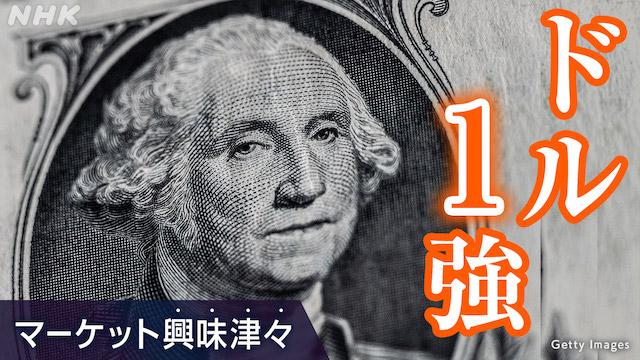
Market Intervention on Thin Trading? "Barrages of attacks have been launched!"
On the afternoon of April 29, 2024, a bank official in Bangkok, Thailand, was surprised. In the morning, the yen had plummeted to 160.24 yen per dollar, but after 1 PM, it swung dramatically in the direction of yen appreciation.
Every time the yen tried to weaken, it was sharply pulled back to strength. At least two large-scale market interventions are believed to have taken place during Asian trading hours and in the evening when the London market opened.
Interventions Suspected to Be Worth 8 Trillion Yen
The market interventions believed to have been carried out by the government and the Bank of Japan on April 29th and the early morning of May 2nd are estimated to be around 8 trillion yen in scale, according to an analysis by financial brokerage firm Toyo Securities Research.
In recent years, interventions involving yen buying and dollar selling have been conducted in 2022, but if the recent movements believed to be interventions are as analyzed, they would be the largest scale of yen buying interventions in a week.
Not Just Japan: Southeast Asian Countries Forced to Defend Their Currencies
Japan is not the only country being forced to respond to rapid currency devaluation. Amidst what is being called "dollar dominance," emerging economies in Asia and elsewhere are also moving to defend their currencies. Indonesia has repeatedly intervened in the market, and Vietnam is also strongly checking its currency depreciation.
Price Hikes at Indonesian Kitchens
Indonesia's repeated market interventions are due to fears of reigniting inflation, which had shown signs of settling down. This is evident in the food stalls of the capital, Jakarta.
During Ramadan, which lasted until early April, the stalls were bustling with people at sunset when eating and drinking were permitted, but food prices soared, and some shops implemented price hikes of up to 40%. Indonesia's inflation rate rose to the 3% range for the first time in seven months in March 2024. Unfavorable weather, coupled with the rise in import prices due to currency devaluation, has spurred food price increases. The rupiah has fallen to its lowest level in four years, and in April, the Bank of Indonesia decided to raise interest rates for the first time in six months, explaining that the aim was "to enhance the stability of the rupiah exchange rate."
Labor Outflows in Malaysia
In Malaysia, currency depreciation is leading to labor outflows. The Malaysian ringgit fell to levels not seen since 1998 in February 2024.
Local media, New Straits Times, reports that in Johor state, which borders Singapore, restaurants are facing labor shortages as more people seek higher wages in Singapore due to the weaker currency.
The Trilemma of International Finance
When discussing currency depreciation and market interventions, a term often heard in the financial world is the "trilemma of international finance."
The trilemma, as defined in dictionaries, refers to a situation where none of the three solutions are acceptable. The "trilemma of international finance" means that it is impossible to simultaneously achieve "free capital movement," "exchange rate stability," and "independence of monetary policy"; one must be sacrificed. Many advanced countries have chosen to sacrifice "exchange rate stability" in favor of maintaining "free capital movement" and "independence of monetary policy," leaving it to market forces. China has given up "free capital movement" to maintain "exchange rate stability" and "independence of monetary policy." In the case of Indonesia, which decided to raise interest rates, and Thailand, which maintains higher interest rates without lowering them, they have chosen "exchange rate stability" while embracing "free capital movement," thus being forced to raise interest rates or maintain high-interest rates, sacrificing "independence of monetary policy."
The Economic Strength Behind the Yen
In Asia, the 1997 Asian financial crisis is still discussed. The crisis, triggered by the sharp fall of the Thai baht, spread not only to Southeast Asia but also to countries like South Korea and Russia.
During the crisis, countries sought support from the IMF and other organizations, and as a result of the austerity fiscal policies and high-interest rate policies imposed by the IMF, the economies suffered significant damage. In Thailand and Indonesia, this even led to a change of government. One of the triggers for the Thai baht's sharp fall was the movement of hedge funds. Hedge funds questioned the economic reality of superficial exchange rate stability under the quasi-fixed dollar peg system and the inflow of short-term funds, which led to the currency crisis.
The yen's depreciation is often explained by the interest rate differential between Japan and the United States, but there is more to consider behind this currency weakness. We are prompted to reflect on the Asian financial crisis and question whether speculators are seeing through Japan's economic growth and declining "earning power." We must also consider whether the prolonged massive monetary easing and the supply of vast amounts of money have devalued the currency, or whether there has been a neglect in growth strategies, competitiveness enhancement, and sustainable fiscal management. It feels like a time to calmly assess what lies behind the yen's depreciation.
Upcoming Focus Next week, on the 15th, the U.S. Consumer Price Index will be released. With the timing of the Federal Reserve's rate cuts in focus, the outcome will be closely watched as it could significantly impact the yen exchange rate.
Source: NHK