News On Japan

How 3D Printing Could Transform Japan's Manufacturing Industry

TOKYO - Yuuji Hara, CEO of Extrabold, is revolutionizing Japan's manufacturing industry with a groundbreaking 3D printer. His goal is to make 3D printing technology accessible to small factories, and development is progressing rapidly.
How 3D Printing Could Transform Japan's Manufacturing Industry

Although the technology of 3D printing was invented by a Japanese person over 40 years ago, it failed to secure a patent, allowing the rest of the world to catch up and surpass Japan. Harboring a deep-seated frustration, Hara is determined to reclaim Japan's pride.

In an in-depth exploration, novelist Jin Mayama delves into Hara’s journey. Known for his economic novels and human dramas, Mayama profiles the trailblazer shaping the future. From houses to rockets, 3D printers can now create a wide range of items, potentially transforming Japanese manufacturing from its core.

Hara is not new to the challenges and intricacies of 3D printing. The technology, which can create complex designs automatically from computer-generated data, represents a significant shift from traditional mass production to bespoke manufacturing. Hara's largest 3D printer in Japan can print objects up to 1.7 meters wide, making it possible to produce automotive parts, prototypes, and even intricate molds for concrete.

In a candid conversation, Hara reveals the potential of his technology. With 3D printers, he envisions a future where personalized manufacturing becomes the norm, allowing for custom-made items tailored to individual needs. This capability is particularly relevant in a society facing an aging population and a shortage of skilled labor.

Despite the challenges, Hara remains optimistic. He believes that 3D printing will play a crucial role in reviving Japan's manufacturing industry, providing innovative solutions to long-standing problems. Through his work, Hara hopes to demonstrate that individualized, high-quality production is not only possible but also essential for the future.

As Mayama concludes his profile, it is clear that Hara’s vision for 3D printing extends beyond mere technological advancement. It is about reimagining manufacturing, fostering creativity, and embracing the potential of custom-made products. With pioneers like Hara leading the way, the future of Japanese manufacturing looks promising.

Source: テレ東BIZ

News On Japan
POPULAR NEWS

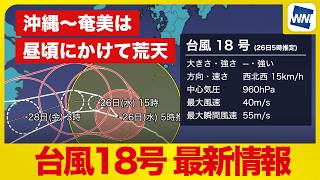
Strong Typhoon No. 18 was gradually moving away from Okinawa and the Amami Islands on August 26 after disrupting flights and bringing violent winds, rough seas and heavy rain, although Okinawa's main island and Amami Oshima remained at risk of sudden downpours, powerful gusts and waves exceeding 6 meters through around midday. As of 4 a.m. on August 26, the typhoon was located about 80 kilometers west-northwest of Okinoerabu Island and was moving west-northwest at 15 kilometers per hour.

A series of mysterious illegal dumping incidents involving about 39 kilograms of sliced bread has been reported around Mount Daisen and other parts of Tottori Prefecture in August, with officials investigating whether the food may have been deliberately placed to attract wild animals.

An 85-year-old couple have donated a combined 400 million yen to Osaka City with a request that the money be used to create a giant Myaku-Myaku statue about 20 meters tall at the former site of the Osaka-Kansai Expo, envisioning a landmark that could become a lasting symbol of the event and of renewed prosperity for Kansai and Japan.

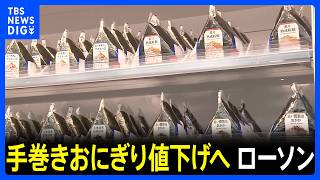
Lawson plans to cut prices on its main line of onigiri rice balls by 10 yen from September 29 as falling rice prices begin to feed through to retail costs.

Police have established a temporary police post in the whaling town of Taiji, Wakayama Prefecture, ahead of the September 1 opening of the annual drive hunt for whales and dolphins.

MEDIA CHANNELS
         

MORE Business NEWS

Tokyo stocks fell on August 25, with the Nikkei 225 closing at 64,980.53, down 0.8%, as investors sold semiconductor and electronics shares ahead of Nvidia’s earnings while a weak yen, elevated bond yields and renewed U.S. pressure on Iran kept risk appetite subdued.

Japan's traditional neighborhood public baths are struggling with rising fuel, labor and operating costs, but unlike most businesses they cannot freely raise prices because admission fees remain regulated under a postwar price-control law introduced in 1946.

Tokyo stocks fell on August 24, with the Nikkei 225 closing at 65,528.09, down 488.27 points, or 0.74%, as global bond-yield pressure and caution ahead of Nvidia’s earnings triggered selling in artificial intelligence and semiconductor-related shares, even as the broader TOPIX edged higher.

Suzuki has unveiled a prototype of its first kei-class electric vehicle, the e SKY, which is scheduled to go on sale during the current fiscal year with a driving range of 310 kilometers, among the longest offered by a domestically produced kei EV.

Following the fare revision, a labor union representing taxi drivers in the prefecture and other groups held a news conference calling for the proportion of operating revenue paid to drivers to be raised from its current level to at least 60%.

China's exports of rare-earth magnets to Japan fell by more than half in July from a year earlier, while shipments of tungsten carbide remained at zero for a sixth consecutive month, according to trade data released by Chinese customs authorities.

Japan's nationwide core consumer price index rose 1.8% in July from a year earlier, with the pace of inflation accelerating for a second consecutive month as higher food prices and a rebound in energy costs outweighed a sharp decline in rice prices.

Mitsubishi Electric said on August 20 that it will acquire U.S.-based PCI Energy Solutions, a developer of software used to manage electricity trading and other energy operations, in a deal worth about 220 billion yen, the largest acquisition in the Japanese company's history.