TOKYO - The theme park industry is experiencing a boom in new openings and expansions, such as the much-anticipated new area at Tokyo DisneySea. Despite rising prices and a trend towards consumer savings, theme parks continue to see growing sales. This report delves into the "magic" behind the industry's success.
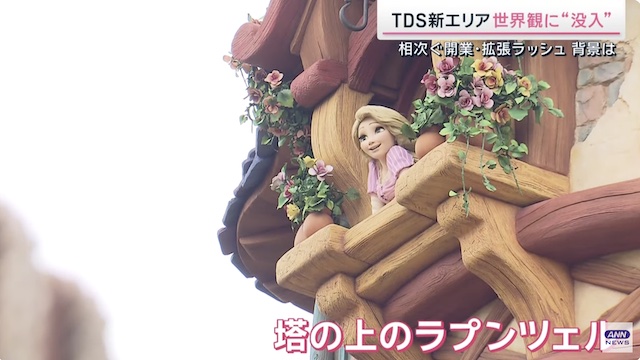
The new "Fantasy Springs" area at Tokyo DisneySea, opened on June 6, recreates the worlds of Disney films "Frozen," "Tangled," and "Peter Pan." The development, which took five years and an investment of about 320 billion yen, is the largest since the park's opening.
The focus is on creating an immersive experience, which is also evident in the attractions.
In "Frozen Journey with Anna and Elsa," a visitor remarked, "Anna and Elsa seemed very lifelike. It was like a dream to see Elsa during 'Let It Go.'"
The attention to detail extends to the surroundings, from the castle to the natural elements.
Another visitor noted, "The towers are faithfully recreated from the movies, enhancing the immersion."
Director Yuka Shoga reported, "To the right are colorful buildings, and directly ahead is Arendelle Castle, accurately reflecting the movie world."
Inside the castle, the grand hall where Elsa's coronation party was held is meticulously recreated.
Manabu Suzuki, Head of Fantasy Springs Opening Preparation at Oriental Land, stated, "The natural elements, such as the rocky surfaces, waterfalls, and trees, are crucial to creating a realistic world. We worked hard to make it as authentic as possible."
To enter this area, visitors need a standby pass for attractions, either free or paid, after entering Tokyo DisneySea.
Why the Rush of New Openings?
The expansion and new openings continue to grow. Last year, the Harry Potter experience facility "Warner Bros. Studio Tour Tokyo – The Making of Harry Potter" opened at the former Toshimaen site. This year, "Immersive Fort Tokyo" opened. Future plans include the addition of "Donkey Kong Country" at Universal Studios Japan and the opening of "Junglia" in Okinawa, a place previously without theme parks.
Despite rising prices, last year's amusement park and theme park sales hit an all-time high. So why is the theme park market thriving?
Professor Yuji Yamaguchi of Obirin University's Business Management Department explained, "The per capita spending has significantly increased. The theme park market has always had latent demand, with people willing to spend money on their idols, such as 'oshi activities,' leading to substantial consumption, including accommodation."
However, the situation for smaller theme parks is more challenging, especially in regional areas.
Huis Ten Bosch's Strategy
Despite these challenges, Huis Ten Bosch in Sasebo City, Nagasaki Prefecture, which replicates a European townscape, saw a 1.5 times increase in visitors during this year's Golden Week compared to last year.
A tourist from Nagasaki said, "I come here almost every month. It feels like being abroad."
A visitor from Yokohama noted, "It's much larger than I expected and feels very authentic."
Having faced multiple financial crises, Huis Ten Bosch returned to profitability for the first time in three years in 2022, with an increase in domestic visitors.
Kumiko Nonaka, Marketing Director at Huis Ten Bosch, said, "We created a new brand, 'Dreamy Otherworld,' leveraging the original strengths of Huis Ten Bosch."
Previously, the park's appeal was not fully conveyed. Last year, they decided to rebrand. Utilizing the authentic buildings from its inception, the park enhanced its charm by removing signs that clashed with the European theme.
Nonaka explained, "There was a large map sign here. By removing it, we improved the scenery, making it more beautiful."
In total, they identified 1,000 areas for improvement. Recently, new attractions and a new area with fountain shows and water play were added.
Nonaka stated, "We aim to enhance the beautiful townscape of Huis Ten Bosch and create an engaging environment."
Host Commentary
Aya Takashima, Anchor: "The appeal of major theme parks is increasing, potentially boosting inbound tourism."
Announcer Tomoki Itakura: "Theme parks are becoming key attractions. According to a survey by the Japan National Tourism Organization, theme parks were the second most popular reason for overseas travel after food. However, entrance fees for Tokyo Disney Resort and Universal Studios Japan can exceed 10,000 yen on peak days."
Takashima: "Variable pricing is beneficial for users, though it may seem high compared to past prices of around 5,500 yen. This reflects the higher quality of entertainment."
Journalist Hideo Yanagisawa: "For parents and grandparents, it's worth loosening the purse strings to give children these magical experiences."
Source: ANN