TOKYO - In April, a junior high school in Okegawa City, Saitama Prefecture, distributed new school rules stating that "it is good manners not to drink water during class." This directive has sparked considerable debate.
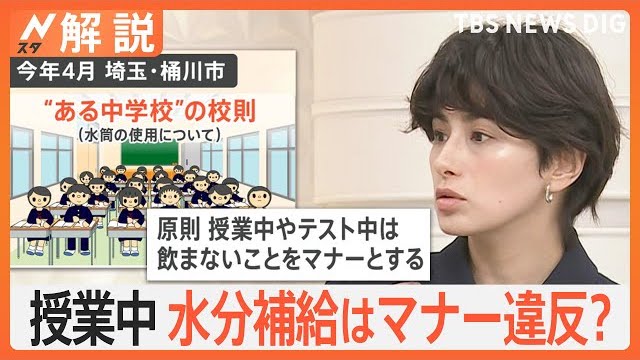
Is Hydration During Class Bad Manners?
Futo Kumazaki, a news anchor, reported that the school’s rule specifies that students should not drink water during teachers’ explanations or other students' presentations, deeming it bad manners. Parents have voiced their opposition, asking for the rule to be abolished. The city’s Board of Education clarified, "It is not a prohibition; students can drink water with teachers' permission."
Takahiro Inoue, another anchor, commented, "While we may not know the exact reasons for this rule -- possibly due to some students' mischief -- there could have been better approaches. Strict rules and increased control can often damage a school's reputation."
Lawyer Maiko Hagiya remarked, "Today's heat is different from the past, and saying 'we endured it back then' is no longer valid. Students should be allowed to drink water."
Chiaki Horan, a co-anchor, noted, "Given the current emphasis on preventing heatstroke, the rationale behind such a rule is concerning. Although it’s not an outright ban, the pressure to adhere to the rule could lead to students risking heatstroke, which is a serious issue."
Inoue added, "Using the term 'manners' seems to downplay the seriousness of the issue."
Hagiya emphasized, "Hydration is not merely a matter of manners but one of life and death."
Hydration Practices Across Different Occupations
Kumazaki investigated how different occupations manage hydration during work.
Bus Drivers:
Bus drivers at Gifu Bus have always been allowed to hydrate while on duty. However, a few complaints from passengers about drivers drinking during shifts led to the display of notices in buses. Between 2019 and 2020, in response to these complaints and to combat heatstroke, notices were posted stating, "Drivers hydrate during stops such as at red lights. Thank you for your understanding." Since then, complaints have ceased, and the notices have been removed.
Tokyo Metropolitan Bureau of Transportation:
For Toei Buses, hydration during stops is permitted. Toei Subway and Toden Arakawa Line operators can hydrate at terminal stations.
Supermarket Cashiers:
At the supermarket chain Belc, employees are encouraged to hydrate every hour, announced via store broadcasts: "It’s hydration time. Please hydrate regularly." Water dispensers are installed near checkout counters for employee use. The store manager explained, "This ensures employees can hydrate without appearing to shirk duties."
Inoue commented, "Publicly supporting hydration makes it easier for employees."
Hagiya added, "The need for such announcements suggests customer complaints might be a factor. If it’s clearly water, it should be acceptable."
Horan noted, "There are always those who disapprove of employees hydrating while working. Notices, like those in buses, are likely necessary for risk management."
Hagiya concluded, "For train operators, risking heatstroke by not hydrating impacts safety. Hydrating during stops is a reasonable measure."
Inoue observed, "This reflects how complaint-prone society has become."
Hydration in the National Diet:
Kumazaki also explored hydration practices in Japan’s National Diet.
During a February 2024 House of Representatives Budget Committee meeting, a member was seen sipping Uji tea and remarked, "I am drinking during this session." Previously, only water and hot water were allowed, but now committee members may drink beverages from personal bottles within reasonable limits with the chairman's approval.
In the plenary sessions of the House of Representatives, stricter rules apply. Under the House rules, maintaining the dignity of the assembly is paramount, and items like bottles and PET bottles are prohibited to ensure focus during sessions.
Source: TBS