News On Japan

Is Japan's Tap Water Safe? The Unavoidable Challenges of PFAS

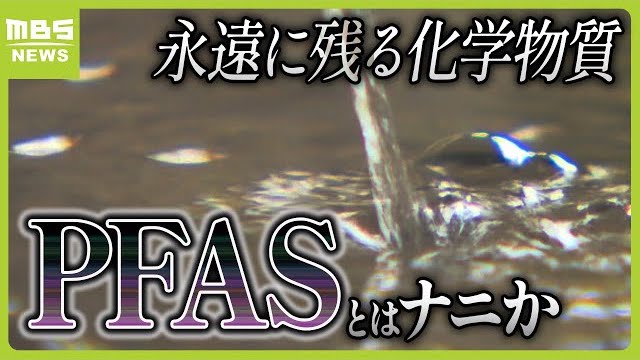
TOKYO - The Japanese government has requested all water utility companies to report the results of water quality tests by the end of September regarding the organic fluorine compound "PFAS." But what exactly is PFAS, and is Japan's tap water safe? Based on interviews with Koji Harada, an associate professor at Kyoto University, we delve into the topic.
Is Japan's Tap Water Safe? The Unavoidable Challenges of PFAS

PFAS is a term unfamiliar to many, but it refers to a group of over 4,700 synthetic chemicals created by humans, not found in nature. These chemicals have been used for various applications, such as non-stick coatings on frying pans and water repellents for clothing. Although not all PFAS are harmful, two types, PFOS and PFOA, are known to pose health risks and are banned by international treaties. However, many others remain under scrutiny.

One of the primary concerns with PFAS is their persistence in the environment and the human body. PFAS do not break down easily, with some taking up to 100 years to reduce by half. This persistence means they can accumulate in the body over time, potentially leading to health issues such as reduced birth weight and decreased vaccine efficacy. The Japanese Food Safety Commission has indicated that these chemicals might affect cholesterol levels and arterial health, similar to findings in other countries.

Despite the potential health risks, PFAS are still detected in various environments, including water sources worldwide. The chemicals can spread through water and air, reaching distant locations. This widespread presence has led to global efforts to address and regulate PFAS use and disposal.

In Japan, recent guidelines have set a safe daily intake limit for PFOS and PFOA at 20 nanograms per kilogram of body weight. For a person weighing 60 kilograms, this translates to a maximum of 1,200 nanograms per day. The government has also established a target concentration for drinking water at 50 nanograms per liter, which is relatively higher than the limits set by Germany and the United States.

To mitigate exposure, consumers are advised to check water quality reports from their local water utilities and consider using water filters. However, boiling water is ineffective against PFAS, and only certain types of activated carbon filters can reduce these chemicals.

The issue of PFAS contamination highlights the challenges in balancing industrial benefits with environmental and public health. As more data emerges, stricter regulations and safer alternatives are likely to be developed. In the meantime, public awareness and precautionary measures are essential to safeguard health and the environment.

Source: MBS

News On Japan
POPULAR NEWS

Typhoon No. 25 had left four people dead and six others missing in Chiba and Kanagawa prefectures by September 22, as the storm moved away from Japan and the extent of flooding and landslide damage across the Kanto region became clearer.

Transport disruption from Typhoon No. 25 continued across Chiba Prefecture on September 22 even as flights and major highways returned toward normal, with entire sections of the JR network remaining suspended for the day and all Narita Express services canceled because of flooding, landslides and damage to railway infrastructure.

Japan came within two runs of producing one of international cricket's biggest upsets on September 22, pushing reigning T20 world champion India to the final ball before losing a rain-shortened match at Sano International Cricket Ground in Tochigi Prefecture.

Japan's Asian Games campaign continued across a packed Day 4 schedule on September 22, with the women's badminton team securing another medal, the women's basketball team completing an unbeaten group stage, and Japan adding a historic bronze medal in mixed air rifle shooting as several of the host nation's biggest medal opportunities moved into the evening.

Japan collected another 12 medals on Day 3 of the Aichi-Nagoya Asian Games on September 21, with 17-year-old swimmer Shin Ohashi and karateka Kakeru Nishiyama winning gold, while the host nation also advanced strongly in women's volleyball, baseball, soccer, handball and hockey.

MEDIA CHANNELS
         

MORE Sci-Tech NEWS

A rare pod of around 50 dolphins was spotted swimming through the Seto Inland Sea off Ozu, Ehime Prefecture, with dozens of dorsal fins repeatedly breaking the surface as the animals moved together.

Tesla unveiled its Cybercab in Japan for the first time on September 11, showcasing an AI-powered autonomous taxi designed without a steering wheel or pedals.

Large volumes of floodwater poured into the Metropolitan Area Outer Underground Discharge Channel in Kasukabe, Saitama Prefecture, following heavy rain on September 7, prompting the massive underground flood-control facility known as the "Underground Temple" to go into operation.

Fluorescent lamps that have illuminated Japanese homes and workplaces for decades are approaching the end of production, with Panasonic preparing to wind down a business it has operated since 1951 while experts warn that incorrectly replacing some fixtures with LEDs could create a fire risk.

Osaka-based spray nozzle maker IKEUCHI is expanding applications for its proprietary "Dry Fog," an ultra-fine mist that can cool, humidify and create visual effects without leaving surfaces wet, with the technology now being used in factories, livestock farming, crop cultivation and tourist attractions in Japan and overseas.

Japanese companies are moving closer to commercializing photonics-electronics convergence technology that replaces part of conventional electrical data transmission with optical signals, potentially allowing huge volumes of data to move with lower latency while sharply reducing power consumption as artificial intelligence drives rapid growth in electricity demand from data centers.

A new generation of optoelectronic integration technology developed over four decades by Japanese companies is moving closer to commercialization, offering a way to transmit huge volumes of data with low latency while sharply reducing the electricity consumed by data centers as artificial intelligence drives explosive growth in computing demand.

Dyson CameraJet™ turns the smart toothbrush into an active sensing product, making useful feedback and clear privacy design part of the same engineering brief.