News On Japan

Separate Surnames for Married Couples: Why Japan Still Says No

TOKYO - The ongoing debate over the legalization of separate surnames for married couples in Japan is a topic that has polarized both politicians and the public for over three decades.
Separate Surnames for Married Couples: Why Japan Still Says No

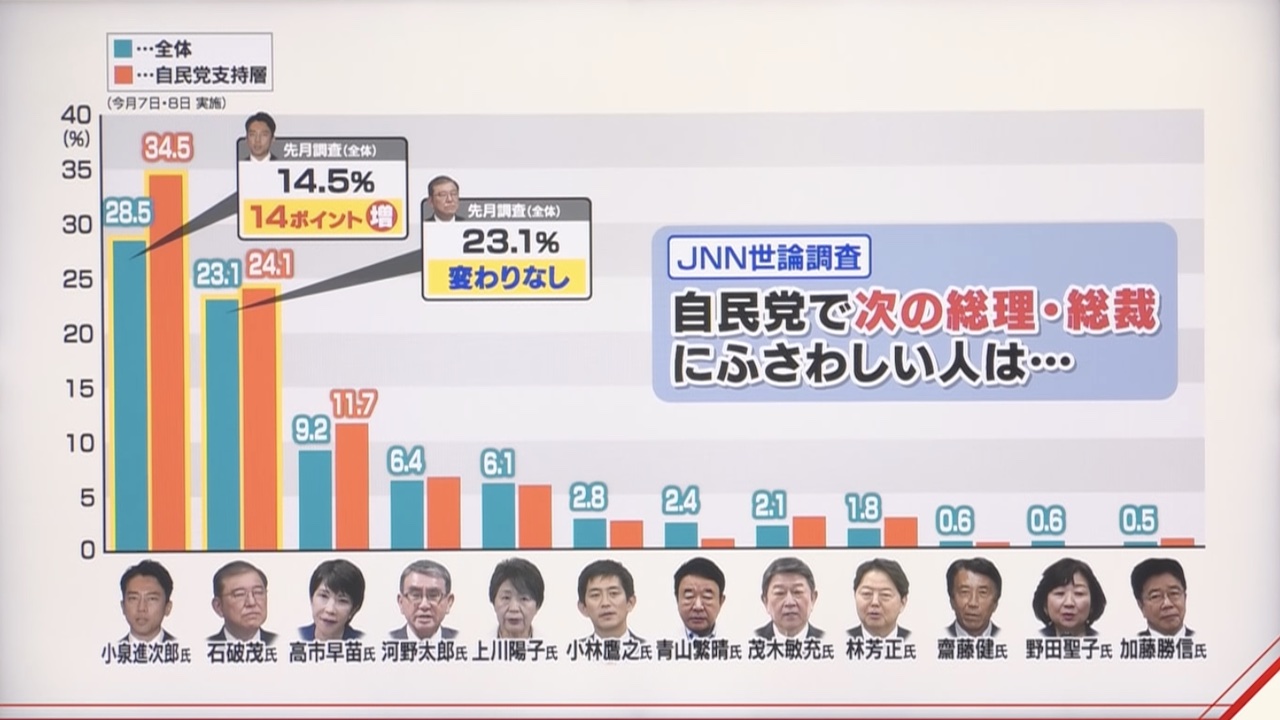
Despite growing support from the general public, conservative factions within the ruling Liberal Democratic Party (LDP), such as Japan Conference (Nippon Kaigi), have strongly opposed the change, citing concerns over family unity and traditional values. The article outlines how this issue has become a focal point in the current LDP leadership election, with candidates taking varied stances on the matter.

Former Environment Minister Koizumi, a prominent figure in the LDP leadership race, has expressed strong support for allowing married couples to have separate surnames. He went so far as to propose legislation that would introduce this system without party restrictions, signaling a progressive shift within the traditionally conservative party. On the other hand, Kōichi, another key candidate, has shown reluctance, advocating instead for policies that would expand the use of maiden names in daily life without changing the family registration system. His cautious approach reflects the influence of conservative groups and their fear that such changes could erode Japan’s social fabric.

The article highlights the deep-rooted opposition from groups like Japan Conference, which argue that separate surnames would weaken the family structure, ultimately threatening societal stability. These conservative organizations, which have a significant influence over the LDP, have long campaigned against liberal reforms, including the legalization of same-sex marriage and other progressive social policies. Their concerns about a "slippery slope" leading to the breakdown of traditional family units have contributed to the stagnation of the debate, despite widespread public support for change.

A significant portion of the article is dedicated to exploring the reasons why the issue has remained unresolved for so long. Although public opinion surveys show that nearly 70% of respondents support the idea of allowing separate surnames, the conservative factions within the LDP have managed to block any legislative progress. Political endorsements from groups like Japan Conference have further solidified this stance, with many LDP candidates, including some who are perceived as progressive, signing pledges opposing separate surnames to secure votes.

The article also touches on the broader implications of the debate, framing it as a question of human rights and personal identity. Supporters of the reform, such as political commentator Yuko Ando, argue that forcing individuals to change their surname after marriage can feel like an erasure of their personal identity. For Ando and others, the debate is not just about family law but also about recognizing the rights of individuals to retain their identity and autonomy within marriage.

In conclusion, the article suggests that the LDP leadership election may serve as a pivotal moment for this long-standing issue. With candidates like Koizumi advocating for change and gaining momentum, there is a possibility that Japan’s family laws could finally be reformed to reflect modern social realities. However, the opposition from conservative factions remains strong, and the outcome of the leadership race will likely determine the future direction of the debate on separate surnames for married couples.

Source: TBS

News On Japan
POPULAR NEWS

Typhoon No. 25 had left four people dead and six others missing in Chiba and Kanagawa prefectures by September 22, as the storm moved away from Japan and the extent of flooding and landslide damage across the Kanto region became clearer.

Transport disruption from Typhoon No. 25 continued across Chiba Prefecture on September 22 even as flights and major highways returned toward normal, with entire sections of the JR network remaining suspended for the day and all Narita Express services canceled because of flooding, landslides and damage to railway infrastructure.

Japan came within two runs of producing one of international cricket's biggest upsets on September 22, pushing reigning T20 world champion India to the final ball before losing a rain-shortened match at Sano International Cricket Ground in Tochigi Prefecture.

Japan's Asian Games campaign continued across a packed Day 4 schedule on September 22, with the women's badminton team securing another medal, the women's basketball team completing an unbeaten group stage, and Japan adding a historic bronze medal in mixed air rifle shooting as several of the host nation's biggest medal opportunities moved into the evening.

Japan collected another 12 medals on Day 3 of the Aichi-Nagoya Asian Games on September 21, with 17-year-old swimmer Shin Ohashi and karateka Kakeru Nishiyama winning gold, while the host nation also advanced strongly in women's volleyball, baseball, soccer, handball and hockey.

MEDIA CHANNELS
         

MORE Politics NEWS

China held commemorative events across the country on September 18 to mark the 95th anniversary of the Mukden Incident, the 1931 railway explosion that Japan's Kwantung Army used as a pretext to seize Manchuria and which became a major turning point in the deterioration of relations between Japan and China.

Prime Minister Sanae Takaichi launched her first cabinet reshuffle since taking office, keeping core economic, foreign-policy and security ministers in place while replacing a broad group of other ministers in an attempt to stabilize her government before a difficult autumn of tax, budget, monetary policy and diplomatic battles.

Japan's Air Self-Defense Force has concluded that a large Global Hawk unmanned reconnaissance aircraft that lost communication off Tottori Prefecture on September 15 crashed into the sea.

Prime Minister Sanae Takaichi launched a new Liberal Democratic Party executive team on September 16, retaining most of the party’s senior leadership while pledging to unite the government and ruling party to overcome a difficult political and economic environment.

A Japan Air Self-Defense Force Global Hawk unmanned reconnaissance aircraft went missing over international waters about 50 kilometers north of Tottori Prefecture on September 15, with floating debris and oil later found in the area where communications were lost.

Prime Minister Sanae Takaichi’s government entered a decisive political week on September 15 after approving an outline for food-tax relief and household payouts without settling how the package will be funded, keeping fiscal concerns alive just days before the Bank of Japan is expected to decide whether to raise interest rates again.

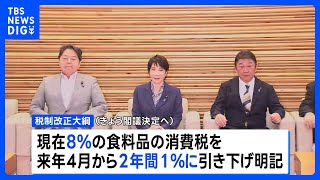
Japan's government is set to approve tax reform guidelines on September 15 that will reduce the consumption tax on food from the current 8% to 1% for two years starting in April 2027 as part of measures to ease the burden of rising prices.

Genta Koja, a former deputy mayor of Naha who accepts the relocation of the U.S. Marine Corps Air Station Futenma to Henoko in Nago, won the Okinawa gubernatorial election on September 13, defeating incumbent Governor Denny Tamaki and bringing an end to 12 years of prefectural administrations committed to blocking the project.