News On Japan

Foreign Tourists Immerse in Japan's Nighttime Economy

TOKYO - The rising number of foreign tourists has spurred growth in Japan’s inbound tourism market. A key to enhancing the experience of these visitors lies in the 'nighttime economy,' which focuses on leisure activities.

Amid a nighttime forest, a breathtaking sight emerges—installations of light that change brightness randomly, creating a pulsing effect reminiscent of a living creature's heartbeat. This mesmerizing display is set in a glamping facility in Kitaibaraki, Ibaraki Prefecture.

A favorite among foreign tourists, the cottages offer a rare experience, where the sunlight gives the forest an endless glow during the day. By contrast, at night, the forest transforms, showcasing art installations that weave light into the landscape.

Manager Shota Takahashi: “This is a facility for guests to enjoy after nightfall. The natural environment becomes a work of art, offering an extraordinary experience.”

Once terraced rice fields nestled in a valley, the area now integrates seamlessly with the forest to form an artistic space at dusk. This transformation has gained widespread attention on social media, drawing many tourists from overseas.

Visitors remarked, “It’s even more magical at night,” and “It’s a one-of-a-kind experience, totally worth the trip.”

The nighttime economy also extends to the taxi industry. One unique initiative is the “Urban Legend Taxi,” a limited-time horror tour. Passengers board this tour to find themselves startled by an apparition wielding scissors.

The tour takes about an hour, driving through Tokyo as a fictional horror program plays inside the vehicle. Passengers are given earphones connected to a designated smartphone to listen to urban legends while walking dark streets and experiencing Japan’s distinct horror style.

Passenger: “It was a fresh way to enjoy horror, watching scary scenes while looking out at the cityscape—it was a lot of fun.”

The tour includes 3D videos capturing actors dressed as ghosts and a storyline supervised by a renowned Japanese horror planner, enhancing the scare factor with cutting-edge visual effects.

Hiroki Matsui, Business Development Department, S.RIDE Inc.: “During the day, all our hire vehicles are booked, while at night, a significant number remain unoccupied. So, we decided to offer a nighttime horror tour, given the few examples of similar events.”

As a pillar for growing inbound tourism, the nighttime economy is set to expand further in Japan.

Source: FNN

News On Japan
POPULAR NEWS

The resignation of Nvidia CEO Jensen Huang on November 12 following allegations involving a woman suspected of links to Chinese intelligence has raised concerns in Japan over the potential impact on semiconductor investment, financial markets and the yen, as uncertainty surrounding the American AI chipmaker threatens to disrupt the global technology industry.

Japan launched a new national disaster management agency on November 2nd to strengthen its response to major emergencies, just days before a powerful earthquake struck Aichi Prefecture, injuring 24 people and renewing concerns over the possibility of a catastrophic Nankai Trough earthquake.

Russia's Foreign Ministry on November 11 defended the government's unilateral decision to place the local subsidiary of Japan Tobacco (JT) under the management of a Russian company, describing the move as a countermeasure against what it called Japan's "blatantly hostile actions."

East Japan Railway (JR East) announced on November 10th that it will introduce touch-free ticket gates at 40 stations, including every station on Tokyo's Yamanote Line, from spring 2028, allowing passengers using Mobile Suica to pass through without taking their smartphones out of their pockets or bags.

Japan's Children and Families Agency unveiled its first national guidelines on November 10th for parental involvement in children's internet use, dividing those aged 0 to 18 into six developmental stages as the government considers tighter regulations on social media platforms to protect young people from online bullying, exploitation, and other growing risks.

MEDIA CHANNELS
         

MORE Travel NEWS

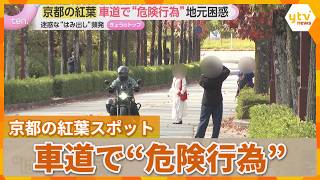
Visitors flocking to a popular autumn foliage destination in Kyoto's Nishikyo Ward have sparked growing concerns among residents, with photographers repeatedly stepping into the middle of busy roads to capture pictures and drivers illegally parking near bus stops and residential streets.

Universal Studios Japan (USJ) is launching its winter season events on November 13, featuring one of the largest food festivals in the park's history, with more than twice as many menu items as last year and opportunities for visitors to dine alongside popular characters.

Tokyo's Toshima Ward announced on November 11th plans to impose administrative penalties of up to 20,000 yen for street smoking and littering, extending its smoking ban to heated tobacco products as complaints about public smoking and illegal dumping continue to rise.

The ginkgo-lined avenue at Hiroshima Shudo University in Hiroshima City has reached its peak autumn color, transforming the campus into a golden landscape as trees display their brilliant yellow leaves.

A woman was seriously injured in a wild boar attack in Nishinomiya, Hyogo Prefecture, as sightings of unusually large boars increase across the Kansai region, with some weighing nearly 150 kilograms and capable of running at speeds of 45 kilometers per hour.

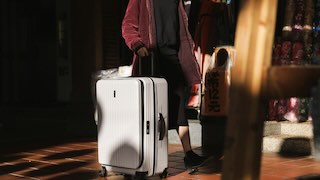
Arriving in Japan after a long-haul flight is so exciting. But dragging a 25kg suitcase through a busy train station is less so.

Northern Japan experienced record-breaking cold on the morning of November 11th, with temperatures plunging to minus 20.2 degrees Celsius in Horokanai, Hokkaido, marking the first time in Japan's recorded history that temperatures have fallen below minus 20 degrees during the first half of November.

East Japan Railway (JR East) announced on November 10th that it will introduce touch-free ticket gates at 40 stations, including every station on Tokyo's Yamanote Line, from spring 2028, allowing passengers using Mobile Suica to pass through without taking their smartphones out of their pockets or bags.