News On Japan

New Trends in Hospitality: Blending Nature, Architecture, and High Value

New Trends in Hospitality: Blending Nature, Architecture, and High Value

TOKYO - Domestic travel spending by Japanese residents reached a record high from January to September this year. Additionally, spending by foreign visitors in Japan has already surpassed last year's total, setting a new record. In this environment, accommodation facilities across the country are adopting strategies to enhance their earning power by offering high-value services.

From historic hot spring inns and luxury boutique hotels targeting affluent travelers to architecturally striking vacation homes, the forefront of Japan’s hospitality business is evolving.

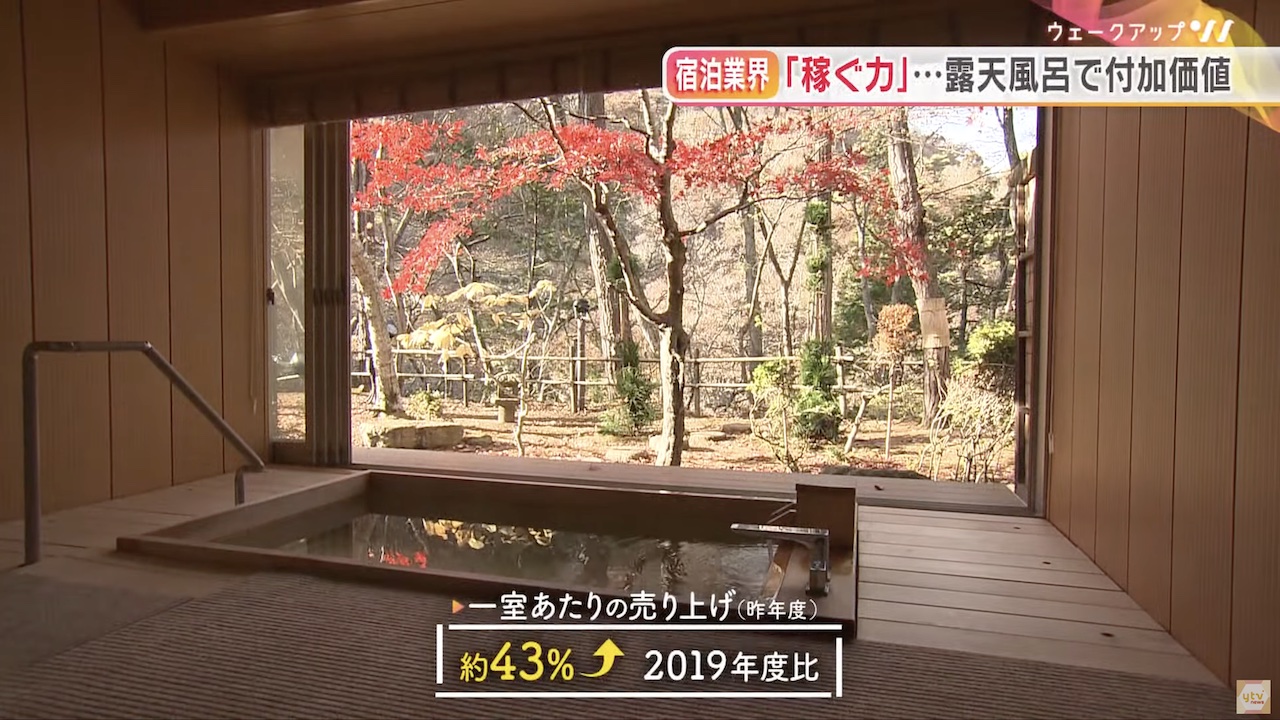
Hanamaki Onsen, one of the leading hot spring areas in Iwate Prefecture, features a 97-year-old resort comprising three hotels and inns. Among its offerings are newly added guest rooms with private open-air baths, designed to enhance the guest experience. These cedar bath suites offer uninterrupted views while guests enjoy natural hot spring water. A night's stay, including two meals, costs 63,800 yen per person. Following renovations funded in part by a 200 million yen subsidy, the resort has increased revenue per room by 43% compared to 2019.

One guest, who chose the upgraded room, noted, "Having the bath right in front of us meant we could use it multiple times. It was a unique and relaxing experience."

Six Senses Kyoto, a luxury boutique hotel that opened in April, targets wealthy travelers. With room rates starting at 170,000 yen per night and penthouse suites costing up to 2 million yen, the property emphasizes design that incorporates local culture and natural elements. Despite the high costs, the hotel boasts an 80% occupancy rate, supported by careful investments in quality over quantity. According to the hotel’s CEO, "Our approach emphasizes individuality. Guests are seeking spaces that feel uniquely Japanese yet distinct from traditional hotels."

The luxury villa business is also thriving. Located about three hours by car from Tokyo, the Noa Hotel in Kitakaruizawa offers shared ownership of exclusive villas surrounded by nature. Each property is designed to integrate with the surrounding landscape, offering amenities like private hot springs and saunas. Prices start in the 20-million-yen range, with additional options available based on usage rights. Owners can rent out the property as a hotel when not in use, combining personal retreat space with investment opportunities.

One villa owner shared, "I often come here at night, where I can see shooting stars. It’s something you can’t experience in Tokyo."

Noa Hotel has expanded its operations to include nine locations nationwide and began marketing to international clients in July. A recent project on Sagi Island in Hiroshima Prefecture aims to revitalize a small community where over 70% of the population is aged 65 or older. The new development features villas designed to blend with the island's natural beauty and is expected to open in April 2026.

Local residents hold mixed feelings. While some hope the influx of visitors will bring vitality to the island, others worry about the limited benefits for the community. As one local said, "If the focus is solely on wealthy visitors, ordinary residents may not feel much of an impact."

With innovative strategies to boost revenue through high-value services, Japan’s lodging businesses are redefining how they appeal to both domestic and international travelers.

Source: YOMIURI

News On Japan
POPULAR NEWS

A section of stone wall at Hikone Castle, one of Japan’s few surviving original Edo-period castles and a National Treasure whose main keep remains intact more than 400 years after its construction, collapsed after heavy rain caused by Typhoons No. 7 and No. 8, Hikone city officials said.

Japan’s weather agency carried out field inspections in Yamanashi Prefecture on June 28 after a powerful earthquake struck the Fuji Five Lakes area late on June 26, registering a lower 6 on Japan’s seismic intensity scale in Fujikawaguchiko and injuring six people.

According to updates on June 28, the double-typhoon system that brought record rain, flooding, landslides and fallen trees to parts of Japan has moved away, but Kanto remains under cloudy rainy-season skies, with intermittent rain still possible and saturated ground keeping the risk of landslides high in areas hit by heavy rain.

Japan advanced to the knockout stage of the World Cup after a 1-1 draw with Sweden on June 25, finishing second in Group F and setting up a Round of 32 clash with Brazil in Houston.

A powerful earthquake with a maximum seismic intensity of upper 6 struck off Iwate Prefecture at around 7:30 a.m. on June 25, shaking parts of Aomori Prefecture and leaving Hachinohe, which was hit by a similarly strong quake last December, facing fresh damage.

MEDIA CHANNELS
         

MORE Travel NEWS

The Kanto region is experiencing an unusual June, with three typhoons approaching the area during the month and rainfall totals already reaching record levels in some locations.

Damage was reported across the Kansai region after a stationary seasonal rain front and an approaching typhoon brought torrential rain on June 26, triggering landslides in Seika, Kyoto Prefecture, flooding homes in Nara, and disrupting roads and railway services in Osaka and surrounding areas.

A powerful earthquake with a maximum seismic intensity of upper 6 struck off Iwate Prefecture at around 7:30 a.m. on June 25, shaking parts of Aomori Prefecture and leaving Hachinohe, which was hit by a similarly strong quake last December, facing fresh damage.

Rice field art depicting Los Angeles Dodgers star Shohei Ohtani and his dog Decoy is nearing its best viewing period in Oshu, Iwate Prefecture, Ohtani’s hometown.

FamilyMart began testing a new bear deterrent on June 24 at a store in a mountainous area of Kiryu, Gunma Prefecture, installing a wolf-shaped device known as Monster Wolf next to the outlet in the first such trial at a convenience store.

A luxury hotel using the former Nara Prison, a nationally designated Important Cultural Property, will open on June 25, offering rooms from 147,000 yen per night as Japan sees a growing trend of converting historic cultural assets into hotels.

A shrine believed to be the world’s first dedicated to stuffed animals was established on June 20 in Nantan, Kyoto Prefecture, giving owners a place to express gratitude for beloved plush toys and hold memorial rites for those that have finished their role.

JR Central said on June 22 that it will operate a special one-day-only Tokaido Shinkansen train that departs at night and arrives the following morning, as the company explores demand for overnight travel at a time of rising hotel costs.