News On Japan

Why Nissan and Honda's Alliance Plans Fell Apart

TOKYO - Nissan’s CEO has informed Honda’s president of the company’s decision to terminate merger discussions. Why did the planned alliance between Japan’s second- and third-largest automakers break down?

When asked whether the talks had been abandoned, Nissan CEO Makoto Uchida did not respond, instead driving away in a luxury Cima sedan, his stern expression revealing the gravity of the situation.

Since December, Nissan and Honda had been engaged in discussions about a potential merger. However, one particular statement became a sticking point.

“We are not in a hierarchy of superior and subordinate; we are partners shaping the future together,” Uchida said.

Honda executives, however, had a different expectation.

“That statement was concerning. We believed there was a certain level of agreement that we would take the lead,” a senior Honda official said.

A major issue was the “integration ratio,” which is calculated based on the average stock prices of the companies over a certain period. Nissan’s market capitalization is roughly one-fifth that of Honda’s, leading to friction as both sides sought favorable terms.

Additionally, discussions became increasingly difficult due to Nissan’s ongoing restructuring efforts and differences over the unification of hybrid and other technologies. Frustrated by the stalemate, Honda proposed making Nissan a subsidiary, to which Nissan reacted strongly.

“That is absolutely unacceptable,” a senior Nissan official said.

As a result, Nissan solidified its decision to end the negotiations on the previous day.

This morning, Uchida visited Honda’s headquarters and conveyed the decision to President Toshihiro Mibe. A formal announcement confirming the collapse of the talks is expected soon.

With the automotive industry undergoing a once-in-a-century transformation, both Nissan and Honda now face the challenge of navigating an increasingly competitive landscape on their own.

Source: TBS

News On Japan
POPULAR NEWS

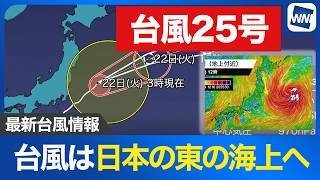
Typhoon No. 25 was moving away from Japan over waters to the east early on September 22, bringing an end to rainfall across the Kanto region while remaining a strong storm as it tracked northeast at 45 kilometers per hour at 3 a.m.

Severe transport disruption continued across Chiba Prefecture on the morning of September 22 even as Typhoon No. 25 moved away from Japan, with major JR lines still suspended, rail access to Narita Airport disrupted by river flooding, highways closed across the Boso Peninsula and thousands of travelers dealing with the aftermath of the previous day's cancellations.

Japan collected another 12 medals on Day 3 of the Aichi-Nagoya Asian Games on September 21, with 17-year-old swimmer Shin Ohashi and karateka Kakeru Nishiyama winning gold, while the host nation also advanced strongly in women's volleyball, baseball, soccer, handball and hockey.

People aged 65 and older accounted for a record 29.6% of Japan's population in 2026, the highest proportion among major countries worldwide, while the number of elderly people in employment also reached an all-time high as Japan marked Respect for the Aged Day on September 21.

Emperor Naruhito and Empress Masako watched Japan defeat Kazakhstan in a women’s basketball preliminary-round game at the 20th Asian Games in Nagoya.

MEDIA CHANNELS
         

MORE Business NEWS

Tokyo’s stock market was closed on September 21 for Respect for the Aged Day, leaving the Nikkei 225 without a cash close after finishing the previous session at 65,019, while currency and futures markets focused on the yen, the Bank of Japan’s latest rate hike and intervention risks during Japan’s Silver Week holiday.

Japan's first five-day Silver Week holiday in 11 years has put renewed attention on household finances, with persistently high food prices and a weakening yen threatening to erode the benefits of the government's planned consumption tax cut on food.

A list of providers with identical promises turns selection into brute-force sorting. The differences do exist; they are just hidden somewhere other than the homepage.

The Bank of Japan raised its policy rate from 1.0% to 1.25% on September 18, taking borrowing costs to their highest level in 31 years and accelerating the pace of monetary tightening as persistent inflation and concerns over fiscal expansion put upward pressure on interest rates.

The yen strengthened by more than 1 yen against the dollar in a short period late on September 18 after the Bank of Japan conducted a rate check, a step commonly taken in preparation for possible intervention in the foreign exchange market.

Tokyo stocks rose sharply on September 18, with the Nikkei 225 climbing to around 65,350 in afternoon trading after the Bank of Japan raised interest rates to 1.25%, as the yen weakened and investors bought artificial intelligence and semiconductor-related shares.

The Bank of Japan raised its policy interest rate from 1.0% to 1.25% on September 18, lifting borrowing costs to their highest level in 31 years as policymakers moved to contain growing inflation risks, but the yen weakened sharply after the decision as markets focused on two dissenting votes and uncertainty over the pace of further increases.

A market spread is generally the difference between two market prices. Most commonly, traders use the term to describe the bid-ask spread: the difference between the highest price a buyer is currently prepared to pay and the lowest price a seller is prepared to accept.