News On Japan

Death Toll Could Reach 298,000 in Nankai Trough Megaquake

TOKYO - The Japanese government has released an updated damage forecast for a potential Nankai Trough megaquake, estimating that up to 298,000 people could die in the worst-case scenario. This projection reflects a slight reduction from the previous estimate of 332,000 deaths made 13 years ago.

While this decrease suggests some progress in disaster preparedness, the overall scale of potential devastation remains immense. The update was not based on a new understanding of the earthquake’s nature, but rather on recent societal and environmental changes, as well as improved knowledge of secondary risks such as fire and post-disaster conditions.

One notable change in the forecast is the inclusion of disaster-related deaths—those who survive the quake and tsunami but later die due to poor evacuation shelter conditions or health complications. These deaths, seen prominently during the Noto Peninsula earthquake, are now projected to reach up to 52,000, which is about 13 times more than the number recorded during the 2011 Great East Japan Earthquake. This addition highlights the critical importance of improving post-disaster care, including the living environment in shelters, which has seen little improvement since the Great Hanshin Earthquake.

Regionally, the number of projected deaths in Wakayama Prefecture has declined by around 15,000, reflecting the impact of mitigation efforts over the past decade. However, in areas such as Osaka and Kyoto, projected fatalities have increased, particularly due to the anticipated rise in fire-related deaths. This shift emphasizes the importance of fire prevention measures alongside tsunami readiness, as the new forecast suggests that fire risk is now a major concern in heavily populated urban areas following a quake.

Another significant aspect of the revised forecast is its emphasis on individual preparedness. Experts found that public behavior can greatly influence the scale of disaster outcomes. If 70 percent of residents evacuate promptly after the initial tremors, the death toll could be drastically reduced compared to a situation where only 20 percent take immediate action. Moreover, installing automatic circuit breakers that shut off power during an earthquake could lower the risk of fires caused by the restoration of electricity after the shaking ends.

Sato, the disaster reporter explaining the new forecast, stressed that the purpose of this projection is not to spread fear, but to provoke serious personal reflection. The expert committee that developed the estimate sent a strong message: the era of relying solely on national or local government measures has passed. Citizens must now take disaster preparedness into their own hands and act proactively. Factors such as the increasing number of foreign visitors, the rise of cashless transactions, and a decline in essential workers like healthcare professionals further complicate the response capacity in a real disaster.

Ultimately, the new damage forecast serves as both a warning and a call to action. It urges individuals to think ahead about what steps they can take to protect themselves and avoid future regret. The enormity of the projected loss is not meant to intimidate, but to underscore the urgent need for both systemic reforms and personal responsibility.

Source: YOMIURI

News On Japan
POPULAR NEWS

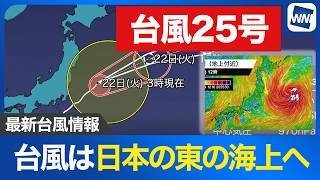
Typhoon No. 25 was moving away from Japan over waters to the east early on September 22, bringing an end to rainfall across the Kanto region while remaining a strong storm as it tracked northeast at 45 kilometers per hour at 3 a.m.

Severe transport disruption continued across Chiba Prefecture on the morning of September 22 even as Typhoon No. 25 moved away from Japan, with major JR lines still suspended, rail access to Narita Airport disrupted by river flooding, highways closed across the Boso Peninsula and thousands of travelers dealing with the aftermath of the previous day's cancellations.

Japan collected another 12 medals on Day 3 of the Aichi-Nagoya Asian Games on September 21, with 17-year-old swimmer Shin Ohashi and karateka Kakeru Nishiyama winning gold, while the host nation also advanced strongly in women's volleyball, baseball, soccer, handball and hockey.

People aged 65 and older accounted for a record 29.6% of Japan's population in 2026, the highest proportion among major countries worldwide, while the number of elderly people in employment also reached an all-time high as Japan marked Respect for the Aged Day on September 21.

Emperor Naruhito and Empress Masako watched Japan defeat Kazakhstan in a women’s basketball preliminary-round game at the 20th Asian Games in Nagoya.

MEDIA CHANNELS
         

MORE Sci-Tech NEWS

A rare pod of around 50 dolphins was spotted swimming through the Seto Inland Sea off Ozu, Ehime Prefecture, with dozens of dorsal fins repeatedly breaking the surface as the animals moved together.

Tesla unveiled its Cybercab in Japan for the first time on September 11, showcasing an AI-powered autonomous taxi designed without a steering wheel or pedals.

Large volumes of floodwater poured into the Metropolitan Area Outer Underground Discharge Channel in Kasukabe, Saitama Prefecture, following heavy rain on September 7, prompting the massive underground flood-control facility known as the "Underground Temple" to go into operation.

Fluorescent lamps that have illuminated Japanese homes and workplaces for decades are approaching the end of production, with Panasonic preparing to wind down a business it has operated since 1951 while experts warn that incorrectly replacing some fixtures with LEDs could create a fire risk.

Osaka-based spray nozzle maker IKEUCHI is expanding applications for its proprietary "Dry Fog," an ultra-fine mist that can cool, humidify and create visual effects without leaving surfaces wet, with the technology now being used in factories, livestock farming, crop cultivation and tourist attractions in Japan and overseas.

Japanese companies are moving closer to commercializing photonics-electronics convergence technology that replaces part of conventional electrical data transmission with optical signals, potentially allowing huge volumes of data to move with lower latency while sharply reducing power consumption as artificial intelligence drives rapid growth in electricity demand from data centers.

A new generation of optoelectronic integration technology developed over four decades by Japanese companies is moving closer to commercialization, offering a way to transmit huge volumes of data with low latency while sharply reducing the electricity consumed by data centers as artificial intelligence drives explosive growth in computing demand.

Dyson CameraJet™ turns the smart toothbrush into an active sensing product, making useful feedback and clear privacy design part of the same engineering brief.