News On Japan

Japan's Total Population Falls; Largest Drop Since Records Began

TOKYO - Japan's Ministry of Internal Affairs and Communications has released its latest population estimate, showing that Japan's total population, including foreign residents, stood at 123,802,000 as of October 1st last year, a decrease of 550,000 from the previous year. This marks the 14th consecutive year of population decline.

The number of Japanese nationals alone fell by 898,000 to 120,296,000, the largest annual drop since statistics began in 1950.

Japan’s modern population history is marked by a dramatic rise in the postwar period followed by a prolonged and accelerating decline in recent decades. After World War II, Japan experienced a population boom, driven by a postwar baby boom, rapid improvements in healthcare, and rising life expectancy. In 1950, Japan’s population was around 83 million, and this number continued to grow steadily over the next few decades as the country rebuilt and modernized. Urbanization, industrial expansion, and economic prosperity during the 1950s to 1970s provided the social and economic foundation for a growing population. During this time, Japan transformed into one of the world’s leading economies, and its population growth reflected this upward trajectory.

By the 1980s, however, the fertility rate had begun to decline significantly. Changes in lifestyle, the growing presence of women in the workforce, delayed marriage, and urban housing constraints contributed to smaller family sizes. Despite the falling birth rate, Japan’s population continued to grow slowly, reaching a peak of around 128 million in 2008. This plateau marked the beginning of a new demographic era. The aging of the baby boomer generation also began to exert pressure on the labor force and social welfare systems, as the number of elderly people started to rise sharply.

Since 2008, Japan’s population has been on a continuous downward trajectory. Natural population decline—where deaths outnumber births—has become the norm. Each year, Japan loses hundreds of thousands of people due to this demographic imbalance. Immigration has not been sufficient to offset the decline, as Japan has traditionally maintained strict immigration policies. In recent years, while more foreign workers and residents have been allowed entry, their numbers remain relatively small compared to the scale of overall population loss.

Today, Japan faces a complex demographic challenge marked by a shrinking and aging population. The birth rate remains well below the replacement level of 2.1, hovering around 1.3. Life expectancy continues to rise, contributing to one of the highest median ages in the world. This shift affects nearly every aspect of Japanese society—from labor shortages and economic stagnation to pension sustainability and rural depopulation. While the government has introduced policies to encourage childbirth, improve childcare access, and attract foreign labor, the structural nature of the decline makes rapid reversal unlikely. The demographic trends Japan is experiencing today are seen as a possible preview of what many developed nations may face in the coming decades.

Source: TBS

News On Japan
POPULAR NEWS

A prolonged eruption at Sakurajima on June 7th blanketed parts of Kagoshima City in volcanic ash, turning roads gray and prompting long lines of vehicles seeking car washes after a plume of smoke rose 1,300 meters above the crater.

A powerful earthquake struck off Mindanao Island in the southern Philippines at 8:38 a.m. (Japan time) on June 8th, generating tsunami waves across parts of the Pacific, causing building collapses and casualties near the epicenter, and prompting the Japan Meteorological Agency to issue tsunami advisories along a wide stretch of Japan's Pacific coastline before lifting all of them at 4:50 p.m.

A clinic director and a former Peruvian staff member have been referred to prosecutors after the man allegedly performed medical procedures without a license, including an external cephalic version—a procedure used to manually turn a baby into the correct position before birth—at an obstetrics and gynecology clinic in Fukuoka City, raising concerns about patient safety and oversight in maternity care.

A large bear was captured on security camera footage running through a shopping arcade in central Utsunomiya, Tochigi Prefecture, in the early hours of June 7th, as authorities stepped up warnings following a series of bear sightings across the city.

Japan's Meteorological Agency announced on June 7th that the rainy season is believed to have begun in the Tokai and Kanto-Koshin regions, marking the seasonal shift to wetter weather across a broad area of the country.

MEDIA CHANNELS
         

MORE Society NEWS

A man believed to be in his 50s or 60s was found dead with knives lodged in his left eye and abdomen inside a container at a company property in Kobe's Suma Ward on June 8th, prompting police to investigate the possibility of a criminal case.

The family of James "Weston" Higginbotham, a 20-year-old Auburn University student who disappeared during a family vacation in Japan, announced on June 7th that he has been found dead after a volunteer search-and-rescue team located his body in a mountainous area outside Kyoto, bringing a week-long multinational search to a tragic end.

A 14-year-old junior high school girl was arrested on suspicion of robbery resulting in injury after allegedly spraying a woman in her 60s in the face and stealing her wallet during a robbery attempt in Kasukabe, Saitama Prefecture.

One of Asia's largest LGBTQ+ events was held in Tokyo on June 7th, bringing together sexual minorities, supporters, businesses, and community organizations to celebrate diversity and call for greater equality and protections for LGBTQ+ people.

At Futamigaoka Farm, operated by Abashiri Prison in Hokkaido, the people caring for the cattle are not livestock farmers but inmates serving prison sentences. Through daily work raising cattle, they are learning responsibility, empathy, and the value of life as Japan marks one year since the introduction of a new correctional system that places greater emphasis on rehabilitation.

A medium poodle named Rokuta, a member of Hiroshima's Wanpato Squad neighborhood patrol program, and his owner, Eri Toya, have received a letter of appreciation after helping locate a missing elderly woman in Fuchu Town, Hiroshima Prefecture, while on a routine patrol walk.

A 60-year-old unemployed man has been arrested and indicted for allegedly stealing water meters from apartment complexes in Sakai, Osaka Prefecture, in what police believe was a scheme to sell the devices amid soaring copper prices and a growing nationwide wave of metal thefts.

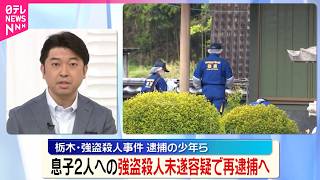
A 16-year-old boy accused of carrying out a deadly home invasion in Tochigi Prefecture has been re-arrested on suspicion of attempted robbery-murder involving the two sons of a 69-year-old woman who was killed during the attack, police said.