News On Japan

Japan Reacts to Trump's Tariffs

TOKYO - As former U.S. President Donald Trump’s trade policies—particularly tariffs—once again become a topic of global attention, Japanese citizens are voicing a wide range of opinions.

From concern about economic fallout to frustration over perceived American isolationism, the public mood in Japan reveals deep unease about the impact of Trump-style politics on international relations and Japan’s economic future.

“I think Japan needs to study more,” said one respondent. “Especially in business. We have to understand that if we impose tariffs, the other side will respond. It’s going to lead to chaos.”

Many fear the United States is heading toward greater isolation. “If America loses too many allies, I don’t think it can stand alone—not in today’s world,” said another. While some expressed hope that Trump's decisiveness could lead to positive change, others were skeptical. “He moves fast and makes big decisions. That can be good, but also dangerous. His actions lack diplomacy.”

Several respondents labeled Trump's behavior as erratic and even dangerous. “Of all the presidents I’ve seen, he’s the most extreme. It’s beyond aggressive—almost reckless. In the past, this kind of attitude would have led to war.”

Others pointed to economic concerns. “The global stock markets are unstable, and it’s affecting ordinary people. I’ve already lost about two million yen,” said one investor. “I worry about both the Japanese and American economies. These tariffs are being used as threats, and that’s not sustainable.”

Despite the criticism, there were nuanced views as well. Some acknowledged the logic behind Trump’s efforts to bring manufacturing back to the U.S. from China. “I get his intention, but the method is too harsh. Diplomacy should come first. Tariffs shouldn’t be used to bully other countries.”

A recurring theme was skepticism over whether the U.S. could revive domestic manufacturing to the level Trump envisions. “American workers aren’t as meticulous as Japanese workers,” said one respondent, particularly in reference to the precision required for semiconductors and advanced machinery.

Cultural differences also emerged. “In Japan, we value preparation and subtle coordination—what we call nemawashi,” one person explained. “Trump doesn’t do that. His approach is all pressure and no groundwork.”

While some admired Trump’s energy, others felt his rhetoric had lost credibility. “He says one thing today and something else tomorrow. Maybe it’s a negotiation tactic, but it comes off as unreliable.”

Still, a few expressed support for Trump’s intentions. “He’s trying hard, and I respect that. But he needs to think globally, not just about America.”

Messages to American voters varied. “Please think carefully before voting again,” said one. Another added, “Don’t hate Japan. We want to maintain a good relationship with America.”

One woman was blunt when asked if she’d date someone like Trump in his 30s. “No way. Too selfish. Though he’s handsome,” she laughed.

Overall, most called for peaceful, cooperative solutions. “Don’t push your own opinions too forcefully,” said one. “Use dialogue. Don’t escalate things unnecessarily. The world only works if we work together.”

As Trump considers a return to political prominence, voices from Japan are clear: the stakes are high, the world is watching, and actions taken by one leader can ripple far beyond one nation's borders.

Source: Interviewing Japan

News On Japan
POPULAR NEWS

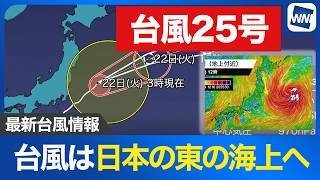
Typhoon No. 25 was moving away from Japan over waters to the east early on September 22, bringing an end to rainfall across the Kanto region while remaining a strong storm as it tracked northeast at 45 kilometers per hour at 3 a.m.

Severe transport disruption continued across Chiba Prefecture on the morning of September 22 even as Typhoon No. 25 moved away from Japan, with major JR lines still suspended, rail access to Narita Airport disrupted by river flooding, highways closed across the Boso Peninsula and thousands of travelers dealing with the aftermath of the previous day's cancellations.

Japan collected another 12 medals on Day 3 of the Aichi-Nagoya Asian Games on September 21, with 17-year-old swimmer Shin Ohashi and karateka Kakeru Nishiyama winning gold, while the host nation also advanced strongly in women's volleyball, baseball, soccer, handball and hockey.

People aged 65 and older accounted for a record 29.6% of Japan's population in 2026, the highest proportion among major countries worldwide, while the number of elderly people in employment also reached an all-time high as Japan marked Respect for the Aged Day on September 21.

Emperor Naruhito and Empress Masako watched Japan defeat Kazakhstan in a women’s basketball preliminary-round game at the 20th Asian Games in Nagoya.

MEDIA CHANNELS
         

MORE Politics NEWS

China held commemorative events across the country on September 18 to mark the 95th anniversary of the Mukden Incident, the 1931 railway explosion that Japan's Kwantung Army used as a pretext to seize Manchuria and which became a major turning point in the deterioration of relations between Japan and China.

Prime Minister Sanae Takaichi launched her first cabinet reshuffle since taking office, keeping core economic, foreign-policy and security ministers in place while replacing a broad group of other ministers in an attempt to stabilize her government before a difficult autumn of tax, budget, monetary policy and diplomatic battles.

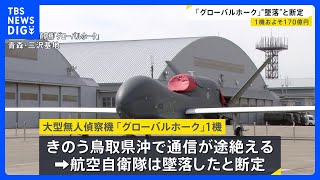
Japan's Air Self-Defense Force has concluded that a large Global Hawk unmanned reconnaissance aircraft that lost communication off Tottori Prefecture on September 15 crashed into the sea.

Prime Minister Sanae Takaichi launched a new Liberal Democratic Party executive team on September 16, retaining most of the party’s senior leadership while pledging to unite the government and ruling party to overcome a difficult political and economic environment.

A Japan Air Self-Defense Force Global Hawk unmanned reconnaissance aircraft went missing over international waters about 50 kilometers north of Tottori Prefecture on September 15, with floating debris and oil later found in the area where communications were lost.

Prime Minister Sanae Takaichi’s government entered a decisive political week on September 15 after approving an outline for food-tax relief and household payouts without settling how the package will be funded, keeping fiscal concerns alive just days before the Bank of Japan is expected to decide whether to raise interest rates again.

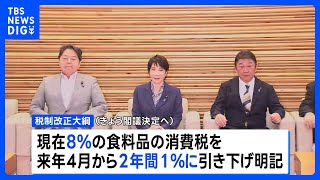
Japan's government is set to approve tax reform guidelines on September 15 that will reduce the consumption tax on food from the current 8% to 1% for two years starting in April 2027 as part of measures to ease the burden of rising prices.

Genta Koja, a former deputy mayor of Naha who accepts the relocation of the U.S. Marine Corps Air Station Futenma to Henoko in Nago, won the Okinawa gubernatorial election on September 13, defeating incumbent Governor Denny Tamaki and bringing an end to 12 years of prefectural administrations committed to blocking the project.