News On Japan

In Kobe, Climbing Mountains Is a Way of Life

KOBE - Kobe is a city blessed by both the sea and the mountains. One of its most defining features is Mount Ichizan, part of the Rokko mountain range. Long known as the birthplace of modern mountaineering in Japan, this area is home to a variety of distinctive peaks. Nestled within one of them, in Kobe’s Chuo Ward, lies Juzenji Temple, a Zen temple with a history spanning over 950 years.

At 5:30 in the morning, people begin climbing the stone steps to the temple. Many stop to sign their names in a logbook that tracks the number of climbs they’ve completed. Some climbers proudly show their tallies—thousands of ascents logged over years of daily effort. One woman notes that she has surpassed 3,000 climbs; another says she’s passed 10,000. One of the top climbers has apparently done it more than 20,000 times—equivalent to climbing every single day for over 50 years.

This culture of “everyday climbing” has a long history. It is said to have started in the Meiji era when foreigners living in Kobe began ascending the mountains each morning before enjoying a refined breakfast. Locals soon embraced the habit, and it evolved into a cherished community tradition.

Archival footage from 1963 shows cheerful climbers ascending Rokko’s slopes, with many performing radio calisthenics at the summit before returning home. While the number of participants has declined since its peak, the tradition remains vibrant. For many, it is not only a health routine but also a key social connection.

At the summit, climbers gather at a mountain teahouse near Juzenji Temple. One such shop is run by Toyonaga Yuko, known affectionately as "Mame-chan." She took over the tea house five years ago and serves breakfast sets like rice balls and miso soup or toast and coffee. The shop has become a central hub, welcoming everyone from elderly climbers to curious children.

Yuko’s mother-in-law, who previously ran the shop, returned to the tea house after recovering from a life-threatening illness. Together, the two women revived the store, creating a space that serves not just food but community support. The mother-in-law jokes about her daughter-in-law being a "devilish wife," but beams with pride when talking about her.

Among the regular climbers are individuals with inspiring stories. One man has been climbing daily for five years and is now 82. Another woman, 94, started climbing with her husband decades ago and continues even after his passing. Then there’s Honda, 86 years old, who began climbing in her late twenties to lose weight. Now with over 24,000 climbs under her belt, she says, “If I don’t climb, I feel like I’ve forgotten something.”

Children also frequent the path. The short climb—just 108.4 meters—makes it accessible even for elementary schoolers, who come after school to play with Mame-chan. The tea house is filled with laughter as generations mingle freely.

Though some mountain tea houses have shut down due to aging proprietors, about a dozen still remain in the Rokko range. Each one offers its own specialties and a place to rest for climbers. Mame-chan hopes to preserve this culture, which naturally fosters human connection through shared routine and nature.

In the afternoon, familiar faces return once more. A man known as “Ken-chan,” 82, comes daily at 6 p.m. to keep up his health. Living alone, he says the tea house gives him someone to talk to—and when he’s absent, others worry.

Climbers say the rhythm of ascending the mountain every day sets the tone for their lives. Whether it’s for health, community, or simply the sense of peace it brings, the tradition endures. As the sun rises over Kobe, another day begins—one more step in a climb that has lasted generations.

Source: ABCTVnews

News On Japan
POPULAR NEWS

A bear that had been repeatedly spotted in commercial and residential areas of Utsunomiya, Tochigi Prefecture, was captured in a residential neighborhood at around 3:30 p.m. on June 9th after authorities used a tranquilizer gun following several days of sightings across the city.

A prolonged eruption at Sakurajima on June 7th blanketed parts of Kagoshima City in volcanic ash, turning roads gray and prompting long lines of vehicles seeking car washes after a plume of smoke rose 1,300 meters above the crater.

A powerful earthquake struck off Mindanao Island in the southern Philippines at 8:38 a.m. (Japan time) on June 8th, generating tsunami waves across parts of the Pacific, causing building collapses and casualties near the epicenter, and prompting the Japan Meteorological Agency to issue tsunami advisories along a wide stretch of Japan's Pacific coastline before lifting all of them at 4:50 p.m.

A clinic director and a former Peruvian staff member have been referred to prosecutors after the man allegedly performed medical procedures without a license, including an external cephalic version—a procedure used to manually turn a baby into the correct position before birth—at an obstetrics and gynecology clinic in Fukuoka City, raising concerns about patient safety and oversight in maternity care.

A large bear was captured on security camera footage running through a shopping arcade in central Utsunomiya, Tochigi Prefecture, in the early hours of June 7th, as authorities stepped up warnings following a series of bear sightings across the city.

MEDIA CHANNELS
         

MORE Travel NEWS

A slope collapse alongside the JR Dosan Line between Tsubojiri and Hashikura stations in Tokushima Prefecture, detected after a rockfall warning system was activated in the early hours of June 8th, has forced the suspension of train services with no timetable yet established for the restoration of operations.

Japan Airlines will once again operate seasonal flights between Chubu Centrair International Airport and the Hokkaido cities of Obihiro and Kushiro throughout August, offering travelers from hot Nagoya a chance to enjoy the region's cooler summer climate.

A large bear was captured on security camera footage running through a shopping arcade in central Utsunomiya, Tochigi Prefecture, in the early hours of June 7th, as authorities stepped up warnings following a series of bear sightings across the city.

Japan's Meteorological Agency announced on June 7th that the rainy season is believed to have begun in the Tokai and Kanto-Koshin regions, marking the seasonal shift to wetter weather across a broad area of the country.

Yakushima, a world natural heritage island in Kagoshima Prefecture, is marking 60 years since the discovery of Jomon Sugi, the island's iconic cedar tree estimated to be more than 2,000 years old, as concerns grow over the future of the ancient forests that have long supported both tourism and local life.

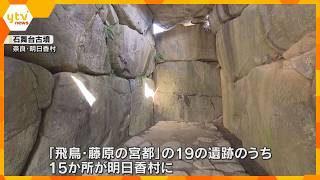
Residents in Nara Prefecture are celebrating after UNESCO's advisory body recommended the archaeological complex known as the Asuka-Fujiwara Ancient Capitals for inscription as a World Heritage site, bringing the historic birthplace of Japan's ancient state one step closer to international recognition.

Japan could face a more active typhoon season than usual in 2026, with private weather forecaster Weathernews predicting around 28 typhoons to form during the year—above the long-term average of 25.1—and warning that approximately 14 could approach Japan, increasing the risk of weather-related disruptions across the country.

Tourists are once again taking to the waters of the Kitayama River along the borders of Wakayama, Mie, and Nara prefectures, where a popular traditional rafting experience recreates the historic practice of transporting mountain timber by raft from Kitayama Village downstream to Shingu City.