News On Japan

48 Hours in Naha – Not the Okinawa You Know

NAHA - Naha is the gate city for Okinawa vacation. It's not a place with beautiful beaches, but it's great base for traveling across Okinawa main island and other islands. Naha also has charm that you can explore, without getting a rental car.

Beyond the bustling main streets and well-trodden tourist spots of Naha, the capital of Okinawa Prefecture, lies a labyrinth of backstreets that offer a deeper, more intimate look into the island’s soul. These alleyways, often hidden behind the neon lights of Kokusai-dori or the modern façade of shopping arcades, reveal the lived-in texture of Okinawan life—where past and present blend seamlessly. In neighborhoods like Tsuboya, visitors can find traditional pottery workshops nestled between modest cafes and weathered homes. The air often carries the scent of burning incense from local altars, and the quiet hum of daily life offers a welcome contrast to the tourist-heavy centers. Walking through these lanes is like stepping into a time capsule. The architecture—low-slung concrete homes built to withstand typhoons, overgrown garden walls, and laundry fluttering from second-floor balconies—tells a story of resilience and simplicity that is distinctly Okinawan.

As the sun begins to set, the backstreets of Naha take on a different character altogether. Lanterns flicker to life outside izakayas and snack bars, casting a warm glow on the narrow roads. In districts like Sakaemachi, just a short walk from the monorail station, locals gather in tightly packed alley pubs known as "yatai mura," where plastic stools and laughter spill onto the street. These casual drinking spots are where the cultural divide between tourist and local often dissolves, especially if you attempt a few words in Okinawan or Japanese. Musicians with sanshin (a traditional Okinawan instrument) might begin to play impromptu tunes, and if you're lucky, you’ll be invited to join in the spirited eisa dancing that often breaks out with little warning. It’s in these settings—not curated for tourists—that Naha’s cultural authenticity truly shines. The food is unpretentious but rich with flavor: rafute (braised pork belly), goya champuru (bitter melon stir-fry), and fresh sashimi served with awamori, the local liquor distilled from rice. Each meal feels like an invitation into someone’s home rather than a performance for visitors.

What makes the backstreets of Naha particularly compelling is their resistance to homogenization. Unlike other Japanese cities that have increasingly leaned into a polished, international aesthetic, these corners of Naha embrace their quirks and imperfections. Hand-painted shop signs, faded vending machines, and tiny record stores run by aging collectors coexist in a kind of beautiful clutter. The murals and graffiti that adorn crumbling walls are often expressions of political sentiment or local pride, reminders of Okinawa’s complex history as a once-independent kingdom and its postwar identity under American influence. For travelers willing to stray from the itinerary, these hidden streets offer an unfiltered encounter with Okinawan life: slower, softer, and shaped by an enduring sense of place. It is here that one can feel the pulse of the city not as a tourist spectacle but as a lived-in rhythm—something authentic, fragile, and quietly profound.

Source: Tokyo Kenchan

News On Japan
POPULAR NEWS

Typhoon No. 25 was moving away from Japan over waters to the east early on September 22, bringing an end to rainfall across the Kanto region while remaining a strong storm as it tracked northeast at 45 kilometers per hour at 3 a.m.

Severe transport disruption continued across Chiba Prefecture on the morning of September 22 even as Typhoon No. 25 moved away from Japan, with major JR lines still suspended, rail access to Narita Airport disrupted by river flooding, highways closed across the Boso Peninsula and thousands of travelers dealing with the aftermath of the previous day's cancellations.

Japan collected another 12 medals on Day 3 of the Aichi-Nagoya Asian Games on September 21, with 17-year-old swimmer Shin Ohashi and karateka Kakeru Nishiyama winning gold, while the host nation also advanced strongly in women's volleyball, baseball, soccer, handball and hockey.

People aged 65 and older accounted for a record 29.6% of Japan's population in 2026, the highest proportion among major countries worldwide, while the number of elderly people in employment also reached an all-time high as Japan marked Respect for the Aged Day on September 21.

Emperor Naruhito and Empress Masako watched Japan defeat Kazakhstan in a women’s basketball preliminary-round game at the 20th Asian Games in Nagoya.

MEDIA CHANNELS
         

MORE Travel NEWS

A phone booth that converts the voice of the person on the other end of a call into real-time text has been installed at Haneda Airport for four days, offering visitors a glimpse of technology designed for people who have difficulty hearing telephone conversations.

Peach Aviation began scheduled flights between Narita Airport and South Korea's Incheon International Airport on September 20, marking the low-cost carrier's first new international route from Narita in seven years.

Japan's Silver Week began on September 19 with five consecutive days off for the first time in 11 years, drawing crowds to food and festival events across the country despite rainy weather in the Kanto region as Typhoon No. 25 approached.

Volcanic smoke continues to rise from Mount Tokachi (Tokachidake), an active volcano in Daisetsuzan National Park in Hokkaido, one week after its eruption alert level was raised to Level 3, restricting entry to the mountain and prompting a series of cancellations at nearby hot spring inns just before the peak autumn foliage season.

The Kyushu Shinkansen will resume operations along its entire route on September 18 after suffering extensive track and other damage in the Kumamoto earthquake, raising hopes that the long-awaited restoration will help revive tourism in disaster-hit areas ahead of the Silver Week holiday period.

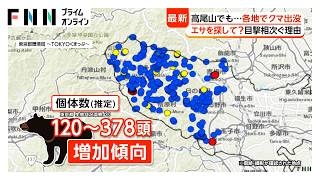
A black bear has been spotted near one of the most popular hiking trails on Mount Takao in western Tokyo, prompting authorities to urge visitors to take precautions ahead of the five-day Silver Week holiday and the approaching autumn foliage season.

Prolonged rain is disrupting tourism ahead of Japan's Silver Week holidays, forcing Nagatoro's popular river cruises to remain suspended for an 11th consecutive day while increased water flow at Fukuroda Falls in Ibaraki Prefecture is drawing more visitors.

A new top-tier "Supreme Class" offering fully private compartments above the level of Green Car service will debut on the Tokaido and Sanyo Shinkansen on October 1, with passengers able to experience the new seating at a demonstration booth at Shin-Osaka Station.