News On Japan

AI Predicts Three Scenarios for Rice Prices

TOKYO - Rice prices in Japan are drawing national attention following government moves to release stockpiled rice, with artificial intelligence now being used to forecast market trends. As convenience stores begin selling rice balls at lower prices, the public is welcoming the temporary relief in food costs. But experts warn that without fundamental policy changes, the situation is unlikely to improve long term.

On the weekend of early June, 5-kilogram bags of stockpiled rice priced at 2,000 yen began appearing in stores, prompting many to ask what will happen next to rice prices. Analyst Kashiwamura offered an AI-based forecast outlining three potential price scenarios.

The most likely outcome, with a 60% probability, predicts prices stabilizing at a relatively high level between 3,900 yen and 4,250 yen per 5 kilograms. This scenario sees the current 2,000-yen stockpile price as a temporary deviation, with the market eventually returning to its original range. According to Kashiwamura, "Since the supply of the stockpiled rice is limited, it’s only a short-term measure. The prevailing flow of distribution and procurement prices supports a stable range around 3,900 to 4,250 yen."

The forecast includes a price trend graph showing a dip followed by a gradual rise, with a possible return to around 4,300 yen. Kashiwamura notes that while the rice release by Agriculture Minister Koizumi may temporarily cool the market, rising production and distribution costs could push prices back up. "Distribution fees and rising logistics costs are maintaining the high price floor," he explained.

A second, more pessimistic scenario—assigned a 10% probability—suggests that rice prices could rise as high as 5,000 yen due to poor weather, global resource constraints, or fuel cost hikes that would raise production costs.

The third scenario assumes a gradual easing of supply-demand imbalances, potentially lowering prices to the 3,600 to 4,000 yen range. This would require continued strong harvests and improvements in distribution.

Kashiwamura noted that the baseline scenario had been slightly adjusted downward after Koizumi’s policy announcement to release stockpiled rice. Previously, the AI forecast gave a 55% chance to an even higher price trend, but the new data reflects expectations that the policy will have a moderating effect.

Beyond short-term price trends, Kashiwamura emphasized that Japan’s rice market is at a structural turning point. He contrasted a passive response—relying on short-term price measures—with a proactive reform approach aimed at improving sustainability. "Temporary discounts may look good now, but unless we fundamentally transform production and distribution systems, prices won't change sustainably," he warned.

The long-term solution, according to Kashiwamura, lies in restructuring Japan’s agricultural systems—improving productivity, updating distribution networks, and ensuring farmers are compensated fairly. “Cheap prices are good for consumers,” he said, “but if prices don’t reflect production costs, sustainable rice farming becomes impossible.”

While the stockpile release may offer immediate relief, experts warn that the current situation represents a pivotal moment in Japan’s agricultural policy. Without broader reforms, rice prices are likely to remain volatile, and the future of domestic rice production could be at risk.

Source: ABEMA

News On Japan
POPULAR NEWS

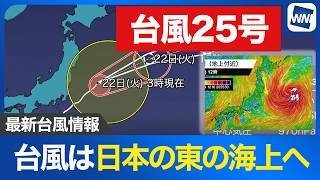
Typhoon No. 25 was moving away from Japan over waters to the east early on September 22, bringing an end to rainfall across the Kanto region while remaining a strong storm as it tracked northeast at 45 kilometers per hour at 3 a.m.

Severe transport disruption continued across Chiba Prefecture on the morning of September 22 even as Typhoon No. 25 moved away from Japan, with major JR lines still suspended, rail access to Narita Airport disrupted by river flooding, highways closed across the Boso Peninsula and thousands of travelers dealing with the aftermath of the previous day's cancellations.

Japan collected another 12 medals on Day 3 of the Aichi-Nagoya Asian Games on September 21, with 17-year-old swimmer Shin Ohashi and karateka Kakeru Nishiyama winning gold, while the host nation also advanced strongly in women's volleyball, baseball, soccer, handball and hockey.

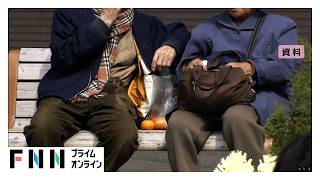
People aged 65 and older accounted for a record 29.6% of Japan's population in 2026, the highest proportion among major countries worldwide, while the number of elderly people in employment also reached an all-time high as Japan marked Respect for the Aged Day on September 21.

Emperor Naruhito and Empress Masako watched Japan defeat Kazakhstan in a women’s basketball preliminary-round game at the 20th Asian Games in Nagoya.

MEDIA CHANNELS
         

MORE Web3 NEWS

Japanese technology company MW is developing a home equipped with artificial intelligence and ceiling-mounted robots designed to automate household chores, with the goal of freeing people from the roughly four hours a day that can be spent on domestic work.

Cross-border trade across Asia-Pacific keeps expanding, and so does the number of foreign shoppers, tourists, and business travelers that merchants now have to serve.

Both cryptocurrency and online casinos have developed huge audiences in Japan. Research from 2025 estimated that more than three million adults have wagered online, while Japan also has an established crypto sector that is supported by millions of exchange accounts.

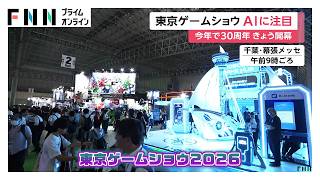
The Tokyo Game Show, one of the world's largest gaming exhibitions, opened with a record 1,138 exhibitors as companies from a growing range of industries seek a foothold in Japan's expanding gaming market, with artificial intelligence emerging as one of the main attractions this year.

Police are warning of a nationwide surge in scams involving criminals posing as officers, with evidence emerging that generative AI may now be used to create fake identities during video calls and make the deception more convincing.

High school students in Mishima, Shizuoka Prefecture, explored how humans and artificial intelligence might coexist in the future by interacting with an AI-powered humanoid robot during a class on September 11.

A medical institution opening in Nagoya's Showa Ward in October will use artificial intelligence-enhanced PET-CT and MRI equipment to produce clearer images and reduce the risk of cancer being overlooked during diagnostic examinations.

The rapid spread of generative artificial intelligence is fueling construction of data centers across Japan, but plans for two large facilities beside a residential neighborhood in Minoh, Osaka Prefecture, are raising concerns over sunlight, noise and low-frequency sound as authorities confront gaps in rules governing the increasingly important infrastructure.