News On Japan

Pioneering Technology That Expands Human Potential

TOKYO - Masahiko Inami, professor and deputy director at the University of Tokyo’s Research Center for Advanced Science and Technology, is leading groundbreaking research into human augmentation—technology that expands human capabilities beyond natural limitations. Inspired by science fiction and driven by a vision of a more inclusive and creative future, Inami’s work aims not only to assist those with physical challenges but to elevate all individuals through the integration of new skills and sensory functions.

His concept of “augmentation” goes beyond rehabilitation or compensation. Rather than restoring lost functions, his goal is to push the boundaries of what the human body can do. For example, one of his research projects involves wearable devices such as a prosthetic sixth finger, which can enhance dexterity and coordination. According to Inami, some users adapt quickly to such technologies, while others take more time—a phenomenon he is also studying to better understand individual differences in learning and adaptation.

Inami sees these differences not as problems to be corrected but as sources of innovation. His approach diverges from traditional engineering, which often designs for an average or “standard” user. Instead, he believes that recognizing and embracing human variability opens new possibilities in design and application. This mindset forms the foundation of his research into what he calls “jizai-ka,” or self-directed transformation—the ability to freely acquire or remove abilities depending on one’s goals.

He contrasts this with automation, which removes tasks from human hands and leans toward unmanned systems. Inami’s vision, in contrast, keeps the human at the center, with technology as a means to amplify personal will and creativity. Just as we change clothes to suit different environments, Inami envisions a future where we can attach or detach skills and sensory enhancements at will, navigating both the physical and digital worlds with new forms of expression and capability.

This philosophy has gained new relevance as artificial intelligence rapidly advances. Inami argues that if AI is set to surpass human intelligence in some domains, humans must also evolve—technologically and creatively—to remain active participants in the future. To him, entering a hyperconnected, AI-driven world without enhancement is like walking into the jungle unarmed. He believes the key to thriving in such an era lies in expanding not only our cognitive capacities but also our physical forms.

The origin of his vision lies in personal experience. Inami recalls being poor at sports as a child, lacking confidence in his physical abilities. This early sense of limitation became the foundation for a lifelong question: What if human shortcomings weren’t simply accepted but transformed into new strengths through technology?

Now, through his work at the University of Tokyo, Inami is creating a future where that question becomes a reality—one wearable skill at a time.

Source: テレ東BIZ

News On Japan
POPULAR NEWS

Typhoon No. 7's impact on Japan's transport network continued to ease on June 28, with major airports and Shinkansen services operating largely as normal, although disruptions remained on several JR conventional lines in eastern Japan and road problems continued in areas affected by heavy rain and landslides.

According to updates at 6:20 a.m. on June 28, Kanto remained under cloudy rainy-season skies after two typhoons brought record rain, flooding and fallen trees across parts of Japan the previous day, with rain clouds already reaching Yamanashi and expected to spread across the region during the morning.

Japan advanced to the knockout stage of the World Cup after a 1-1 draw with Sweden on June 25, finishing second in Group F and setting up a Round of 32 clash with Brazil in Houston.

A powerful earthquake with a maximum seismic intensity of upper 6 struck off Iwate Prefecture at around 7:30 a.m. on June 25, shaking parts of Aomori Prefecture and leaving Hachinohe, which was hit by a similarly strong quake last December, facing fresh damage.

A powerful earthquake registering a maximum intensity of 6 upper on Japan’s seismic scale struck Aomori Prefecture at around 7:30 a.m. today. According to the Japan Meteorological Agency, the epicenter was off the coast of Iwate Prefecture, with a depth of about 50 kilometers. The earthquake’s magnitude was estimated at 6.9.

MEDIA CHANNELS
         

MORE Sci-Tech NEWS

A new treatment that uses healthy tissue from the heart removed from a transplant patient and transplants it into another patient has been approved in Japan for the first time, with the National Cerebral and Cardiovascular Center preparing to carry out the procedure.

For those involved in medical research and biostatistics, understanding the intricacies of recovery processes is crucial.

The KAGRA gravitational-wave research facility in Kamioka, Hida, Gifu Prefecture, was opened to the public on June 20 for the first special viewing in nine years, giving 200 visitors a rare chance to tour the underground observatory with Nobel laureate Takaaki Kajita.

Mosquitoes are appearing earlier than usual this year, raising fears of a major summer outbreak as experts warn that warm May weather and repeated light rain have created ideal breeding conditions across residential areas.

New cases of hand, foot and mouth disease in Fukuoka Prefecture remained at alert level for the third consecutive week, prompting the prefectural government to urge residents to take preventive measures against the infection, which spreads through droplets and physical contact.

A Japanese startup is seeking to transform manufacturing inspections with a world-first lighting technology that eliminates reflected light, making previously hidden defects, contaminants, and irregularities visible to the human eye.

You likely interact with Japanese innovation daily without realizing it. Walk through any modern facility, and you encounter systems where hardware and software fuse flawlessly.

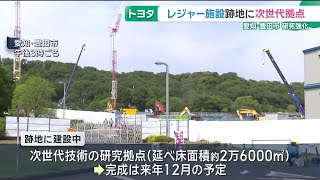
Toyota Motor will establish a next-generation technology research hub on the site of a former leisure complex in Toyota City, Aichi Prefecture, as part of its efforts to accelerate innovation in future mobility and related fields.