News On Japan

Why More Children Are Getting Hair Removal

TOKYO - Hair removal is rapidly growing in popularity across all age groups in Japan, with a sharp increase seen even among children. Some clinics now report cases of children as young as nine undergoing hair removal treatments, often due to teasing from classmates or a desire to feel confident during swimming classes.

The number of children receiving hair removal has surged twentyfold compared to 2022, with many parents supporting early treatments to prevent bullying or future inconvenience.

There are two main types of hair removal: medical and cosmetic. Medical procedures use high-powered lasers to destroy hair-producing cells for more permanent results, while cosmetic treatments use lower-intensity light, causing less pain but offering more temporary effects. Experts generally recommend starting treatments in the late teenage years when hormonal balance stabilizes, though many younger children are already receiving procedures.

Hair removal among adult men has also gained widespread acceptance, influenced partly by the popularity of K-pop stars like BTS, who model smooth, hairless appearances. In South Korea, more than a quarter of men in their twenties reportedly wish to undergo hair removal. Keio University economics professor Sakai, who has undergone full-body treatments himself, believes male hair removal is now socially normalized, while women still face stronger expectations to remain hairless.

The debate around hair removal reflects broader societal discussions about beauty standards, personal freedom, and social pressure. While some see it as a personal choice for comfort or aesthetics, others point out the risk of imposing rigid appearance norms, particularly on women and children. Even in elder care, hair removal is sometimes used to simplify hygiene for caregivers. Ultimately, many believe individuals should have full freedom to decide for themselves, whether to remove hair or not.

Source: ABEMA

News On Japan
POPULAR NEWS

Typhoon No. 7's impact on Japan's transport network continued to ease on June 28, with major airports and Shinkansen services operating largely as normal, although disruptions remained on several JR conventional lines in eastern Japan and road problems continued in areas affected by heavy rain and landslides.

According to updates at 6:20 a.m. on June 28, Kanto remained under cloudy rainy-season skies after two typhoons brought record rain, flooding and fallen trees across parts of Japan the previous day, with rain clouds already reaching Yamanashi and expected to spread across the region during the morning.

Japan advanced to the knockout stage of the World Cup after a 1-1 draw with Sweden on June 25, finishing second in Group F and setting up a Round of 32 clash with Brazil in Houston.

A powerful earthquake with a maximum seismic intensity of upper 6 struck off Iwate Prefecture at around 7:30 a.m. on June 25, shaking parts of Aomori Prefecture and leaving Hachinohe, which was hit by a similarly strong quake last December, facing fresh damage.

A powerful earthquake registering a maximum intensity of 6 upper on Japan’s seismic scale struck Aomori Prefecture at around 7:30 a.m. today. According to the Japan Meteorological Agency, the epicenter was off the coast of Iwate Prefecture, with a depth of about 50 kilometers. The earthquake’s magnitude was estimated at 6.9.

MEDIA CHANNELS
         

MORE Education NEWS

A U.S. family took part in a Japanese school experience program at a former school building in Chiba Prefecture, joining calligraphy, disaster drills, school lunch duty and a sports day-style event in a six-hour program that has attracted more than 200 foreign participants since it began about a year ago.

Urakawa, a Hokkaido town of about 10,000 people known as one of Japan's leading thoroughbred breeding centers, is seeing a rapid increase in Indian residents as local farms turn to experienced overseas workers to offset a shrinking pool of Japanese horse trainers.

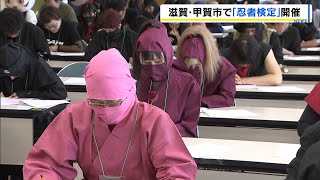
A certification exam testing knowledge and skills related to ninjas was held in Koka, Shiga Prefecture, a city known as one of Japan's historic ninja centers.

The Tokyo Fire Department has called for greater public cooperation with emergency medical services following a rise in incidents involving interference with ambulance crews, including cases in which paramedics have been assaulted while carrying out rescue operations.

The University of Tokyo and TOPPAN Holdings announced the establishment of the AI Innovation Research Center, a new initiative aimed at advancing research and development for the practical application of artificial intelligence in society.

As bear sightings continue at an unusually high pace across Akita Prefecture, a veteran wildlife photographer who has spent nearly 30 years observing and photographing Asian black bears says the animals are appearing more frequently, moving closer to human settlements, and increasingly adapting their behavior to survive.

The Blue Angels, the cheerleading squad of Joto High School's support and cheering club, are winning over audiences with their sparkling smiles and dynamic performances.

A group of university students in Okinawa is working to combat menstrual poverty and improve understanding of menstruation through educational programs aimed at both children and adults, addressing a problem that affects roughly one in three young women in Japan.