News On Japan

Sleep Market Expands with AI Pillow Selection

TOKYO - The market for sleep-related products is rapidly expanding in Japan, with innovations ranging from AI-powered pillow selection to a cat-shaped robot that promotes deep breathing.

The “Lifestyle Week Summer” trade fair opened on July 2nd at Tokyo Big Sight, featuring a dedicated “Sleep Goods Fair” focused on quality sleep. Approximately 300 items are on display, including bedding made from paper threads and alarm clocks that use vibrations and light to help users wake naturally.

Takahiromu Kikuchi, Director of Lifestyle Week, explained: "Visitors had been requesting a zone dedicated to sleep-themed items, so we created one."

Despite having some of the shortest average sleep times globally, many in Japan are seeking better sleep quality, fueling steady growth in the sleep-related goods market.

Among the highlighted trends is “summer wellness,” which Rakuten predicts will be a seasonal hit. One standout product is the “Utataneco” cat-shaped robot. It expands and contracts in a steady rhythm, encouraging diaphragmatic breathing simply by sleeping beside it. It also features a warming function that mimics a real cat’s body temperature—ideal for those who suffer from overuse of air conditioning during the summer.

Mitsuteru Nakahira from the PR division of Amaze Plus noted: "Hugging something warm is key to relaxation. Post-pandemic, health awareness has grown, and wellness has become an even hotter topic."

As record heat waves drive demand for wellness products, companies are also turning to cutting-edge solutions under the banner of “sleep tech”—the fusion of technology and sleep.

One such innovation uses AI to recommend ideal pillows. By submitting two standing posture photos along with basic details like height and weight, the system analyzes user data against a database of tens of thousands and recommends one of ten pillow types. The process, which traditionally required lengthy in-person customization, is now completed via smartphone, with delivery in as little as three days.

When anchor Uenaka tried the AI-recommended “super-low” pillow, the lowest of all types, he remarked: "I didn’t realize this low was actually good for me. I’ve been using something a bit higher, but this one is far more comfortable."

Ryusei Haneda, Chief of Strategic Planning at Yayoi Delight, commented: "AI not only saves time but increases accuracy—it's all benefits. The need for this kind of technology will only grow."

With trends like “summer wellness” and “sleep tech” continuing to evolve, Kikuchi of Lifestyle Week said he hopes the Sleep Goods Fair will expand in the coming years, adding: "As wellness becomes more widespread, we expect this exhibition to grow and attract even more innovative sleep products."

Source: FNN

News On Japan
POPULAR NEWS

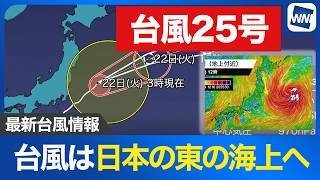
Typhoon No. 25 was moving away from Japan over waters to the east early on September 22, bringing an end to rainfall across the Kanto region while remaining a strong storm as it tracked northeast at 45 kilometers per hour at 3 a.m.

Severe transport disruption continued across Chiba Prefecture on the morning of September 22 even as Typhoon No. 25 moved away from Japan, with major JR lines still suspended, rail access to Narita Airport disrupted by river flooding, highways closed across the Boso Peninsula and thousands of travelers dealing with the aftermath of the previous day's cancellations.

Japan collected another 12 medals on Day 3 of the Aichi-Nagoya Asian Games on September 21, with 17-year-old swimmer Shin Ohashi and karateka Kakeru Nishiyama winning gold, while the host nation also advanced strongly in women's volleyball, baseball, soccer, handball and hockey.

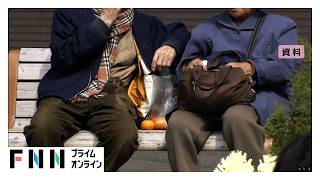
People aged 65 and older accounted for a record 29.6% of Japan's population in 2026, the highest proportion among major countries worldwide, while the number of elderly people in employment also reached an all-time high as Japan marked Respect for the Aged Day on September 21.

Emperor Naruhito and Empress Masako watched Japan defeat Kazakhstan in a women’s basketball preliminary-round game at the 20th Asian Games in Nagoya.

MEDIA CHANNELS
         

MORE Web3 NEWS

Japanese technology company MW is developing a home equipped with artificial intelligence and ceiling-mounted robots designed to automate household chores, with the goal of freeing people from the roughly four hours a day that can be spent on domestic work.

Cross-border trade across Asia-Pacific keeps expanding, and so does the number of foreign shoppers, tourists, and business travelers that merchants now have to serve.

Both cryptocurrency and online casinos have developed huge audiences in Japan. Research from 2025 estimated that more than three million adults have wagered online, while Japan also has an established crypto sector that is supported by millions of exchange accounts.

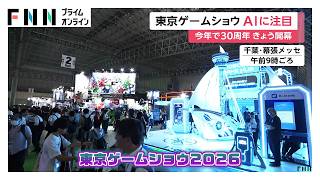
The Tokyo Game Show, one of the world's largest gaming exhibitions, opened with a record 1,138 exhibitors as companies from a growing range of industries seek a foothold in Japan's expanding gaming market, with artificial intelligence emerging as one of the main attractions this year.

Police are warning of a nationwide surge in scams involving criminals posing as officers, with evidence emerging that generative AI may now be used to create fake identities during video calls and make the deception more convincing.

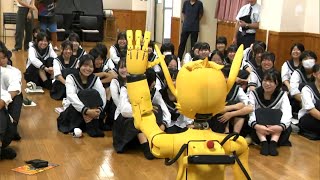
High school students in Mishima, Shizuoka Prefecture, explored how humans and artificial intelligence might coexist in the future by interacting with an AI-powered humanoid robot during a class on September 11.

A medical institution opening in Nagoya's Showa Ward in October will use artificial intelligence-enhanced PET-CT and MRI equipment to produce clearer images and reduce the risk of cancer being overlooked during diagnostic examinations.

The rapid spread of generative artificial intelligence is fueling construction of data centers across Japan, but plans for two large facilities beside a residential neighborhood in Minoh, Osaka Prefecture, are raising concerns over sunlight, noise and low-frequency sound as authorities confront gaps in rules governing the increasingly important infrastructure.