News On Japan

Immigration Policy Debate Focuses on Labor Shortage and Social Friction

TOKYO - With Japan facing a labor shortage due to its aging population, immigration policy has emerged as a key issue in the upcoming Upper House election in July. On July 9th, the topic was discussed in depth by news program “It!”, which highlighted public concerns and political stances regarding the role of foreign nationals in Japanese society.

Several recent incidents have sparked debate, including the ease with which foreign driver’s licenses are converted to Japanese ones, and rising tensions around property ownership by foreigners. At a licensing center in Fuchu, Tokyo, a large number of Chinese nationals were seen lining up early in the morning to complete the conversion process. Critics point out that the written test is comparatively easy and that possession of a Japanese license facilitates the issuance of an international driving permit valid in over 100 countries.

Another issue gaining attention involves sharp rent hikes in a Tokyo apartment building after ownership changed hands to a company registered in China. Tenants reported that rents were being raised to as much as 260–320% of previous levels, with one example rising from 72,500 yen to 190,000 yen. Although the hikes were ultimately withdrawn, concerns remain that such moves could be part of attempts to convert properties into short-term rentals, a trend that has caused friction in some neighborhoods.

Additional concerns include fraudulent resale practices at duty-free stores and rising instances of foreign nationals failing to pay into Japan’s medical insurance system. In response, Prime Minister Ishiba announced on July 8th that the government will set up a new administrative unit next week to address these issues and review relevant policies.

The ruling Liberal Democratic Party is calling for stricter regulation of driver’s license conversions and foreign real estate ownership. The Constitutional Democratic Party supports improving employment systems for foreign workers. Komeito emphasizes regional tourism and protection of foreign residents’ rights, while Nippon Ishin no Kai proposes centralized national control of immigration policy. Other parties, such as the Japanese Communist Party, advocate expanded protections for foreign workers and asylum seekers. The Democratic Party for the People wants legal restrictions on land ownership and reforms to the duty-free system.

Reiwa Shinsengumi opposes the reliance on low-wage foreign labor and calls for the abolition of the Immigration Control and Refugee Recognition Act. The Sanseito party promotes a “Japan First” approach and the creation of a new immigration policy agency. The Social Democratic Party supports building a multicultural society, while the Japan Conservative Party seeks to revise the immigration law and review business management visas.

While some public criticisms of foreign nationals are based on real issues, the spread of misinformation and exaggerated claims—particularly on social media—has been flagged as a concern. Some of these narratives risk fostering xenophobic sentiment, prompting calls for fact-checking and balanced reporting.

“It’s important to recognize that many foreign nationals live, work, or visit Japan as tourists, and a nuanced, inclusive approach is needed,” said anchor Miyaura. “We see foreign staff in our daily lives, like at convenience stores, so we must not base judgments on impressions alone,” added anchor Miyaji.

Commentator Patrick Harlan noted, “Japan tends to assume good intentions in policy-making, but systems should be designed to prevent abuse—based on actual data, not fears.”

Behind this growing focus on immigration policy is Japan’s deepening labor shortage, according to Fuji TV’s political editor Soichiro Nishigaki. While some advocate for coexistence with foreign workers, others stress regulation out of concern for public safety or wage stagnation. As a result, political parties remain divided in their approaches, and voters are paying closer attention to where each party stands.

Source: FNN

News On Japan
POPULAR NEWS

A state of heightened alert remained in place in Utsunomiya, Tochigi Prefecture, on June 9th after a series of bear sightings continued across the city, with authorities warning that as many as two bears may be moving through residential neighborhoods. All 94 municipal elementary and junior high schools remained closed for a second day as officials searched for the animals.

A prolonged eruption at Sakurajima on June 7th blanketed parts of Kagoshima City in volcanic ash, turning roads gray and prompting long lines of vehicles seeking car washes after a plume of smoke rose 1,300 meters above the crater.

A powerful earthquake struck off Mindanao Island in the southern Philippines at 8:38 a.m. (Japan time) on June 8th, generating tsunami waves across parts of the Pacific, causing building collapses and casualties near the epicenter, and prompting the Japan Meteorological Agency to issue tsunami advisories along a wide stretch of Japan's Pacific coastline before lifting all of them at 4:50 p.m.

A clinic director and a former Peruvian staff member have been referred to prosecutors after the man allegedly performed medical procedures without a license, including an external cephalic version—a procedure used to manually turn a baby into the correct position before birth—at an obstetrics and gynecology clinic in Fukuoka City, raising concerns about patient safety and oversight in maternity care.

A large bear was captured on security camera footage running through a shopping arcade in central Utsunomiya, Tochigi Prefecture, in the early hours of June 7th, as authorities stepped up warnings following a series of bear sightings across the city.

MEDIA CHANNELS
         

MORE Politics NEWS

The speakers and vice speakers of both houses of Japan's parliament formally presented a proposal on June 8th aimed at securing a stable number of Imperial Family members, seeking legislation on two measures previously recommended by a government expert panel.

For several months, Japan has been moving in a more nationalist and conservative direction. The shift has been fuelled by economic challenges at home and growing regional tensions with China.

Prime Minister Sanae Takaichi's administration is facing mounting scrutiny over allegations that members of her campaign were involved in distributing online videos that disparaged rival candidates during the February House of Representatives election, with opposition parties intensifying their questioning in the Diet and demanding further clarification.

The Japanese government approved its 2026 Environment White Paper at a Cabinet meeting on June 5th, warning that a record-high 50,000-plus bear sightings recorded nationwide during fiscal 2025 have become a serious threat to public safety while also highlighting growing concerns over Japan's aging hunting population and the need to train a new generation of hunters.

Prime Minister Sanae Takaichi faced intense questioning in the House of Representatives Budget Committee on June 4th over allegations surrounding defamatory campaign videos, telling lawmakers she had not verified newly released audio published by Weekly Bunshun because she had no intention of becoming a paid subscriber to the magazine's online service.

The Japanese government has presented estimates showing how long it would take to implement a reduction in Japan's consumption tax on food products, indicating that cutting the rate to either zero percent or 1 percent would require significant preparation time.

The Japanese government approved a supplementary budget proposal exceeding 3 trillion yen on June 3rd, including the creation of a new contingency reserve aimed at responding to developments in the Middle East and addressing rising energy prices.

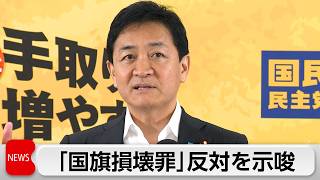
The leader of the Democratic Party for the People, Yuichiro Tamaki, suggested on June 2nd that his party may oppose a bill drafted by the Liberal Democratic Party to establish a new criminal offense for desecrating the national flag, arguing that it could unduly restrict freedom of expression.