News On Japan

Fake AI Robot Dog Ads Spark Consumer Backlash

NAGOYA - A growing number of consumers in Japan are falling victim to fake online ads that falsely claim endorsements from well-known companies and universities. In one such case, a licensed psychologist in Nagoya paid approximately 4,500 yen for an "AI robot dog" that turned out to be little more than a cheap toy resembling something from the Showa era.

Psychologist Takeuchi Naruhiko said he was browsing YouTube in June when he saw a video advertisement featuring a lifelike robotic puppy. The ad promoted the product as "Japan’s first AI toy dog" that didn’t require feeding and could be rapidly recharged. It also claimed the device could "read its owner's personality and gradually learn new tricks," prompting Takeuchi to make an instant purchase.

However, what arrived a few days later was a crude toy that bore no resemblance to the advertised product. "It's not a pet at all—you can tell at a glance it's a toy," Takeuchi said. "Even a 3-year-old wouldn’t enjoy this. It’s like a toy from the Showa era."

On social media, others echoed similar experiences. One buyer noted the product merely "barked noisily" and discovered many others had encountered the same scam. A key reason for the product’s appeal was the claim that it had been jointly developed by Sony and the University of Tokyo.

Takeuchi said, "They said it was a collaboration between the University of Tokyo and Sony, so I thought it must be legitimate. I was impressed—Sony and the University of Tokyo together sounded serious."

However, both institutions have denied any involvement. The University of Tokyo clarified that it does not even have a faculty of artificial intelligence, as claimed in the advertisement. Sony also denied any connection to the product.

Experts suggest some parts of the advertisement may have used generated AI imagery, particularly the USB charging scenes. However, others, such as scenes featuring a white dog, appeared to use footage of a real animal.

Fake ads are being discovered across a wide range of products. In the case of a falsely advertised air circulator, one victim attempted to negotiate a refund through LINE, telling the seller that the product was clearly a counterfeit. Although they were promised a refund of 1,000 yen, the payment never arrived. "I wasn’t satisfied with just 1,000 yen, but I wanted to be done with it," the buyer said.

Legal experts warn that engaging directly with such sellers—often overseas entities posing as Japanese companies—can be risky. Lawyer Kyorikawa Sho from Hashimoto Law Office advises victims to contact the police or a consumer affairs center rather than pursuing the matter privately, which could lead to further harm.

Source: FNN

News On Japan
POPULAR NEWS

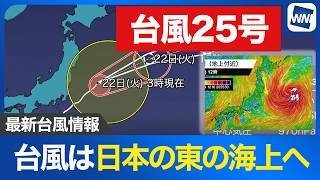
Typhoon No. 25 was moving away from Japan over waters to the east early on September 22, bringing an end to rainfall across the Kanto region while remaining a strong storm as it tracked northeast at 45 kilometers per hour at 3 a.m.

Severe transport disruption continued across Chiba Prefecture on the morning of September 22 even as Typhoon No. 25 moved away from Japan, with major JR lines still suspended, rail access to Narita Airport disrupted by river flooding, highways closed across the Boso Peninsula and thousands of travelers dealing with the aftermath of the previous day's cancellations.

Japan collected another 12 medals on Day 3 of the Aichi-Nagoya Asian Games on September 21, with 17-year-old swimmer Shin Ohashi and karateka Kakeru Nishiyama winning gold, while the host nation also advanced strongly in women's volleyball, baseball, soccer, handball and hockey.

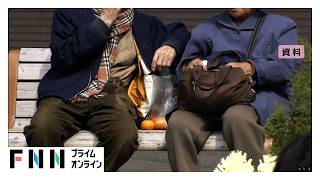
People aged 65 and older accounted for a record 29.6% of Japan's population in 2026, the highest proportion among major countries worldwide, while the number of elderly people in employment also reached an all-time high as Japan marked Respect for the Aged Day on September 21.

Emperor Naruhito and Empress Masako watched Japan defeat Kazakhstan in a women’s basketball preliminary-round game at the 20th Asian Games in Nagoya.

MEDIA CHANNELS
         

MORE Web3 NEWS

Japanese technology company MW is developing a home equipped with artificial intelligence and ceiling-mounted robots designed to automate household chores, with the goal of freeing people from the roughly four hours a day that can be spent on domestic work.

Cross-border trade across Asia-Pacific keeps expanding, and so does the number of foreign shoppers, tourists, and business travelers that merchants now have to serve.

Both cryptocurrency and online casinos have developed huge audiences in Japan. Research from 2025 estimated that more than three million adults have wagered online, while Japan also has an established crypto sector that is supported by millions of exchange accounts.

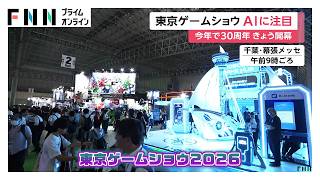
The Tokyo Game Show, one of the world's largest gaming exhibitions, opened with a record 1,138 exhibitors as companies from a growing range of industries seek a foothold in Japan's expanding gaming market, with artificial intelligence emerging as one of the main attractions this year.

Police are warning of a nationwide surge in scams involving criminals posing as officers, with evidence emerging that generative AI may now be used to create fake identities during video calls and make the deception more convincing.

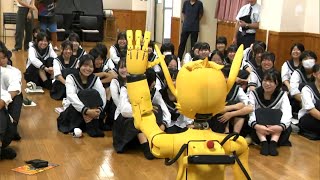
High school students in Mishima, Shizuoka Prefecture, explored how humans and artificial intelligence might coexist in the future by interacting with an AI-powered humanoid robot during a class on September 11.

A medical institution opening in Nagoya's Showa Ward in October will use artificial intelligence-enhanced PET-CT and MRI equipment to produce clearer images and reduce the risk of cancer being overlooked during diagnostic examinations.

The rapid spread of generative artificial intelligence is fueling construction of data centers across Japan, but plans for two large facilities beside a residential neighborhood in Minoh, Osaka Prefecture, are raising concerns over sunlight, noise and low-frequency sound as authorities confront gaps in rules governing the increasingly important infrastructure.