News On Japan

Revolutionizing Real Estate Using Satellite Data and AI

TOKYO - In Japan’s high-priced real estate market, a new service has emerged that aims to uncover overlooked and undervalued properties. The target: the 99% of real estate on Earth that remains largely untapped.

A start-up founded by a former JAXA (Japan Aerospace Exploration Agency) researcher is taking on the challenge, aiming to revolutionize property discovery and distribution by combining satellite data with artificial intelligence.

When asked about the potential market scale, the founder estimated it at 10 quadrillion yen.

This episode of "Breakthrough" follows writer Hideo Ai as he interviews a pioneer using space and AI to transform how real estate is found and transacted.

The focus is Akutake, CEO of Penetrator, the first start-up to spin out of JAXA. He guides Ai through Tokyo’s Bunkyo Ward, a densely packed residential area.

"Here’s a quick quiz," Akutake says. "This area may look like an ordinary neighborhood, but there’s actually a vacant lot here that could be a real estate opportunity. Can you spot it?"

Looking around, the buildings seem tightly packed, with no visible open space. But using their proprietary software, Akutake pulls up satellite data that reveals a vacant lot hidden behind a row of buildings.

When they visit the location in person, the space is indeed there—tucked away and invisible from the street.

But the software does more than just identify empty lots. It also integrates data from legal registries to instantly display information like property ownership, location of the owner, and percentage of land held.

"This land, for example," Akutake explains, "you can see who owns it, where they live, and what share of the property they hold."

The software, called WEAR, is a real estate search tool equipped with AI trained to analyze satellite images and identify vacant lots, aging buildings, or even underused parking spaces. It combines this with government data—including ownership records and construction details—providing a comprehensive picture in seconds. The system is patented.

To test the software’s capabilities, Ai tries searching for land on the assumption he wants to build a house.

"The interface is simple," Akutake says. "You enter the desired location and search radius. For example, is there somewhere you've always dreamed of living?"

Ai selects Aobadai in Meguro Ward, Tokyo.

Like a standard property search site, the user inputs a neighborhood and specifies the type of property—such as vacant land, old homes, or parking lots—based on intended use.

"The broader the area or the more detailed the criteria, the longer the search takes," Akutake notes. "But even then, if you’re looking for around 100 properties, it only takes about three minutes."

"Three minutes?" Ai repeats, surprised.

Source: テレ東BIZ

News On Japan
POPULAR NEWS

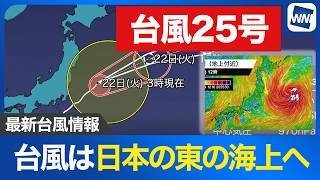
Typhoon No. 25 was moving away from Japan over waters to the east early on September 22, bringing an end to rainfall across the Kanto region while remaining a strong storm as it tracked northeast at 45 kilometers per hour at 3 a.m.

Severe transport disruption continued across Chiba Prefecture on the morning of September 22 even as Typhoon No. 25 moved away from Japan, with major JR lines still suspended, rail access to Narita Airport disrupted by river flooding, highways closed across the Boso Peninsula and thousands of travelers dealing with the aftermath of the previous day's cancellations.

Japan collected another 12 medals on Day 3 of the Aichi-Nagoya Asian Games on September 21, with 17-year-old swimmer Shin Ohashi and karateka Kakeru Nishiyama winning gold, while the host nation also advanced strongly in women's volleyball, baseball, soccer, handball and hockey.

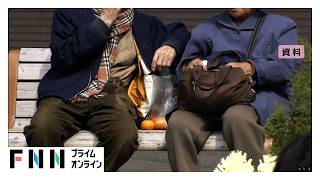
People aged 65 and older accounted for a record 29.6% of Japan's population in 2026, the highest proportion among major countries worldwide, while the number of elderly people in employment also reached an all-time high as Japan marked Respect for the Aged Day on September 21.

Emperor Naruhito and Empress Masako watched Japan defeat Kazakhstan in a women’s basketball preliminary-round game at the 20th Asian Games in Nagoya.

MEDIA CHANNELS
         

MORE Web3 NEWS

Japanese technology company MW is developing a home equipped with artificial intelligence and ceiling-mounted robots designed to automate household chores, with the goal of freeing people from the roughly four hours a day that can be spent on domestic work.

Cross-border trade across Asia-Pacific keeps expanding, and so does the number of foreign shoppers, tourists, and business travelers that merchants now have to serve.

Both cryptocurrency and online casinos have developed huge audiences in Japan. Research from 2025 estimated that more than three million adults have wagered online, while Japan also has an established crypto sector that is supported by millions of exchange accounts.

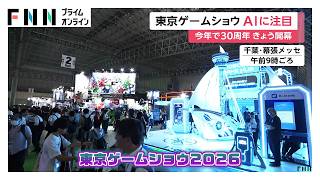
The Tokyo Game Show, one of the world's largest gaming exhibitions, opened with a record 1,138 exhibitors as companies from a growing range of industries seek a foothold in Japan's expanding gaming market, with artificial intelligence emerging as one of the main attractions this year.

Police are warning of a nationwide surge in scams involving criminals posing as officers, with evidence emerging that generative AI may now be used to create fake identities during video calls and make the deception more convincing.

High school students in Mishima, Shizuoka Prefecture, explored how humans and artificial intelligence might coexist in the future by interacting with an AI-powered humanoid robot during a class on September 11.

A medical institution opening in Nagoya's Showa Ward in October will use artificial intelligence-enhanced PET-CT and MRI equipment to produce clearer images and reduce the risk of cancer being overlooked during diagnostic examinations.

The rapid spread of generative artificial intelligence is fueling construction of data centers across Japan, but plans for two large facilities beside a residential neighborhood in Minoh, Osaka Prefecture, are raising concerns over sunlight, noise and low-frequency sound as authorities confront gaps in rules governing the increasingly important infrastructure.