News On Japan

Typhoon 15 Leaves Trail of Destruction Across Japan

TOKYO - Typhoon No. 15 made landfall near Sukumo City in Kochi Prefecture in the early hours of September 5th before re-entering northern Wakayama Prefecture around 9 a.m. The storm then tracked eastward along the Pacific coast, unleashing record rainfall, tornado-like winds, and severe damage across wide areas of Japan.

Shizuoka Prefecture has been among the hardest hit. In Makinohara City, violent gusts ripped through residential areas, toppling utility poles, damaging buildings, and overturning large vehicles. As of 8 p.m. on September 5th, the city reported 228 houses damaged, including one destroyed and 42 partially collapsed. Power outages left neighborhoods in darkness, forcing residents to spend the night under sweltering and humid conditions without air conditioning or fans. Hospitals in the area treated about 30 people for injuries such as fractures and cuts caused by flying debris.

Residents described terrifying scenes as windows shattered, roofs were torn away, and cars were flipped by the force of the winds. A 73-year-old man recounted hiding with his son in a bathroom as his house was partially destroyed, while foreign residents in Makinohara surveyed debris-strewn apartments with broken glass, fallen air conditioning units, and entire walls ripped away.

Rainfall in Shizuoka also reached record levels, with 127 millimeters in one hour in Kikugawa and 113 millimeters at Shizuoka Airport. Flooding inundated parking lots, with cars submerged to the windows, and roads impassable as traffic lights went dark due to outages. In Hamamatsu, police and firefighters continued searching for an elderly man feared to have fallen into a water channel.

Elsewhere, Aichi Prefecture saw intense downpours, with 78 millimeters falling in one hour in Okazaki, submerging roads and stalling vehicles. Residents pushed stranded cars to safety through rising floodwaters. In Kanagawa, gusts struck Owakudani in Hakone, sending tourists scrambling for cover. By late afternoon, linear rainbands triggered flooding in Kamakura and Yokohama, where water surged from manholes as drainage systems were overwhelmed.

In Ibaraki Prefecture, violent winds overturned cars in a parking lot near JR Omika Station in Hitachi. Firefighters received emergency calls around 1:40 p.m. reporting vehicles flipped by strong gusts. Two cars were overturned, though no injuries were reported. Video captured cars being lifted and thrown, with one witness likening the event to a tornado.

Across the country, Typhoon 15 left its mark. In Ito City, Shizuoka, street trees fell and storefronts were damaged by flying debris. In multiple regions, storm surges and torrential rainfall flooded roads, while strong winds tore at buildings and infrastructure.

Although the worst of the rain is expected to pass overnight, authorities warn that saturated soils in Pacific-facing regions remain at high risk of landslides even after rainfall subsides. In Kanto, up to 200 millimeters of additional rain is forecast through midday September 6th.

Looking ahead, skies will clear nationwide on September 6th under high pressure, but dangerous heat is expected to return. Temperatures in Tokai and western Japan may again reach around 35 degrees Celsius, while Tokyo will rise to 32 degrees. Northern Japan will also see warmer conditions, though Tohoku may face intermittent rain.

Despite the typhoon’s departure, recovery efforts are only beginning. Across Japan, emergency crews continue to restore power, clear debris, and assist residents whose homes and livelihoods were battered by Typhoon 15.

Source: TBS

News On Japan
POPULAR NEWS

A bear that had been repeatedly spotted in commercial and residential areas of Utsunomiya, Tochigi Prefecture, was captured in a residential neighborhood at around 3:30 p.m. on June 9th after authorities used a tranquilizer gun following several days of sightings across the city.

A prolonged eruption at Sakurajima on June 7th blanketed parts of Kagoshima City in volcanic ash, turning roads gray and prompting long lines of vehicles seeking car washes after a plume of smoke rose 1,300 meters above the crater.

A powerful earthquake struck off Mindanao Island in the southern Philippines at 8:38 a.m. (Japan time) on June 8th, generating tsunami waves across parts of the Pacific, causing building collapses and casualties near the epicenter, and prompting the Japan Meteorological Agency to issue tsunami advisories along a wide stretch of Japan's Pacific coastline before lifting all of them at 4:50 p.m.

A clinic director and a former Peruvian staff member have been referred to prosecutors after the man allegedly performed medical procedures without a license, including an external cephalic version—a procedure used to manually turn a baby into the correct position before birth—at an obstetrics and gynecology clinic in Fukuoka City, raising concerns about patient safety and oversight in maternity care.

A large bear was captured on security camera footage running through a shopping arcade in central Utsunomiya, Tochigi Prefecture, in the early hours of June 7th, as authorities stepped up warnings following a series of bear sightings across the city.

MEDIA CHANNELS
         

MORE Travel NEWS

A slope collapse alongside the JR Dosan Line between Tsubojiri and Hashikura stations in Tokushima Prefecture, detected after a rockfall warning system was activated in the early hours of June 8th, has forced the suspension of train services with no timetable yet established for the restoration of operations.

Japan Airlines will once again operate seasonal flights between Chubu Centrair International Airport and the Hokkaido cities of Obihiro and Kushiro throughout August, offering travelers from hot Nagoya a chance to enjoy the region's cooler summer climate.

A large bear was captured on security camera footage running through a shopping arcade in central Utsunomiya, Tochigi Prefecture, in the early hours of June 7th, as authorities stepped up warnings following a series of bear sightings across the city.

Japan's Meteorological Agency announced on June 7th that the rainy season is believed to have begun in the Tokai and Kanto-Koshin regions, marking the seasonal shift to wetter weather across a broad area of the country.

Yakushima, a world natural heritage island in Kagoshima Prefecture, is marking 60 years since the discovery of Jomon Sugi, the island's iconic cedar tree estimated to be more than 2,000 years old, as concerns grow over the future of the ancient forests that have long supported both tourism and local life.

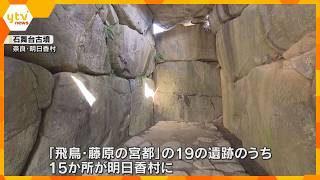
Residents in Nara Prefecture are celebrating after UNESCO's advisory body recommended the archaeological complex known as the Asuka-Fujiwara Ancient Capitals for inscription as a World Heritage site, bringing the historic birthplace of Japan's ancient state one step closer to international recognition.

Japan could face a more active typhoon season than usual in 2026, with private weather forecaster Weathernews predicting around 28 typhoons to form during the year—above the long-term average of 25.1—and warning that approximately 14 could approach Japan, increasing the risk of weather-related disruptions across the country.

Tourists are once again taking to the waters of the Kitayama River along the borders of Wakayama, Mie, and Nara prefectures, where a popular traditional rafting experience recreates the historic practice of transporting mountain timber by raft from Kitayama Village downstream to Shingu City.