News On Japan

Ishiba Faces Mounting Pressure as LDP Pushes for Early Leadership Vote

TOKYO - Prime Minister Ishiba’s declaration to remain in office has triggered a surge in moves within the Liberal Democratic Party (LDP) to unseat him. The party’s top four executives have announced their resignations, and former Prime Minister Aso has endorsed bringing forward the leadership election.

Current cabinet ministers have also expressed support for an early contest, with some lawmakers publishing written endorsements ahead of the September 8th submission deadline.

Amid this intensifying conflict, Ishiba’s options to resist are limited. One possibility is the dissolution of the House of Representatives, a tactic seen as a last resort. However, public concerns are rising that while political maneuvering dominates headlines, measures to address living standards remain stalled. The government is considering cash handouts of 20,000 yen per day, but debate continues over whether to impose income limits. A survey found 83 percent believe such measures would not boost support for the Ishiba administration, while only 10 percent said it would.

Pressure from within the party has been mounting. Lawmakers such as Nakatani have openly signed requests for an early leadership election, and Cabinet members including Minister Suzuki have also voiced support. Younger lawmakers are following suit, fueling momentum for change. A survey of 566 respondents showed that 52 percent support an early leadership election, while 38 percent oppose it, with many citing the LDP’s string of defeats in the Lower House, Tokyo Metropolitan Assembly, and Upper House elections as evidence that the party leadership must take responsibility.

Some in the LDP see the “dissolution card” as Ishiba’s way to regain leverage. Dissolving the Lower House would allow the prime minister to wield control over candidate endorsements, creating pressure on lawmakers concerned about reelection prospects. Yet critics argue that such a move lacks clear justification and could deepen divisions within the party.

The struggle is further complicated by the sharp decline in the number of LDP lawmakers since last year, making it harder for potential candidates to gather the 20 endorsements required to enter the race. Even Ishiba himself could face difficulty securing sufficient support. Meanwhile, senior figures such as Koizumi have hinted at the possibility of running if Ishiba steps down voluntarily, reflecting the fluid nature of party dynamics.

Public frustration remains high over issues such as political funding scandals and insufficient responses to rising living costs. Comparative examples abroad, such as Sweden’s temporary reduction of food taxes from 12 to 6 percent, have sparked debate in Japan over whether more flexible measures are needed. For now, the LDP’s internal turmoil overshadows policy debate, leaving both party members and voters uncertain about the path forward.

Source: YOMIURI

News On Japan
POPULAR NEWS

A prolonged eruption at Sakurajima on June 7th blanketed parts of Kagoshima City in volcanic ash, turning roads gray and prompting long lines of vehicles seeking car washes after a plume of smoke rose 1,300 meters above the crater.

A powerful earthquake struck off Mindanao Island in the southern Philippines at 8:38 a.m. (Japan time) on June 8th, generating tsunami waves across parts of the Pacific, causing building collapses and casualties near the epicenter, and prompting the Japan Meteorological Agency to issue tsunami advisories along a wide stretch of Japan's Pacific coastline before lifting all of them at 4:50 p.m.

A clinic director and a former Peruvian staff member have been referred to prosecutors after the man allegedly performed medical procedures without a license, including an external cephalic version—a procedure used to manually turn a baby into the correct position before birth—at an obstetrics and gynecology clinic in Fukuoka City, raising concerns about patient safety and oversight in maternity care.

A large bear was captured on security camera footage running through a shopping arcade in central Utsunomiya, Tochigi Prefecture, in the early hours of June 7th, as authorities stepped up warnings following a series of bear sightings across the city.

Japan's Meteorological Agency announced on June 7th that the rainy season is believed to have begun in the Tokai and Kanto-Koshin regions, marking the seasonal shift to wetter weather across a broad area of the country.

MEDIA CHANNELS
         

MORE Politics NEWS

The speakers and vice speakers of both houses of Japan's parliament formally presented a proposal on June 8th aimed at securing a stable number of Imperial Family members, seeking legislation on two measures previously recommended by a government expert panel.

For several months, Japan has been moving in a more nationalist and conservative direction. The shift has been fuelled by economic challenges at home and growing regional tensions with China.

Prime Minister Sanae Takaichi's administration is facing mounting scrutiny over allegations that members of her campaign were involved in distributing online videos that disparaged rival candidates during the February House of Representatives election, with opposition parties intensifying their questioning in the Diet and demanding further clarification.

The Japanese government approved its 2026 Environment White Paper at a Cabinet meeting on June 5th, warning that a record-high 50,000-plus bear sightings recorded nationwide during fiscal 2025 have become a serious threat to public safety while also highlighting growing concerns over Japan's aging hunting population and the need to train a new generation of hunters.

Prime Minister Sanae Takaichi faced intense questioning in the House of Representatives Budget Committee on June 4th over allegations surrounding defamatory campaign videos, telling lawmakers she had not verified newly released audio published by Weekly Bunshun because she had no intention of becoming a paid subscriber to the magazine's online service.

The Japanese government has presented estimates showing how long it would take to implement a reduction in Japan's consumption tax on food products, indicating that cutting the rate to either zero percent or 1 percent would require significant preparation time.

The Japanese government approved a supplementary budget proposal exceeding 3 trillion yen on June 3rd, including the creation of a new contingency reserve aimed at responding to developments in the Middle East and addressing rising energy prices.

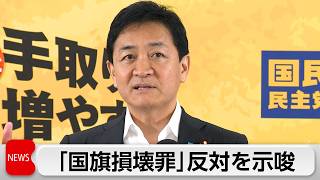
The leader of the Democratic Party for the People, Yuichiro Tamaki, suggested on June 2nd that his party may oppose a bill drafted by the Liberal Democratic Party to establish a new criminal offense for desecrating the national flag, arguing that it could unduly restrict freedom of expression.