News On Japan

From Morning Glory Failures to Shorter Radio Exercises, Summer Heat Challenge Students

TOKYO - Persistent extreme heat has upended familiar elements of summer life in Japan, with long-standing traditions such as morning glory observation homework and radio exercises disrupted by high temperatures.

According to the Japan Weather Association’s ranking of prefectural capitals by the number of “extremely hot days” (temperatures at or above 35°C), Kyoto topped the list with 61 days, followed by Kofu with 59, and Nagoya and Maebashi with 52 each. By contrast, Naha in Okinawa recorded zero extremely hot days this summer. The highest temperature in Naha was 34°C on September 12th, with July and August averages about two degrees cooler than Tokyo. Meteorologist Makoto Kawazu explained that Okinawa’s climate is moderated by surrounding seas and the absence of high mountains, limiting the impact of the Foehn phenomenon.

Kawazu, who spent his summer vacation in Okinawa, noted, “If you avoid direct sunlight, it is cooler and more comfortable than Tokyo.”

The heat has also forced changes to the tradition of radio calisthenics, which began in 1928 under the Ministry of Communications. The National Radio Calisthenics Federation said more communities and schools are no longer holding morning sessions, mainly due to the heat. On August 5th, Tokyo recorded 30°C at 6:30 a.m., the standard time for exercises. In places where the program continues, it has been shortened to just one week at the start or end of summer vacation, a shift from the once month-long practice. The familiar stamp cards, once distributed at schools and exchanged for stationery prizes, are now often obtained online or at post offices and can be used year-round.

Another tradition, the summer homework of observing morning glories assigned to first graders, has also been disrupted. Associate Professor Nitasaka of Kyushu University said the plant is usually easy to grow because it has large seeds and resists disease, but this year’s extreme conditions caused widespread failures. On social media, parents reported that flowers did not bloom, plants withered, and in some cases children substituted drawings of mud balls when their morning glories died. “Only one child in the class managed to get seeds,” one parent wrote, while another described the assignment as “broken as homework.”

Nitasaka explained that while morning glories are heat-tolerant, they are vulnerable to drought, and prolonged daylight hours can prevent flowering. This year’s low rainfall compounded the problem. With summers growing hotter, schools and families may need to reconsider the traditional shape of summer assignments.

Source: TBS

News On Japan
POPULAR NEWS

Typhoon No. 7's impact on Japan's transport network continued to ease on June 28, with major airports and Shinkansen services operating largely as normal, although disruptions remained on several JR conventional lines in eastern Japan and road problems continued in areas affected by heavy rain and landslides.

According to updates at 6:20 a.m. on June 28, Kanto remained under cloudy rainy-season skies after two typhoons brought record rain, flooding and fallen trees across parts of Japan the previous day, with rain clouds already reaching Yamanashi and expected to spread across the region during the morning.

Japan advanced to the knockout stage of the World Cup after a 1-1 draw with Sweden on June 25, finishing second in Group F and setting up a Round of 32 clash with Brazil in Houston.

A powerful earthquake with a maximum seismic intensity of upper 6 struck off Iwate Prefecture at around 7:30 a.m. on June 25, shaking parts of Aomori Prefecture and leaving Hachinohe, which was hit by a similarly strong quake last December, facing fresh damage.

A powerful earthquake registering a maximum intensity of 6 upper on Japan’s seismic scale struck Aomori Prefecture at around 7:30 a.m. today. According to the Japan Meteorological Agency, the epicenter was off the coast of Iwate Prefecture, with a depth of about 50 kilometers. The earthquake’s magnitude was estimated at 6.9.

MEDIA CHANNELS
         

MORE Education NEWS

A U.S. family took part in a Japanese school experience program at a former school building in Chiba Prefecture, joining calligraphy, disaster drills, school lunch duty and a sports day-style event in a six-hour program that has attracted more than 200 foreign participants since it began about a year ago.

Urakawa, a Hokkaido town of about 10,000 people known as one of Japan's leading thoroughbred breeding centers, is seeing a rapid increase in Indian residents as local farms turn to experienced overseas workers to offset a shrinking pool of Japanese horse trainers.

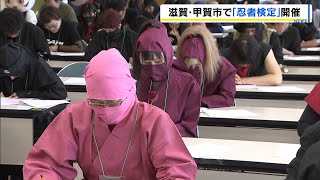
A certification exam testing knowledge and skills related to ninjas was held in Koka, Shiga Prefecture, a city known as one of Japan's historic ninja centers.

The Tokyo Fire Department has called for greater public cooperation with emergency medical services following a rise in incidents involving interference with ambulance crews, including cases in which paramedics have been assaulted while carrying out rescue operations.

The University of Tokyo and TOPPAN Holdings announced the establishment of the AI Innovation Research Center, a new initiative aimed at advancing research and development for the practical application of artificial intelligence in society.

As bear sightings continue at an unusually high pace across Akita Prefecture, a veteran wildlife photographer who has spent nearly 30 years observing and photographing Asian black bears says the animals are appearing more frequently, moving closer to human settlements, and increasingly adapting their behavior to survive.

The Blue Angels, the cheerleading squad of Joto High School's support and cheering club, are winning over audiences with their sparkling smiles and dynamic performances.

A group of university students in Okinawa is working to combat menstrual poverty and improve understanding of menstruation through educational programs aimed at both children and adults, addressing a problem that affects roughly one in three young women in Japan.