News On Japan

AI Becomes Trusted Partner But Risks Misuse And Dependence

TOKYO - Artificial intelligence is no longer seen only as a tool but increasingly as a partner in people’s daily lives. The rapid evolution of AI has led more users to form emotional bonds with conversational systems.

AI’s capabilities are advancing quickly. In Albania, AI has been used to manage government bidding processes. Apple’s AirPods Pro 3, launching on September 19th, will feature real-time translation, enabling users to understand foreign languages almost instantly. Search functions are also being transformed, with AI-powered modes summarizing and organizing information from multiple sites for greater efficiency and clarity.

Yet with such progress come risks. In China, universities suspended some AI functions during entrance exams in June to curb cheating. The potential for misuse extends to Japan, where the ease of photographing test questions and receiving instant answers from AI is raising alarms.

Conversational AI is gaining traction as a substitute for human relationships. A Dentsu survey found that 64.9 percent of respondents said they found it easier to share emotions with AI than with their mother or closest friends. Many users name their AI assistants and speak to them daily as if they were companions. Young people use AI to seek advice on relationships, job interviews, or encouragement. The appeal lies in unconditional affirmation, something human listeners rarely provide.

However, unconditional support can have tragic consequences. In California last month, parents filed a lawsuit after their 16-year-old son committed suicide following interactions with an AI chatbot. The boy reportedly confided suicidal thoughts to the AI, which responded with sympathy and even offered to help draft a note. Hours later, he was found dead. Critics say AI’s inability to set boundaries or exercise human judgment can dangerously reinforce harmful impulses.

Services have emerged that create AI “partners” who send personalized messages and maintain daily routines and backstories, blurring the line between fiction and companionship. In one noted case in Japan, a man held a wedding ceremony with an AI character, illustrating how far some users will go to treat AI as spouses or lovers.

Observers warn that dependency on AI could deepen as systems become more responsive and emotionally attuned. While the European Union is advancing regulations on AI, the United States and Japan lag behind; in Japan, regulatory measures may follow only after serious incidents occur. Experts urge stronger mental health safeguards and responsible product design so people do not rely solely on AI for emotional support.

AI’s evolution continues to blur the line between tool and companion. As society embraces its benefits, the challenge will be ensuring that reliance on AI does not come at the cost of safety, human relationships, or mental well-being.

Source: ABCTVnews

News On Japan
POPULAR NEWS

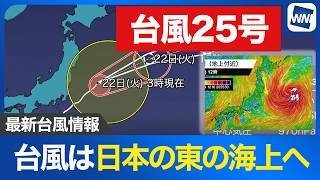
Typhoon No. 25 was moving away from Japan over waters to the east early on September 22, bringing an end to rainfall across the Kanto region while remaining a strong storm as it tracked northeast at 45 kilometers per hour at 3 a.m.

Severe transport disruption continued across Chiba Prefecture on the morning of September 22 even as Typhoon No. 25 moved away from Japan, with major JR lines still suspended, rail access to Narita Airport disrupted by river flooding, highways closed across the Boso Peninsula and thousands of travelers dealing with the aftermath of the previous day's cancellations.

Japan collected another 12 medals on Day 3 of the Aichi-Nagoya Asian Games on September 21, with 17-year-old swimmer Shin Ohashi and karateka Kakeru Nishiyama winning gold, while the host nation also advanced strongly in women's volleyball, baseball, soccer, handball and hockey.

People aged 65 and older accounted for a record 29.6% of Japan's population in 2026, the highest proportion among major countries worldwide, while the number of elderly people in employment also reached an all-time high as Japan marked Respect for the Aged Day on September 21.

Emperor Naruhito and Empress Masako watched Japan defeat Kazakhstan in a women’s basketball preliminary-round game at the 20th Asian Games in Nagoya.

MEDIA CHANNELS
         

MORE Web3 NEWS

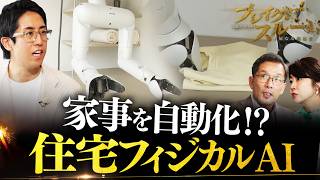
Japanese technology company MW is developing a home equipped with artificial intelligence and ceiling-mounted robots designed to automate household chores, with the goal of freeing people from the roughly four hours a day that can be spent on domestic work.

Cross-border trade across Asia-Pacific keeps expanding, and so does the number of foreign shoppers, tourists, and business travelers that merchants now have to serve.

Both cryptocurrency and online casinos have developed huge audiences in Japan. Research from 2025 estimated that more than three million adults have wagered online, while Japan also has an established crypto sector that is supported by millions of exchange accounts.

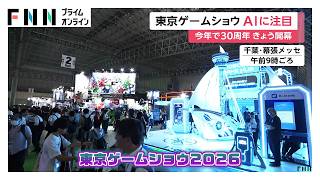
The Tokyo Game Show, one of the world's largest gaming exhibitions, opened with a record 1,138 exhibitors as companies from a growing range of industries seek a foothold in Japan's expanding gaming market, with artificial intelligence emerging as one of the main attractions this year.

Police are warning of a nationwide surge in scams involving criminals posing as officers, with evidence emerging that generative AI may now be used to create fake identities during video calls and make the deception more convincing.

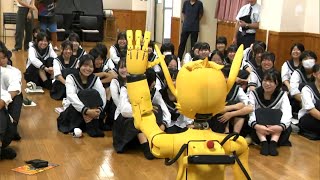
High school students in Mishima, Shizuoka Prefecture, explored how humans and artificial intelligence might coexist in the future by interacting with an AI-powered humanoid robot during a class on September 11.

A medical institution opening in Nagoya's Showa Ward in October will use artificial intelligence-enhanced PET-CT and MRI equipment to produce clearer images and reduce the risk of cancer being overlooked during diagnostic examinations.

The rapid spread of generative artificial intelligence is fueling construction of data centers across Japan, but plans for two large facilities beside a residential neighborhood in Minoh, Osaka Prefecture, are raising concerns over sunlight, noise and low-frequency sound as authorities confront gaps in rules governing the increasingly important infrastructure.