News On Japan

Japan Startup Pushes Autonomous Driving Into Saudi Vision 2030

OSAKA - Saudi Arabia is advancing its national project Vision 2030 to achieve a post-oil society by the end of the decade, with the Riyadh Expo positioned as its grand culmination, and Japan is aiming to secure a foothold in the initiative by providing technologies such as decarbonization systems and expertise in hosting world expos, while also looking to translate this involvement into domestic economic growth.

Against this backdrop, Tier IV, a Japanese startup specializing in autonomous driving technology, has announced plans to expand into the Saudi market, signing a memorandum of understanding with a local company to jointly develop self-driving vehicles, while the Riyadh Expo is also expected to feature an autonomous car race.

The Osaka-Kansai Expo will close on October 13th, with Riyadh set to host the next edition in October 2030. Envisioned as a massive event fully aligned with Vision 2030, the Riyadh Expo will cover an exhibition area of 6 million square meters—roughly four times the size of the Osaka Expo and equivalent to about 128 Tokyo Domes. While Saudi Arabia remains a major oil producer, it is working to transform its industrial structure under Vision 2030, and the Expo has been positioned as a symbolic event showcasing this national transformation.

Japan, seeing significant business opportunities, is strengthening ties through frameworks such as the Japan-Saudi Vision Ministerial Meeting, co-chaired recently by Economy, Trade and Industry Minister Muto and Saudi Arabia’s investment minister. At the same time, Tier IV signed its agreement to pursue joint development in the field of autonomous driving, setting ambitious goals such as organizing a race between AI-driven and human-driven vehicles during the Riyadh Expo. The startup, backed by investors including Suzuki, Denso, and Toyota-affiliated funds, is seen as a standard-bearer for Japan’s auto industry as it seeks entry into the Saudi market.

In an interview, Tier IV’s chief executive explained the company’s strategy. Central to its proposal is “Robot Formula,” an autonomous racecar project inspired by Formula One, where vehicles—unmanned and capable of speeds up to 300 kilometers per hour—compete either against each other or against human drivers. The concept is intended to highlight the safety and utility of self-driving technology while offering entertainment value, with Saudi Arabia expected to take a lead in promoting it. The company also plans to integrate autonomous taxis and package its offerings with education and training programs to foster local talent.

According to Tier IV, Saudi Arabia is an ideal “greenfield” environment where new infrastructure can be designed around autonomous driving from the outset, rather than retrofitted into existing systems. This, combined with the kingdom’s financial capacity to invest heavily in new technologies, presents a rare opportunity to demonstrate the full value of self-driving solutions. The company envisions rolling out smaller, go-kart–like vehicles for educational purposes ahead of 2030, gradually building up to full-scale autonomous racing within the country. Ultimately, the initiative is intended not only to support Saudi Arabia’s transformation but also to contribute to Japan’s economic growth through deeper bilateral cooperation.

Source: テレ東BIZ

News On Japan
POPULAR NEWS

Typhoon No. 15 (Chan-hom) is expected to make landfall near Ibaraki Prefecture between around 6 p.m. and 9 p.m. on August 11, bringing rapidly strengthening winds, high waves and heavy rain to parts of Kanto and southern Tohoku, with unsettled weather potentially continuing even after the storm moves inland.

Japan's H3 Rocket No. 9 successfully placed the Michibiki No. 7 navigation satellite into its planned orbit after lifting off from the Tanegashima Space Center in Kagoshima Prefecture at 4:23 a.m. on August 11, marking the country's second consecutive successful H3 launch.

The Tokaido Shinkansen operated its first overnight service ahead of the Obon holiday period, offering travelers a 15,000 yen trip from the Tokyo area to Kyoto and Shin-Osaka while allowing them to save on hotel costs and arrive earlier than the first regular morning trains.

Typhoon No. 15 is expected to approach and likely make landfall somewhere in the Kanto region on August 11, bringing strong winds and heavy rain that could disrupt conventional rail services, expressways and flights while also affecting a wider area extending into Tohoku.

Raccoons are increasingly invading homes across Japan, damaging roofs and wiring, contaminating buildings with large amounts of urine and feces, and raising concerns over agriculture, native wildlife and the spread of disease as their population continues to expand.

MEDIA CHANNELS
         

MORE Sci-Tech NEWS

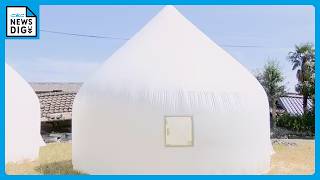
Requests for rapidly constructed "instant houses" are growing across areas of Kumamoto Prefecture devastated by the recent earthquake, providing air-conditioned temporary shelter for residents who have been sleeping in tents and vehicles beside their damaged homes.

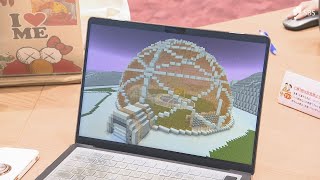
University students in Shizuoka have designed a future lunar city using the globally popular game Minecraft and educational materials supervised by the Japan Aerospace Exploration Agency, combining programming and spatial design to explore how people could live safely and sustainably on the moon.

Toyota Motor has begun recruiting residents of Shizuoka Prefecture to live in Woven City, its experimental community for developing future technologies, with about 25 households expected to move into the site for two years from March 2027.

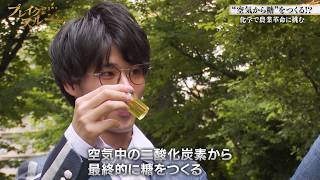
A 29-year-old Osaka University researcher is developing technology to produce sugar from carbon dioxide in the air, seeking to create a faster and more sustainable source of livestock feed as population growth, extreme weather and poor harvests raise fears of future food shortages.

The Kego Fault Zone running through central Fukuoka could produce an earthquake with a maximum seismic intensity of 7, leaving 1,800 people dead, 800 disaster-related deaths and 319,000 evacuees, according to prefectural damage estimates, as experts warn that an unruptured section may remain under stress.

The powerful earthquake that struck Kumamoto Prefecture on July 28 was caused by essentially the same mechanism as the devastating earthquakes that hit the region 10 years ago, according to a leading seismologist, who warned residents to prepare for strong aftershocks and take precautions against heatstroke even during the night.

Multiple rare earth elements essential for high-tech products have been confirmed in mud extracted from the deep seabed off Minamitorishima, Japan's easternmost island.

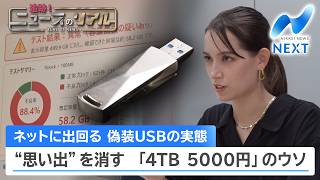
Low-cost USB drives advertised online with enormous storage capacities are exposing users to the risk of lost data, malware infections and information theft, with tests finding that some products contain only a fraction of the memory shown on their labels.