News On Japan

AI Innovations Take Center Stage at CEATEC

TOKYO - AI-powered technologies took center stage at this year’s CEATEC, Japan’s premier digital technology exhibition, with more than half of all displays devoted to artificial intelligence.

Exhibitors demonstrated how AI is increasingly woven into daily life, from enhancing convenience and memory to supporting workforce training and skill transfer.

One exhibit featured a service that could recognize people’s faces and whisper their names through an earpiece when users struggled to remember them. When phrases like “Good to see you again” are spoken, a camera embedded in the device captures the person’s image and cross-references it with stored data to identify them — a tool that could transform everyday social interactions.

Other booths explored playful and practical uses of AI. At TDK’s stand, visitors challenged a machine to a game of rock-paper-scissors, with sensors reading their hand movements and the AI responding strategically. Another demonstration involved a robot that detected signs of fatigue and offered coffee, showcasing how AI could anticipate and respond to human needs.

Beyond convenience, AI is also emerging as a powerful tool for education and skill transmission. A system designed to train bartenders, for example, uses sensor-equipped gloves to measure grip strength, shaking speed, and angle when mixing drinks. The AI compares these metrics against data from professional bartenders and provides a score, offering trainees real-time feedback. Developers see broader potential for such technology in manufacturing, where passing down technical know-how from retiring veterans to younger workers has become increasingly difficult.

Experts believe that AI’s societal impact is only beginning. Commentators noted that in the United States, many routine white-collar jobs are already being replaced, lowering employment rates among young people. As one business leader put it, the wage gap between white-collar and essential workers is likely to reverse, since tasks requiring human hands — such as carefully peeling and chopping irregularly shaped vegetables — remain beyond the capabilities of even advanced “physical AI.” Moreover, combining human expertise with AI support could elevate these roles into highly valued, well-paid “advanced essential” professions.

Source: TBS

News On Japan
POPULAR NEWS

Typhoon No. 25 was moving away from Japan over waters to the east early on September 22, bringing an end to rainfall across the Kanto region while remaining a strong storm as it tracked northeast at 45 kilometers per hour at 3 a.m.

Severe transport disruption continued across Chiba Prefecture on the morning of September 22 even as Typhoon No. 25 moved away from Japan, with major JR lines still suspended, rail access to Narita Airport disrupted by river flooding, highways closed across the Boso Peninsula and thousands of travelers dealing with the aftermath of the previous day's cancellations.

Japan collected another 12 medals on Day 3 of the Aichi-Nagoya Asian Games on September 21, with 17-year-old swimmer Shin Ohashi and karateka Kakeru Nishiyama winning gold, while the host nation also advanced strongly in women's volleyball, baseball, soccer, handball and hockey.

People aged 65 and older accounted for a record 29.6% of Japan's population in 2026, the highest proportion among major countries worldwide, while the number of elderly people in employment also reached an all-time high as Japan marked Respect for the Aged Day on September 21.

Emperor Naruhito and Empress Masako watched Japan defeat Kazakhstan in a women’s basketball preliminary-round game at the 20th Asian Games in Nagoya.

MEDIA CHANNELS
         

MORE Web3 NEWS

Japanese technology company MW is developing a home equipped with artificial intelligence and ceiling-mounted robots designed to automate household chores, with the goal of freeing people from the roughly four hours a day that can be spent on domestic work.

Cross-border trade across Asia-Pacific keeps expanding, and so does the number of foreign shoppers, tourists, and business travelers that merchants now have to serve.

Both cryptocurrency and online casinos have developed huge audiences in Japan. Research from 2025 estimated that more than three million adults have wagered online, while Japan also has an established crypto sector that is supported by millions of exchange accounts.

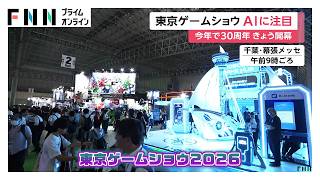
The Tokyo Game Show, one of the world's largest gaming exhibitions, opened with a record 1,138 exhibitors as companies from a growing range of industries seek a foothold in Japan's expanding gaming market, with artificial intelligence emerging as one of the main attractions this year.

Police are warning of a nationwide surge in scams involving criminals posing as officers, with evidence emerging that generative AI may now be used to create fake identities during video calls and make the deception more convincing.

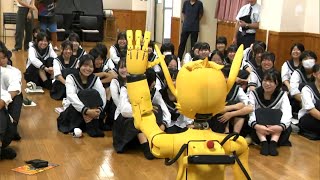
High school students in Mishima, Shizuoka Prefecture, explored how humans and artificial intelligence might coexist in the future by interacting with an AI-powered humanoid robot during a class on September 11.

A medical institution opening in Nagoya's Showa Ward in October will use artificial intelligence-enhanced PET-CT and MRI equipment to produce clearer images and reduce the risk of cancer being overlooked during diagnostic examinations.

The rapid spread of generative artificial intelligence is fueling construction of data centers across Japan, but plans for two large facilities beside a residential neighborhood in Minoh, Osaka Prefecture, are raising concerns over sunlight, noise and low-frequency sound as authorities confront gaps in rules governing the increasingly important infrastructure.